You already know.
You’ve tried to outthink it. Manage it. Control it. Hide it.
But something in you finally said, “I can’t keep living like this.”
If you’re considering getting help for your drinking, you might be terrified of what comes next. Not just the logistics—but the experience. What it will feel like. Whether you’ll fail. Whether it will actually work.
At Foundations Group Recovery Center Ohio, we’ve walked alongside hundreds of people at this exact moment. If you’re looking for honest clarity about alcohol addiction treatment in Ohio, this is what we want you to know.
Not the brochure version. The real one.
The Call Is Often the Hardest Part
Before treatment even begins, there’s the phone call.
Your heart races. You rehearse what you’ll say. You might hang up once before calling back.
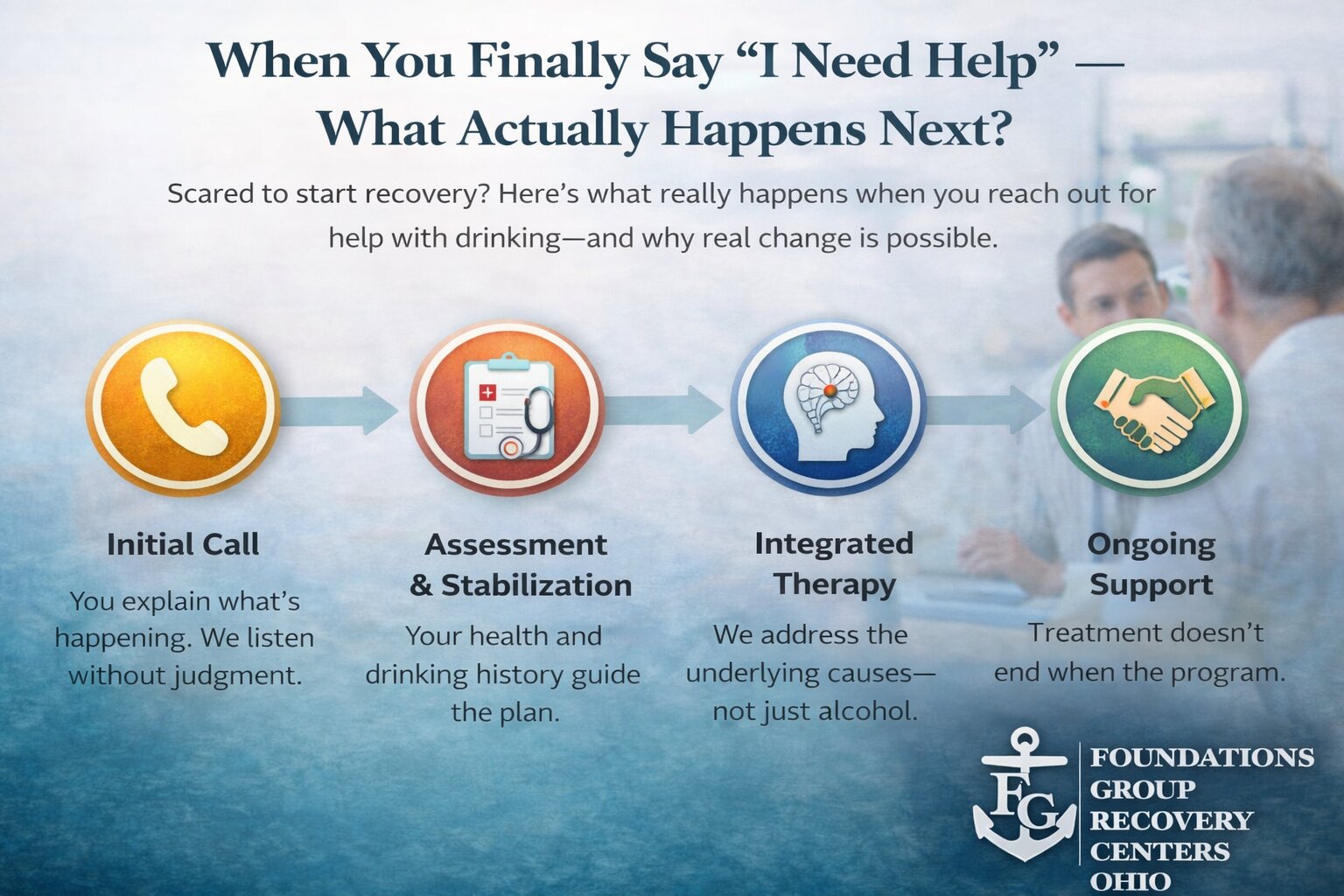
When you reach us, you won’t be interrogated. You won’t be judged. You’ll be asked simple questions: What’s been happening? How much are you drinking? Have you tried to stop before? Are you safe right now?
You don’t need perfect answers. You don’t need a speech. You just need honesty.
For many people, hanging up the phone is the first time they feel relief in months.
The Intake Process: Slower Than You Think
There’s a myth that treatment is chaotic. It isn’t.
The first few days are focused on stabilization and understanding your needs. That means:
- Medical check-ins
- Conversations about your drinking history
- Mental health screening
- Planning the right level of care
If your body needs help adjusting to being alcohol-free, that’s handled carefully. Alcohol withdrawal can be serious, which is why medical oversight matters.
You are not expected to “tough it out.”
You are not expected to be strong.
You are allowed to be uncomfortable.
The goal isn’t intensity. It’s safety.
Structure Isn’t About Control — It’s About Calm
One of the biggest surprises people experience is how much relief structure brings.
Addiction is chaos.
Treatment is rhythm.
You wake up at a set time. You attend groups. You meet with a therapist. You eat consistently. You rest. You repeat.
It may sound simple. It is simple.
But simple is powerful when your nervous system has been in fight-or-flight for months—or years. Structured daytime care or multi-day weekly treatment creates predictability. And predictability helps your brain heal.
When you remove alcohol and add consistency, your body starts recalibrating.
Therapy Gets to the Root — Not Just the Drinking
Most people don’t drink “for no reason.”
There’s stress. Trauma. Anxiety. Depression. Loneliness. Pressure. Sometimes all of it at once.
Drinking becomes the fastest way to regulate emotions.
In treatment, we don’t just focus on stopping alcohol. We look at what alcohol was doing for you.
- Was it numbing anxiety?
- Was it helping you sleep?
- Was it quieting intrusive thoughts?
- Was it giving you social confidence?
When mental health and substance use collide, you can’t treat one and ignore the other. Therapy helps you build real coping skills—not emergency ones.
This is where hope becomes practical.
You’ll Meet People Who Understand (More Than You Expect)
Addiction isolates.
Treatment reconnects.
You’ll sit in a room with people who have different jobs, different ages, different backgrounds—but similar stories. The shame you’ve been carrying alone starts to loosen when someone across the room says, “Yeah. Me too.”
Community doesn’t magically fix everything.
But it removes the lie that you’re uniquely broken.
That shift alone can change everything.
What Actually Changes Physically
This part is rarely talked about enough.
When alcohol leaves your system and your body stabilizes, changes happen:
- Sleep improves
- Appetite normalizes
- Mood swings soften
- Morning anxiety decreases
- Mental clarity returns
At first, it’s subtle.
Then one day you wake up and realize you don’t feel like you’re in constant damage control.
Your brain is capable of healing. It just hasn’t had a chance.
“What If I Fail?”
This is the quiet fear almost everyone carries.
What if I start and can’t finish?
What if I relapse?
What if I’m the exception?
Here’s the truth: recovery is not about perfection. It’s about persistence.
Some people move forward steadily. Others stumble and recalibrate. Alcohol addiction treatment works not because it demands flawlessness—but because it builds tools, support systems, and awareness that outlast setbacks.
Relapse, if it happens, is information. Not proof you’re hopeless.
You are not graded here.
You are guided.
What Makes Treatment Actually Work
Let’s be direct.
Willpower alone rarely sustains sobriety long-term. Treatment works because it layers support:
- Medical stabilization
- Evidence-based therapy
- Peer accountability
- Structured routine
- Family involvement when appropriate
- Aftercare planning
It addresses the physical, psychological, and relational pieces of addiction simultaneously.
That layered approach creates durability.
Recovery isn’t a motivational speech. It’s a system.
You Don’t Have to Believe Yet
You don’t need full confidence.
You don’t need certainty that you’ll love sobriety.
You don’t even need to promise forever.
You just need willingness to try something different.
We often tell clients: Borrow our belief until you build your own.
Because we’ve seen people who were convinced they were too far gone rebuild relationships, careers, self-trust, and peace.
Not because they were superhuman.
Because they finally stopped trying to do it alone.
Frequently Asked Questions
How long does treatment last?
It depends on your needs. Some individuals begin with more intensive, structured support and gradually step down into multi-day weekly care. Length isn’t one-size-fits-all. It’s personalized to your safety, stability, and progress.
Will I lose my job if I go to treatment?
Many people are able to take protected medical leave. There are federal and state protections that may apply. We can walk you through those conversations so you don’t have to figure it out alone.
What if I have anxiety or depression too?
That’s common. Treatment addresses both substance use and mental health together. Ignoring one rarely works long-term.
Is it going to feel overwhelming?
The beginning can feel vulnerable—but not chaotic. Structure tends to reduce overwhelm rather than increase it. You won’t be thrown into the deep end without support.
What happens after I complete a higher level of care?
Recovery continues. Step-down care, therapy, alumni groups, and structured follow-up help maintain momentum. The goal isn’t just short-term sobriety. It’s long-term stability.
What if I’ve tried before?
You’re not disqualified.
Many people require more than one attempt. Each experience teaches something new about what works and what needs adjusting. Trying again isn’t failure—it’s resilience.
If You’re Reading This Late at Night
There’s a specific kind of loneliness that hits after 10 p.m.
When everyone else is asleep.
When the house is quiet.
When the bottle feels loud.
If that’s you right now, know this:
The version of you who is tired of this cycle is real. And strong. Even if you don’t feel it yet.
You don’t have to decide the rest of your life tonight.
You just have to decide whether you’re willing to explore something different.
At Foundations Group Recovery Center Ohio, we offer steady, compassionate support designed for real people—not perfect ones.
Call (888)501-5618 or visit our Alcohol addiction treatment services in Ohio to learn more about our Alcohol addiction treatment services in Upper Arlington.