You’re functioning.
You’re productive.
You’re responsible.
From the outside, nothing looks broken.
But inside? You might feel tired. Foggy. Slightly disappointed in yourself more often than you admit.
Maybe alcohol isn’t destroying your life — but it’s quietly running more of it than you’d like.
If you’ve been sober curious… if you’ve wondered whether you’d feel better without drinking… if you’ve asked yourself, “Is this still working for me?” — this is where support can actually help.
You don’t need a dramatic crisis to explore change. And you don’t need to adopt a label before you reach out. Many people begin by simply learning what their options are through alcohol addiction treatment.
Here’s how it helps — even when you’re still “high-functioning.”
1. You Finally Get to Talk About the Part No One Sees
High-functioning drinking is often private.
You may:
- Only drink at home
- Keep strict boundaries around work hours
- Never miss a major responsibility
- Appear completely “normal” socially
But the mental space it takes up? That’s the part that wears you down.
The planning.
The negotiating.
The “I’ll only have two tonight.”
The quiet frustration when that plan doesn’t stick.
In a structured setting, you get a confidential space to say what you haven’t said out loud:
“I don’t like how dependent I feel.”
“I think about drinking more than I want to.”
“I’m scared this could escalate.”
You don’t have to declare yourself anything. You just get to be honest.
And honesty is often the first real relief.
2. You Understand Why You’re Drinking — Not Just That You Are
Most high-functioning adults aren’t drinking for chaos.
They’re drinking for relief.
- Relief from anxiety
- Relief from racing thoughts
- Relief from social pressure
- Relief from loneliness
- Relief from the pressure to perform
Alcohol works — at first. That’s why it’s so hard to question it.
But over time, what used to take the edge off can start dulling everything. Your sleep. Your motivation. Your patience. Your joy.
In treatment, we don’t just focus on stopping the behavior. We explore what alcohol has been doing for you — and help you build healthier ways to get those same needs met.
Because taking away a coping tool without replacing the relief? That rarely lasts.
3. You Don’t Have to Disappear From Your Life
One of the biggest fears we hear from sober curious adults is:
“I can’t check out of my responsibilities.”
You may have:
- A career you care about
- Kids who rely on you
- A public-facing role
- Financial obligations
The good news? Not everyone needs live-in treatment or to “step away” from life entirely.
Many people benefit from structured daytime care or multi-day weekly treatment that allows them to:
- Continue working
- Stay at home
- Maintain privacy
- Gradually change habits
This isn’t about blowing up your world.
It’s about adjusting your trajectory.
Sometimes recovery looks less like a dramatic intervention and more like a quiet course correction — one steady decision at a time.
4. You Address the Mental Health Piece (Without Making It Dramatic)
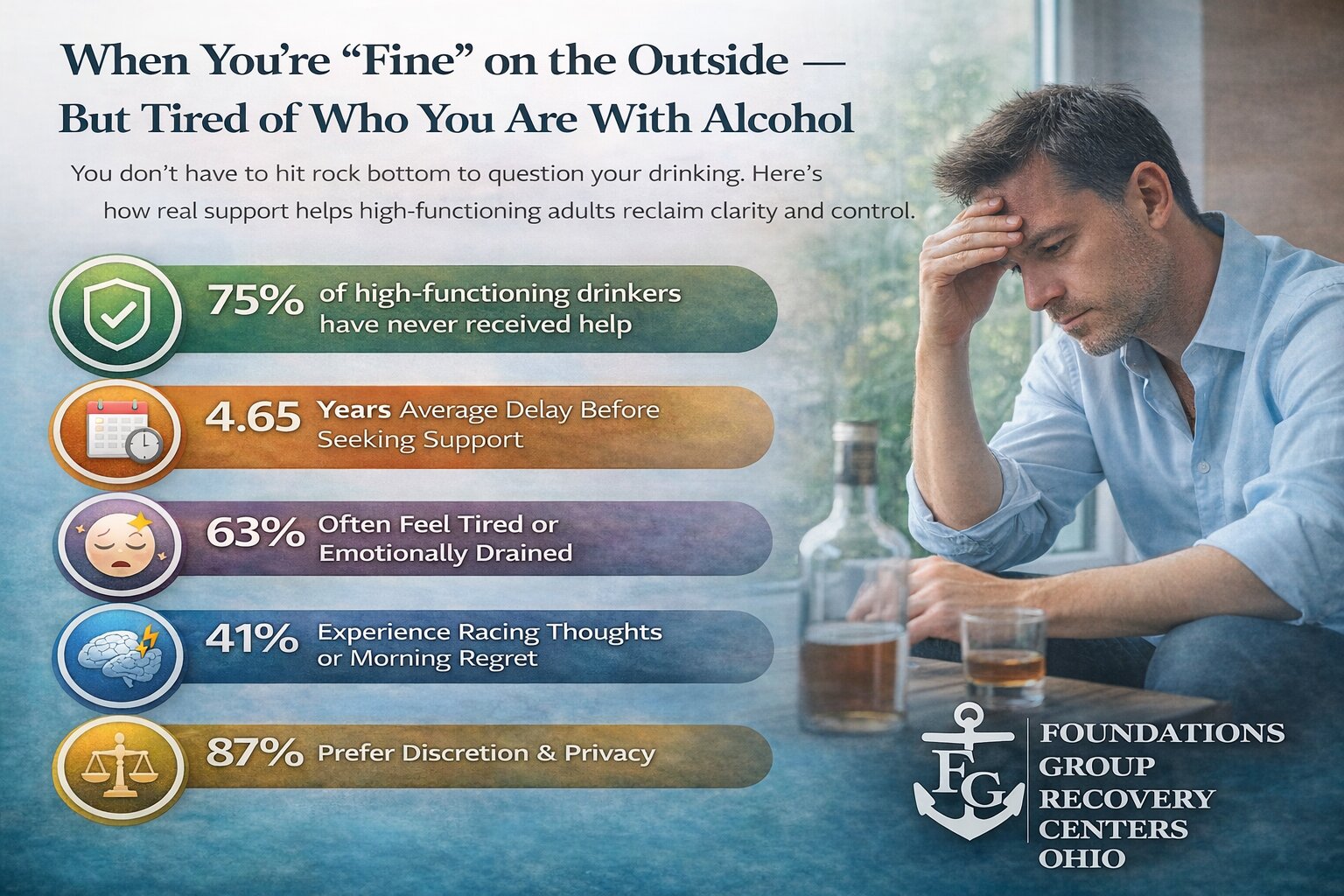
High-functioning drinking often overlaps with anxiety, burnout, or untreated stress.
You might not describe yourself as depressed.
You might not identify as anxious.
But you might:
- Feel constantly “on edge”
- Struggle to relax without alcohol
- Wake up at 3 a.m. with racing thoughts
- Feel emotionally flat some days
When mental health and substance use collide, the drinking can become a self-prescribed solution.
In treatment, we help you untangle that knot.
Sometimes reducing alcohol improves mental clarity dramatically. Sometimes deeper anxiety or mood patterns need support. Either way, you don’t have to figure it out alone.
You deserve relief that doesn’t come with regret the next morning.
5. You Reduce the Risk Before It Becomes a Crisis
A lot of people wait.
They wait until:
- A doctor raises concerns
- A partner draws a line
- A mistake happens
- Their tolerance increases significantly
But here’s the truth: early support is often easier, gentler, and more effective than crisis-driven treatment.
When you address it now, you may avoid:
- Escalating health risks
- Relationship strain
- Legal consequences
- Emotional burnout
You don’t have to earn help by suffering more.
Choosing support early isn’t dramatic. It’s strategic.
6. You Rebuild Self-Trust
High-functioning drinkers often struggle quietly with one thing: broken promises to themselves.
“I’ll only drink on weekends.”
“I won’t drink tonight.”
“I’ll take a month off.”
And when those boundaries slide, even slightly, self-trust erodes.
You may still look successful to everyone else.
But internally? You may feel disappointed.
Treatment isn’t about punishment. It’s about rebuilding integrity between you and you.
Each small step — attending sessions, learning new skills, following through — restores something powerful:
Confidence that you can rely on yourself again.
That’s not small.
7. You Get to Explore — Not Commit Forever
There’s a myth that reaching out means signing up for a lifetime identity shift.
It doesn’t.
Exploring alcohol addiction treatment can simply mean:
- Scheduling a consultation
- Asking questions
- Sharing your drinking patterns honestly
- Understanding what support could look like
You’re allowed to be curious.
You’re allowed to change your mind.
You’re allowed to want more clarity without labeling yourself.
We don’t force conclusions. We help you explore possibilities.
8. You Might Discover You Feel Better Than You Expected
Many sober curious adults are afraid of one thing:
“What if I lose something I love?”
Alcohol may feel like:
- A social bridge
- A creativity booster
- A stress valve
- A ritual of connection
It makes sense that you’d hesitate.
But many people discover that what they feared losing — connection, joy, personality — actually deepens when alcohol no longer runs the show.
You don’t become less interesting.
You become more present.
You don’t become rigid.
You become clearer.
The goal isn’t to shrink your life.
It’s to expand it beyond the narrow relief alcohol provides.
FAQ: High-Functioning Drinking & Getting Support
Do I have to identify as an alcoholic to get help?
No. Many people who enter alcohol addiction treatment are exploring their relationship with drinking — not declaring a lifelong label. You don’t need a specific identity to ask for support.
What if I’ve never had legal trouble or lost a job?
You don’t need visible consequences to deserve help. Many high-functioning adults seek treatment because of internal discomfort — anxiety, loss of control, or emotional fatigue — not external crises.
Will I have to stop drinking forever?
That depends on your personal situation and goals. Treatment starts with assessment and conversation, not assumptions. We help you understand your options and what’s healthiest for you.
Can I keep working while getting support?
In many cases, yes. Depending on your needs, structured outpatient options allow you to maintain work and family responsibilities while receiving care.
What if I try this and decide it’s not for me?
You’re allowed to ask questions and make informed decisions. Starting a conversation doesn’t lock you into anything. It gives you clarity.
How do I know if my drinking is “bad enough”?
If you’re asking the question, it matters.
You don’t need to compare yourself to someone else’s worst moment. If alcohol is taking more than it’s giving — mentally, emotionally, or physically — that’s worth exploring.
You Don’t Have to Crash to Change
If you’re in Ohio and you’re quietly wondering whether life might feel clearer without alcohol running the background… that curiosity deserves attention.
You don’t have to wait for a crisis.
You don’t have to justify your discomfort.
You don’t have to prove anything.
You just have to be willing to explore.
Call (888)501-5618 or visit our page to learn more about our Alcohol addiction treatment services in Franklin County.