When your child finally agrees to go — or when you have to insist — your heart is pounding in your ears.
You’re terrified you’re making the wrong call.
You’re terrified you’re making it too late.
You’re terrified they’ll never forgive you.
If you’re searching for answers about opiate addiction Treatment right now, you are not calm. You are likely in survival mode.
And the question underneath all the others is this:
What is actually going to happen to my child in those first 72 hours?
Let us walk you through it gently. Not clinically. Not cold. The way we would if you were sitting across from us, shaking, asking what comes next.
The First Few Hours: Immediate Safety and Stabilization
The first priority is safety.
Not lectures. Not consequences. Not life lessons.
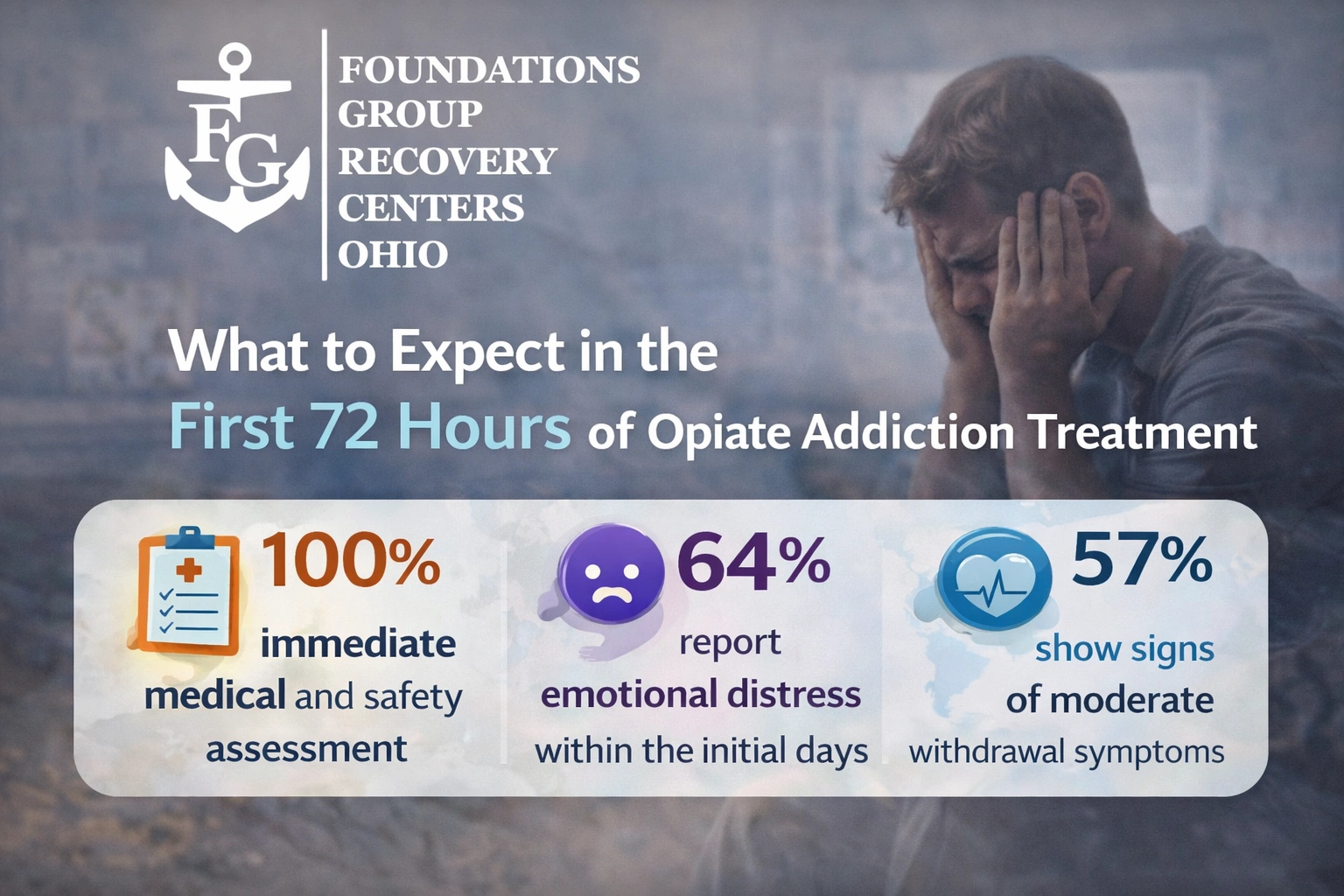
When your child arrives, our team begins with a thorough medical and clinical assessment. We evaluate their current physical state, substance use history, mental health symptoms, medications, and immediate risks.
If they are in withdrawal, we do not ignore it or minimize it. We monitor it closely and intervene when needed.
The atmosphere is structured but calm.
For many parents — especially those who’ve been living through late-night arguments, unpredictable mood swings, or emergency scares — this is the first moment things feel contained.
Contained doesn’t mean fixed.
It means safe.
And safe is the first step toward anything better.
The Intake Process: Listening Before Acting
Parents sometimes imagine an intake as an interrogation.
It isn’t.
It’s a careful, steady conversation. We gather information not to label your child, but to understand what they’re carrying.
Substance use rarely stands alone. Anxiety, depression, trauma, impulsivity — these often sit underneath the surface. When mental health and substance use collide, clarity matters.
During these first conversations, your child may be guarded. They may minimize. They may be angry.
That does not alarm us.
Ambivalence is common in crisis admissions. Our job isn’t to force motivation. It’s to create stability where motivation has a chance to grow.
Withdrawal Care: Managed, Not Ignored
One of the biggest fears parents carry is this:
Will they suffer?
Opioid withdrawal can be physically and emotionally intense. But unmanaged withdrawal is very different from medically supported withdrawal.
Our medical team monitors symptoms around the clock when necessary. Medications may be used to ease distress. Hydration, rest, and nutrition are prioritized.
We are not trying to “teach a lesson” through discomfort.
We are trying to stabilize the nervous system.
Many families later tell us the experience was hard — but far more humane and structured than they imagined.
Emotional Turbulence: Expect Waves, Not Calm Seas
The first 72 hours are rarely peaceful.
Your child may cycle through:
- Anger
- Shame
- Relief
- Fear
- Defensiveness
- Tears
- Silence
Sometimes in the same day.
This is not regression.
It’s what happens when the numbing agent is removed and the emotional backlog comes rushing forward.
Our clinicians expect this. We respond with steadiness, not shock. We normalize what’s surfacing without dismissing it.
You may want immediate transformation. That’s understandable.
But the first 72 hours are not about personality change.
They are about grounding.
Structure Begins Immediately — And That Matters
Even in crisis, structure is introduced gently and quickly.
Consistent wake times.
Meals at predictable intervals.
Check-ins with staff.
Small, manageable expectations.
Structure regulates the nervous system.
When chaos has ruled your home — especially in communities like Upper Arlington, Ohio, where families may feel pressure to “hold it together” publicly — this structure can feel foreign at first.
Young adults often resist it.
But within days, something subtle happens. Sleep begins to normalize. Appetite improves. Speech slows. Eye contact increases.
The body starts to recalibrate.
That recalibration is quiet — but powerful.
Family Emotions During the First 72 Hours
While your child is stabilizing, you are, too.
Parents often experience:
- Deep relief that their child is safe
- Guilt for “letting it get this far”
- Fear of relapse
- Anxiety about what others will think
- Grief for the life they thought their child would have
All of this can coexist.
In areas throughout Franklin County, Ohio, we’ve worked with families who felt alone in this — convinced no one else understood the specific blend of fear and love they were carrying.
You are not alone in that mix.
And this moment is not a verdict on your parenting.
It is a turning point.
Communication: You Are Not Shut Out
Parents often fear that once their child is admitted, they will be excluded.
Privacy laws protect your child’s autonomy, but that does not mean you are erased.
When appropriate and with consent, family communication begins early. We provide updates. We discuss expectations. We guide you on how to support without escalating tension.
Sometimes, we gently begin addressing family dynamics that have developed around the addiction — enabling patterns, communication breakdowns, or boundary confusion.
This is not about blame.
It’s about strengthening the environment your child will eventually return to.
What the First 72 Hours Are Not
They are not:
- A full recovery
- A guarantee of motivation
- A personality reset
- A promise that everything will be easy
They are stabilization.
They are containment.
They are a nervous system moving from crisis mode toward regulation.
Sometimes parents expect fireworks — a dramatic awakening.
More often, the change looks like this: your child sleeps through the night.
And that alone feels like a miracle.
What Happens After the Initial Window
Once medical stability is achieved and emotions begin settling, we assess next steps.
This may involve continued live-in treatment, structured daytime care, or multi-day weekly treatment depending on clinical need.
We do not rush these decisions.
The first 72 hours give us clarity — about mental health concerns, substance use severity, and what level of support will truly serve your child.
We move thoughtfully, not reactively.
Because reacting is what brought you here.
Planning is what carries you forward.
The Quiet Power of the First Pause
For many families, the most significant shift in those first three days isn’t dramatic.
It’s the pause.
No frantic searching.
No midnight phone calls.
No wondering if they’ll come home.
Just pause.
And in that pause, something fragile but real begins to form: hope.
Hope is not loud.
It’s a nervous system finally exhaling.
Frequently Asked Questions From Crisis Parents
Will my child hate me for admitting them?
They may be angry at first.
Crisis admissions often come with strong emotions. But anger in the first 72 hours does not predict long-term resentment.
Many young adults later say that admission — even when they resisted it — became the moment things started to change.
Temporary anger is not the same as permanent damage.
What if they refuse to engage?
Resistance is common early on.
Engagement is not forced. It develops as stabilization increases.
When the body feels safer and withdrawal subsides, openness often follows.
We meet resistance with steadiness, not confrontation.
How involved can I be during those first days?
That depends on your child’s age and consent.
However, we prioritize appropriate family communication and education. You are part of the ecosystem that supports recovery.
Your stability matters too.
What if this doesn’t work?
That fear is real.
But the first 72 hours are not about “working” in the sense of full recovery.
They are about reducing immediate risk, stabilizing symptoms, and creating a foundation.
From that foundation, long-term progress becomes possible.
Is it normal to feel relieved?
Yes.
Relief and guilt often sit side by side.
Relief does not mean you’ve given up on your child. It means you have been carrying too much for too long.
What if I’m exhausted?
You probably are.
Crisis parenting drains every system — emotional, physical, financial.
Part of this process is allowing yourself to rest while professionals carry some of the weight.
You are not abandoning your child.
You are widening the circle of support.
The first 72 hours are not about fixing your child.
They are about stabilizing a crisis so healing can begin.
If you are standing at this crossroads, heart racing, unsure if this is the right step — know that choosing safety is never the wrong move.
Call (888)501-5618 or visit our Opiate addiction Treatment services in Ohio to learn more.
We will meet your fear with steadiness.
And we will meet your child with care.