You’ve tried everything.
The talks, the threats, the silence.
You’ve watched your child unravel from someone you knew into someone you barely recognize. And nothing seems to get through.
If you’re here, you’re likely exhausted, terrified, and wondering what’s left to try. The word “treatment” might feel too late. Or too big. Or like a door that’s already closed.
It’s not.
At Foundations Group Recovery Center, we talk to parents in crisis every day. And what we say to them is this: You don’t have to fix everything. But you do deserve real support, and so does your child. Here’s how alcohol addiction treatment actually works—especially when you feel like you’ve run out of options.
It Doesn’t Have to Get Worse First
There’s a myth that people have to “hit bottom” before they’ll accept help. But rock bottom is not a requirement for recovery.
Most people begin treatment still angry, still in denial, still actively using. That’s okay. Treatment is designed to hold people through that—not after it. Your child doesn’t have to be ready. They just need to be reachable.
What matters is that you take a step now. Even if it’s just a phone call.
What Happens First: Assessment and Stabilization
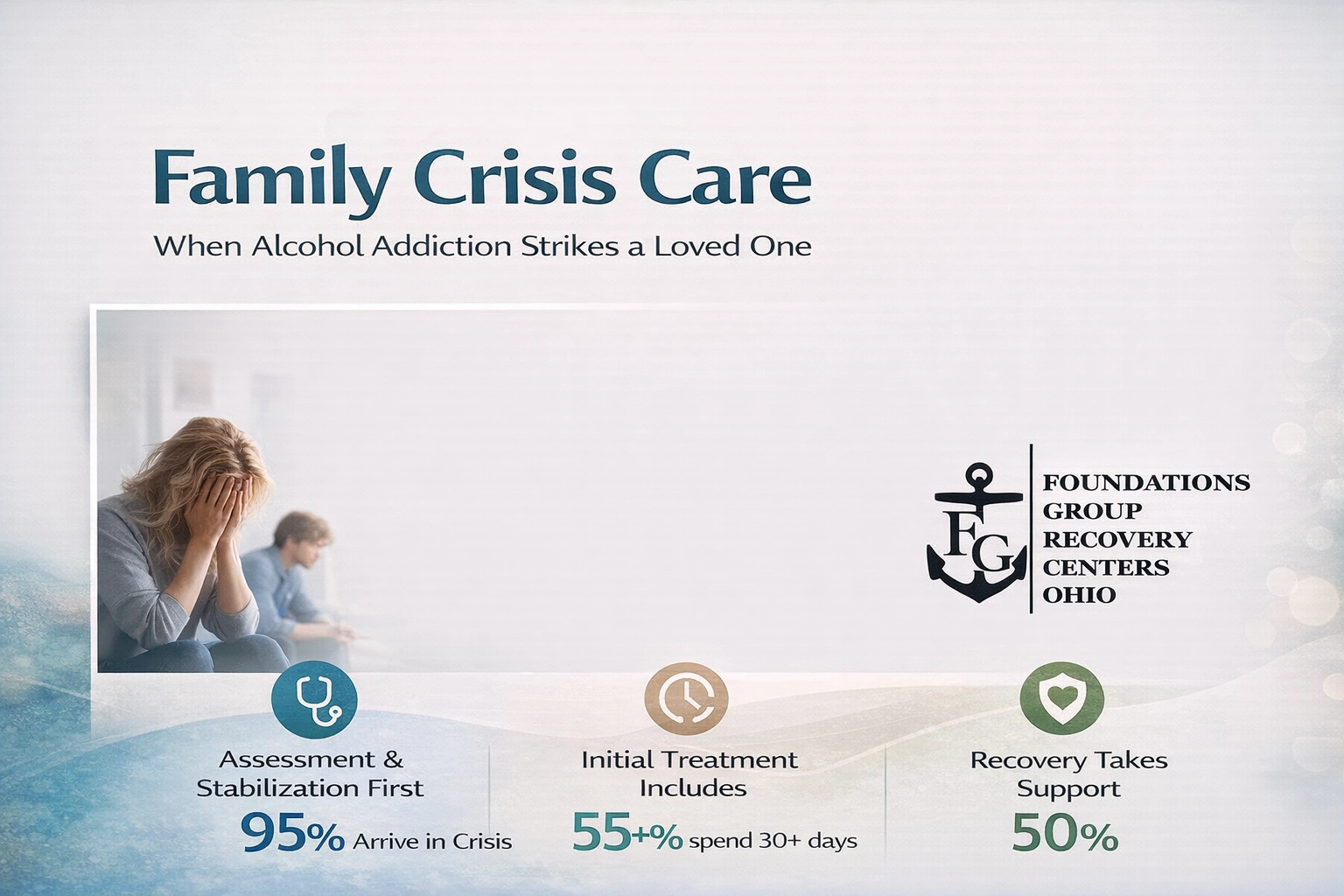
When someone enters treatment, the first step is always an assessment.
- How long have they been drinking?
- Are there any withdrawal risks?
- Is there underlying depression, anxiety, trauma, or psychosis?
- Are they safe?
This isn’t just paperwork—it’s how we build a treatment plan that’s realistic, safe, and effective.
If your child is physically dependent on alcohol, medical detox may come first. This ensures their body is safely weaned off alcohol in a supervised, compassionate setting. From there, deeper work can begin.
What Alcohol Addiction Treatment Actually Includes
There’s no one-size-fits-all plan—but most treatment involves a combination of these levels:
Medical Detox
Needed if there’s risk of withdrawal. It’s short-term and supervised by medical staff.
Residential or PHP
Full-day support either in a facility or returning home at night. Helps stabilize people who are in crisis or unsafe on their own.
Intensive Outpatient Program (IOP)
Structured therapy several days a week while living at home. Ideal for stepping down after higher levels of care or for people who are functioning but struggling.
Ongoing Therapy + Aftercare
Long-term support that includes individual therapy, group work, sober living options, and relapse prevention planning.
Not everyone goes through all of these—but most people benefit from starting with more structure and slowly stepping down as stability returns.
Yes, People Start Treatment Angry
If your child is combative, resistant, or shut down, you might wonder: what’s the point?
The truth is, we’ve seen some of the most resistant clients become some of the most committed—once they’re in a space that feels safe enough to stop performing.
The anger is often fear. The shutdown is often shame. And a good treatment team knows how to work with both.
You Can Still Help—Even If They Won’t Listen
If your adult child refuses to talk about treatment, that doesn’t mean you’re helpless.
You can:
- Call a treatment center to understand your options
- Set boundaries that create natural consequences
- Ask about family consultation or parent coaching
- Offer transport or help with logistics
- Refuse to enable without refusing to love
You can move forward without waiting for permission. And sometimes, your movement is what creates space for theirs.
Parents from Upper Arlington, Ohio often share how isolating it can feel to have a struggling adult child—especially in communities where everything is supposed to “look” okay. You’re not the only one. You’re not overreacting. And you’re not too late.
The System Is Confusing—But You Don’t Have to Navigate It Alone
Treatment terms can feel like alphabet soup: IOP, PHP, MAT, CBT, DBT. And every program promises something slightly different.
You don’t need to know it all before reaching out.
A good facility will walk you through:
- What level of care makes sense based on behavior and risk
- Whether detox is needed
- What insurance covers
- What family involvement looks like
- How long things might take
We’re here to guide—not sell. Whether your child is 19 or 35, in crisis or quiet collapse, you deserve clarity before you make a move.
Recovery Is Not a Straight Line—But It’s Still Possible
Relapse doesn’t mean failure. Treatment that didn’t stick before doesn’t mean nothing works. And a resistant young adult isn’t a lost cause.
We’ve seen families from Franklin County, Ohio come in expecting a revolving door—and walk away with hope. The truth is, with the right structure and support, people change. They really do. Sometimes slowly. Sometimes suddenly. But always on their own terms.
Your job is not to control their healing. It’s to offer them the chance to begin it.
FAQ: Alcohol Addiction Treatment for Crisis Families
What if my child doesn’t want treatment?
That’s common. Many clients enter treatment resistant or ambivalent. Treatment works by meeting people in that state—not expecting them to be ready first. Intervention support or parent coaching may also help.
Can I come in even if they won’t?
Yes. Parents can attend family consultations, get education, and talk through options without the person in treatment. You don’t have to wait.
What’s the difference between PHP and IOP?
PHP (Partial Hospitalization Program) offers full-day treatment with evening return home. IOP (Intensive Outpatient Program) offers part-time therapy sessions several times per week. PHP is better for high-risk or unstable situations.
Do you offer family therapy?
Yes. We believe healing happens in relationships. Family sessions are often part of the treatment plan and can be incredibly healing—for everyone involved.
Is alcohol detox dangerous?
It can be. Alcohol withdrawal is one of the few that can be life-threatening. That’s why clinical assessment and, if needed, medical detox is essential.
This Isn’t the End. It Might Be the Beginning.
You’re tired. You’ve done everything. And it still feels like it’s falling apart.
But treatment exists for exactly this moment. Not after rock bottom. Not after they’re “ready.” But now—when your heart is breaking and you’re out of ideas.
We’re here to help you take the next step.
Call (888)501-5618 to learn more about our alcohol addiction treatment services Columbus, Ohio.