You ever walk into a room and immediately clock where the drinks are… even though you’re not drinking?
You laugh at the right times. You say you’re “just tired.” You hold your cup like a prop. And somewhere in the middle of it all, you feel like the only sober person on the planet.
Getting clean young can mess with your identity. But here’s what most people don’t see: the work you’re doing in recovery is quietly building confidence in ways that don’t show up on Instagram.
If you’re in or considering opiate addiction Treatment, this part matters more than you think. The changes happening underneath the surface? They’re real.
And they’re shaping you into someone stronger than you realize.
1. You Learn to Sit in Discomfort Without Running
Early sobriety is awkward.
There’s too much feeling. Too much time. Too much awareness.
In treatment — whether that’s live-in support or structured daytime care — you practice staying instead of escaping. You sit in group when you’d rather bolt. You feel the craving without immediately silencing it. You let anxiety spike… and then fall.
That repetition rewires something.
You start to internalize: I can survive hard moments.
Confidence isn’t loud. Sometimes it’s just choosing not to leave.
2. You Stop Performing and Start Being Honest
A lot of us were performers before we were sober.
We performed being fine.
We performed being funny.
We performed being reckless but “in control.”
Recovery strips that down. You say things out loud you used to bury. You admit when you’re not okay. You tell the truth about cravings, shame, or fear.
That kind of honesty builds self-respect.
And self-respect? That’s the backbone of real confidence.
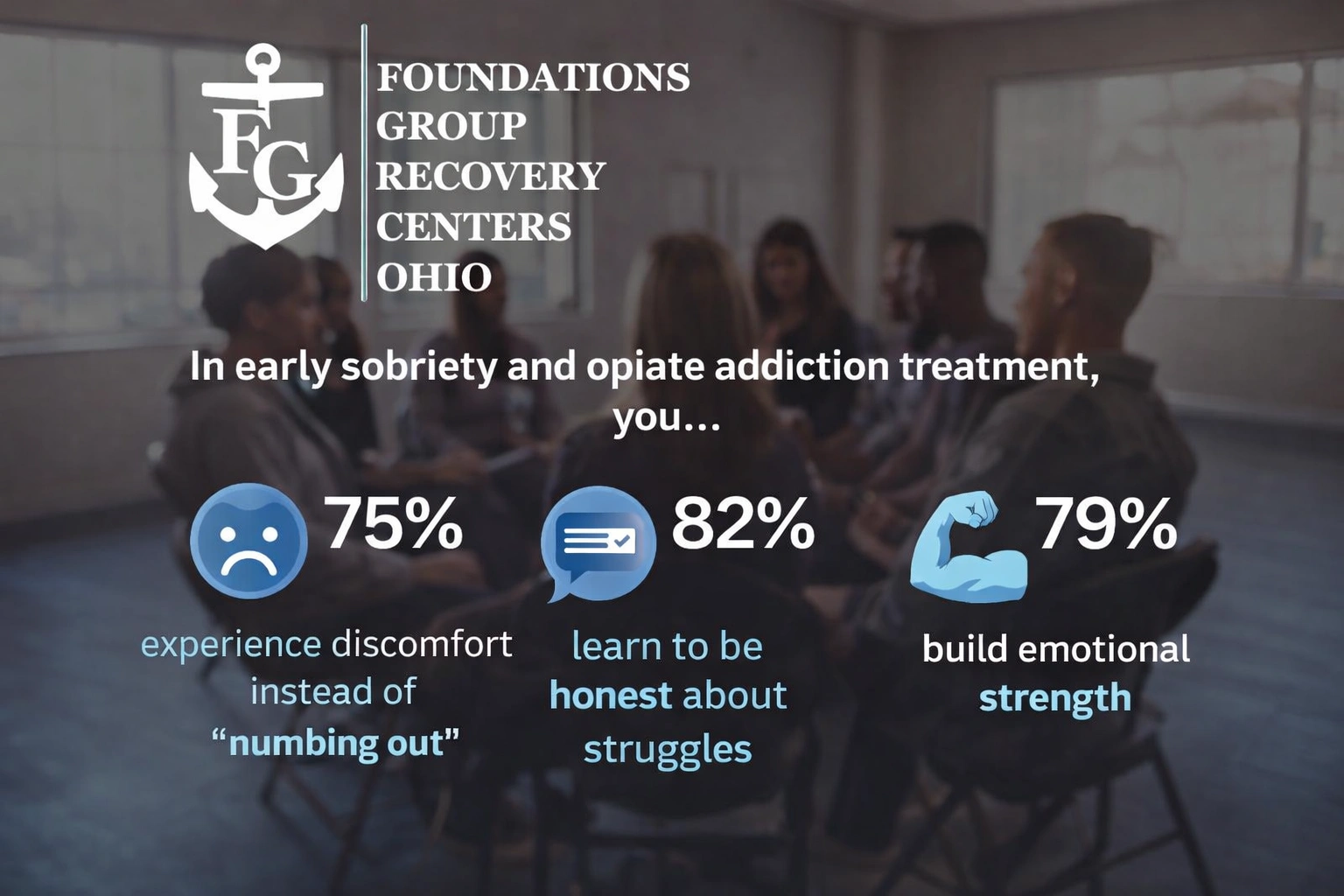
3. You Build Emotional Strength (Even If You Still Feel Sensitive)
There’s this myth that confidence means being unbothered.
Recovery teaches the opposite.
You feel everything more. Sadness hits deeper. Loneliness echoes. Anger doesn’t have an outlet anymore.
But you don’t collapse.
You talk through it in sessions. You learn coping skills. You practice grounding techniques instead of numbing out. In opiate addiction Treatment settings, especially ones that address both substance use and mental health together, that emotional skill-building becomes daily work.
And here’s the wild part: every time you ride out a wave instead of drowning in it, your brain remembers.
I can handle this.
That’s resilience forming.
4. You Learn Boundaries — And They Change Everything
The first time you say, “No, I’m not going,” it feels huge.
The first time you delete a number instead of responding? Even bigger.
Treatment environments teach boundaries in ways most of us never learned growing up. You start recognizing what triggers you. You see patterns in relationships. You realize not everyone gets unlimited access to you anymore.
At first, you worry people will leave.
Some might.
But the ones who stay? They respect you more. And so do you.
5. You See Other Young People Doing the Same Work
There’s something powerful about sitting in a circle and realizing you’re not the only 23-year-old rebuilding their life.
You’re not the only one who messed up.
You’re not the only one who feels behind.
You’re not the only one who thought sobriety would make you boring.
When you see peers choosing recovery — especially in communities like Upper Arlington, Ohio — it shifts something internal. It stops feeling like punishment and starts feeling like possibility.
Shame thrives in isolation. Confidence grows in community.
6. You Start Keeping Promises to Yourself
This one sounds small. It’s not.
You show up to group even when you don’t want to.
You take your medication consistently.
You follow through on appointments.
You don’t text your ex at midnight.
Every follow-through becomes evidence.
Before, you might’ve told yourself, I always mess things up.
Now you have proof that you don’t.
That proof builds identity. And identity builds confidence.
7. You Discover You’re More Than Your Worst Moments
Addiction can shrink your identity down to one label.
The screw-up.
The addict.
The disappointment.
Recovery stretches that narrative.
You rediscover interests. You try things sober. You realize you’re still funny — just differently. You’re still creative — maybe even more.
In places like Franklin County, Ohio, where recovery communities are growing and resources are expanding, you begin to see that your story doesn’t end with your lowest point.
It evolves.
And you get to write the next chapter.
8. You Start Thinking Long-Term (Without Panicking About It)
Early on, “forever” feels terrifying.
So you stop thinking about forever.
Instead, treatment helps you think in increments:
Today.
This week.
This semester.
This year.
Eventually, your brain shifts from “How do I survive tonight?” to “Who do I want to become?”
That shift is massive.
It means you’re not just reacting anymore. You’re choosing.
And choosing intentionally is one of the clearest signs confidence is forming.
The Confidence You Don’t See Yet
Here’s the part no one says out loud:
Confidence in early recovery doesn’t feel like swagger.
It feels quiet.
It feels like leaving a party early and not spiraling about it.
It feels like waking up without regret.
It feels like looking in the mirror and not hating who you see.
It feels steady.
And if you’re in opiate addiction Treatment or considering it, that steadiness is being built day by day — even when you still feel awkward, isolated, or unsure.
You might feel like the weird one right now.
But weird doesn’t mean weak.
Sometimes it just means you’re ahead of the curve.
FAQs About Recovery and Confidence in Your 20s
Is it normal to feel socially awkward after getting sober?
Yes. Completely. If you used substances in social settings, your brain learned to associate connection with chemical comfort. Removing that shortcut can make interactions feel raw and exposed at first.
That awkwardness doesn’t mean you’re bad at socializing. It means you’re relearning how to connect without armor.
And that’s a skill worth building.
Does treatment really help with confidence, or just sobriety?
Both — when it’s done well.
Good treatment doesn’t just focus on stopping use. It helps you rebuild thinking patterns, regulate emotions, strengthen boundaries, and repair self-trust. All of those directly impact confidence.
Sobriety clears the fog. The work you do inside that clarity builds strength.
What if I feel behind compared to my friends?
This is common.
You might feel like everyone else is traveling, dating, networking, or “living their best life” while you’re in group therapy on a Tuesday afternoon.
But here’s the perspective shift: you’re investing in your foundation. A strong foundation might not look flashy. But it supports everything that comes next.
Being early in recovery doesn’t mean you’re behind in life.
What if I’ve tried before and it didn’t stick?
Then you’re human.
Recovery isn’t linear for most people. If a past attempt didn’t last, that doesn’t erase the growth you experienced during that time.
Sometimes it takes a different level of support. Sometimes it takes a different setting. Sometimes it takes being ready in a way you weren’t before.
Trying again isn’t failure. It’s resilience.
How long does it take to feel “normal” again?
There’s no universal timeline.
Some people feel clearer within weeks. Others notice emotional regulation improving over months. What matters is consistency.
Confidence builds gradually — through repetition, accountability, and support. Not overnight.
But it does build.
What if I’m scared sobriety will change who I am?
It will.
But not in the way you think.
It won’t erase your personality. It won’t flatten you. It won’t make you boring.
What it will do is remove the layer that was masking your real self.
What’s underneath might surprise you.
You might not feel confident yet.
You might still feel like the sober outlier. The one who leaves early. The one who drinks sparkling water. The one rebuilding while everyone else seems carefree.
But underneath all that?
You’re developing grit.
You’re building emotional intelligence.
You’re creating integrity.
You’re forming a version of yourself that doesn’t rely on substances to exist comfortably.
That’s not small.
That’s strength.
If you’re ready to explore what structured support could look like, call (888)501-5618 or visit our Opiate addiction Treatment in Ohio to learn more.