I didn’t think I needed treatment. I thought I needed better self-control.
There’s a difference.
If you’re skeptical — if you’ve been before and it “didn’t work” — I’m not here to sell you anything. I’m here to say I was that guy. The one who believed he could outthink addiction, out-argue counselors, and outlast the cravings on sheer intelligence alone.
I was wrong. And it took me longer than I’d like to admit to see it.
Within my first week of going back to opiate addiction Treatment, I realized something uncomfortable: the problem wasn’t that I was too smart for the program.
It was that I was too guarded for it to work.
I Thought Knowing the Language Meant I’d Mastered the Life
I could talk recovery all day.
Triggers. Boundaries. Trauma. Accountability.
I knew the vocabulary. I could dissect relapse patterns like a case study.
But knowing recovery terms didn’t mean I was practicing recovery behaviors.
There’s a quiet arrogance in thinking insight equals change.
I confused awareness with action. I thought because I understood my patterns, I’d automatically stop repeating them.
That’s not how it works.
You can intellectually understand why you’re drowning and still refuse to grab the life raft.
I Treated It Like a Debate, Not a Lifeline
The first time around, I walked into group like I was entering a courtroom.
Every suggestion? Cross-examined.
Every assignment? Critiqued.
Every peer share? Analyzed.
I wasn’t participating. I was evaluating.
And here’s the brutal truth: you can’t heal from behind a podium.
I told myself I was being discerning. That I wasn’t going to blindly accept ideas. But what I was really doing was protecting my ego. If I stayed critical, I never had to be vulnerable.
Vulnerability felt dangerous. Being right felt safe.
Until being right didn’t save me.
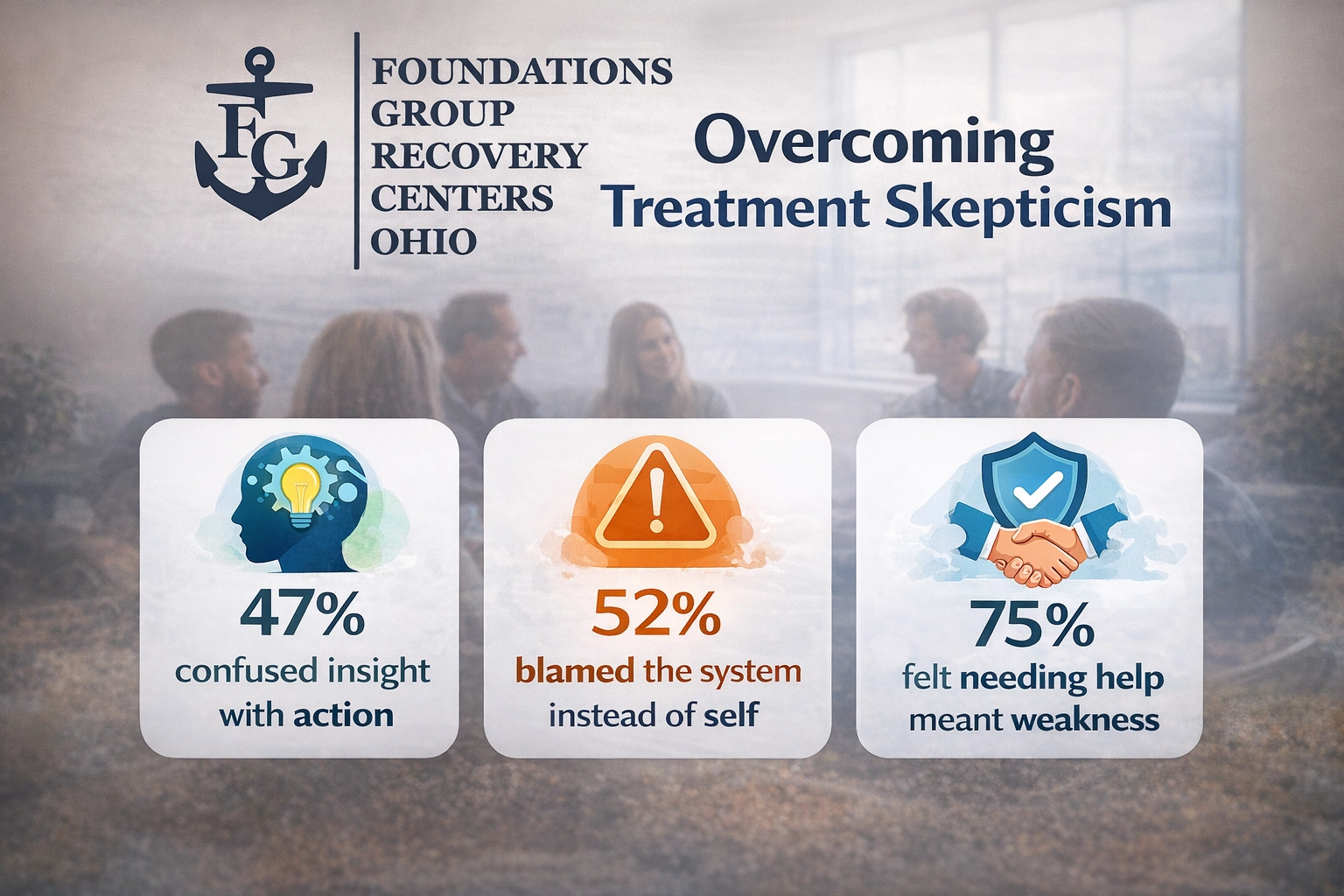
I Blamed the System Instead of Looking in the Mirror
When I relapsed, my first thought wasn’t, “I didn’t fully engage.”
It was, “That place didn’t work.”
It’s easier to blame a structure than confront your own resistance.
I told people the program was too rigid. Or not individualized enough. Or too focused on group. I built a case against it.
What I didn’t mention? I skipped calls. I half-did assignments. I filtered what I shared so no one saw the full picture.
Structured daytime care isn’t magic. It’s a framework.
If you only bring half of yourself into it, you’ll only get half the result.
I Didn’t Want to Need Anyone
This was the real issue.
Needing help felt like weakness. I prided myself on independence. I handled things. I figured things out. I survived.
Addiction twists that instinct. It isolates you while convincing you you’re self-sufficient.
The idea of multi-day weekly treatment, group accountability, check-ins — it felt suffocating.
But here’s what I learned the hard way:
Independence is powerful. Isolation is deadly.
There’s a difference.
When I finally admitted I couldn’t muscle through this alone, something shifted. Not dramatically. Just enough to crack the armor.
And through that crack, support started to land.
The Second Time, I Shut Up and Participated
There wasn’t a cinematic turning point. No dramatic intervention. Just exhaustion.
Exhaustion from relapsing. From pretending I was fine. From rebuilding the same mess twice.
When I went back, I made one quiet decision: I wasn’t going to outsmart it this time.
I was going to follow directions.
Not blindly. Not passively. But willingly.
I spoke honestly instead of strategically.
I admitted cravings instead of minimizing them.
I asked for help before things escalated.
I stopped trying to be impressive.
That’s when things began to change.
Cynicism Felt Intelligent — But It Was Just Fear
Skepticism can be healthy. Blind faith isn’t the goal.
But I wasn’t skeptical. I was cynical.
Cynicism gave me distance. It kept me from being disappointed. If I never fully believed in the process, I could never be let down by it.
It’s a clever defense mechanism.
But healing requires proximity. It requires letting something in close enough to affect you.
Cynicism is like criticizing umbrellas in a storm while refusing to open one. You can be technically correct about their flaws and still end up soaked.
I had to risk disappointment to experience change.
Being “Different” Was My Favorite Excuse
I told myself I wasn’t like the others.
My background was different. My stress was different. My trauma was different. My personality was different.
There’s always a way to frame yourself as the exception.
But addiction doesn’t care how unique your resume is.
In rooms across Columbus, Ohio, I sat with people whose lives looked nothing like mine on paper — and yet the patterns were identical.
Denial. Bargaining. Isolation. Rationalization.
I wasn’t special. I was struggling.
That realization didn’t shrink me. It freed me.
Because if I wasn’t uniquely broken, maybe I wasn’t uniquely hopeless either.
What I Misunderstood About Confidence
I thought confidence meant not needing treatment.
I thought it meant white-knuckling through urges and proving I could self-regulate without help.
Now I see confidence differently.
Confidence is walking back into a room you once dismissed and saying, “I was wrong.”
Confidence is admitting you need support and choosing it anyway.
Confidence is surrendering your ego in order to protect your life.
In recovery communities throughout Franklin County, Ohio, I’ve seen more strength in people asking for help than I ever saw in myself pretending I didn’t need it.
That changed me.
The Hard Truth: It Didn’t “Not Work” — I Didn’t Work It
That sentence stung the first time I admitted it.
But it was also liberating.
Because if the issue was my engagement, then I had control over the outcome this time.
That doesn’t mean every program is perfect. Fit matters. Environment matters. Support style matters.
But participation matters more.
When I stopped performing insight and started practicing change, the framework started holding me up instead of feeling like it was holding me back.
That’s the shift.
If You’re Thinking, “I Already Tried That”
Let’s talk honestly.
Maybe you did try. Maybe you showed up. Maybe you felt unseen. Maybe you left discouraged.
That’s real.
But ask yourself this, gently:
Were you open — or were you guarded?
Were you honest — or were you managing your image?
Were you teachable — or were you trying to be impressive?
You don’t need blind optimism to go back.
You need a slightly different posture.
Less commentary.
More curiosity.
Less proving.
More practicing.
You don’t have to believe it will work.
You just have to stop proving that it won’t.
FAQs for the Treatment Skeptic
What if I’m genuinely smarter than the average program?
Intelligence isn’t the barrier. Ego often is.
Programs aren’t designed to challenge your IQ. They’re designed to interrupt patterns. You can be brilliant and still need structure, accountability, and support.
Being smart doesn’t immunize you against addiction.
How do I know if it was the wrong program or my resistance?
Ask yourself how fully you engaged.
Did you speak openly about cravings?
Did you follow through outside of sessions?
Did you reach out before slipping?
If the answer is “sometimes” or “not really,” there may be room to approach it differently.
If you truly felt unheard or unsupported, exploring a better fit matters. Both can be true.
Isn’t it embarrassing to go back?
It can feel that way.
But embarrassment fades. Regret lingers.
The people who matter in recovery spaces understand relapse. They understand hesitation. They understand pride.
Going back isn’t a public failure. It’s a private decision to fight again.
What if I’m tired of trying?
That’s valid.
Trying is exhausting when you feel like you keep falling short.
But exhaustion isn’t proof that change is impossible. It’s often proof that you’ve been carrying too much alone.
Sometimes the next step isn’t trying harder.
It’s trying differently.
What if I still feel skeptical?
You’re allowed to.
You don’t have to walk in convinced. You don’t have to be enthusiastic.
Just be willing to experiment with humility.
That’s enough to start.
I thought being the smartest person in the room would protect me.
It didn’t.
What protected me was humility. Participation. Willingness.
If you’re tired of reliving the same cycle, maybe it’s not about finding a smarter argument.
Maybe it’s about finding a steadier foundation.
Call (888)501-5618 or visit our Opiate addiction Treatment services in Ohio to learn more.