You walked out the door. Maybe not literally—but emotionally, mentally. One day you stopped coming to group. You ignored a call from your therapist. You meant to reschedule. Then you didn’t.
And now, you’re reading this. Which means some part of you is wondering:
“Can I go back?”
The short answer: Yes.
You don’t need to justify the gap. You don’t need to explain the silence. Life happens. Crises happen. Avoidance happens. Ghosting happens. You’re not the only one—and you’re not disqualified because of it.
The first week back in an Intensive Outpatient Program (IOP) can feel strange. But it can also be one of the most meaningful choices you make.
At Foundations Group Recovery Center in Upper Arlington, OH, we’ve helped many clients walk back through those doors—some with confidence, most with fear—and we’ve never once regretted holding the door open.
Step 1: Know That You’re Not Starting From Scratch
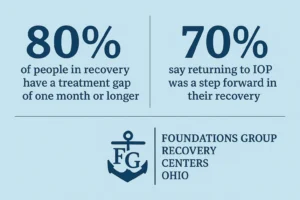
Whether it’s been a week, a month, or more since you left IOP, your progress isn’t erased. You’re not going back to square one. You’re picking up from where you left off—with new awareness, maybe more humility, definitely more realness.
Recovery isn’t linear. It’s layered. And leaving treatment, while it may feel like failure, is often part of the process for many people. Sometimes it takes a break to realize what was working, what wasn’t, and what you really need.
Coming back is a step forward—not a rewind.
Step 2: Don’t Wait Until You “Feel Ready”
Let’s be honest—most people never feel ready to return to treatment. That perfect-feeling moment where everything aligns and you’re totally confident in your decision? It rarely comes.
Come back messy. Come back scared. Come back uncertain. But come back.
Your nervous system might be screaming “not again.” That’s okay. Courage doesn’t feel good at first. It feels awkward. Vulnerable. Exposed.
But it also leads somewhere.
The Foundations team is here to help you steady that discomfort, not judge it.
Step 3: Expect the First Few Days to Be Weird—Then Better
The first group might feel uncomfortable.
You may be tempted to over-explain why you left. Or to shrink yourself down and hope no one notices. Or to just say nothing at all.
All of that is normal.
Most people in group have stepped away from something at some point—IOP, therapy, support meetings, medications. You’re not the only one. You’re not even the rare one.
By the end of your first or second day back, something shifts. You recognize a voice in group. You catch yourself nodding. You say something honest. And you remember why you started.
Step 4: Let Your Team Recalibrate Your Plan
The version of you who started IOP isn’t the same as the version walking back in. You’ve lived more life. Maybe relapsed. Maybe learned something the hard way.
Your care plan should reflect that.
At Foundations Ohio, returning clients don’t just “plug back in.” We reassess your goals, update your treatment needs, and help you feel seen as you are now—not as you were before.
Maybe you need more trauma support. Maybe your depression has deepened. Maybe you’re dealing with family fallout, housing stress, or shame you didn’t know you were carrying last time.
All of that belongs here.
Step 5: Give It One Honest Week
Make a deal with yourself: stay one full week. Show up for five days. Let it be hard. Let it be boring. Let it be emotional.
Just stay.
By the end of that week, you’ll have more data than fear. You’ll know:
- What’s different this time
- What actually helps you feel grounded
- What support still feels confusing or overwhelming
- Whether you’re ready to keep going
That one week can make all the difference between spiraling out again and finding your footing again.
Step 6: Be Honest in Group—But Go at Your Pace
Group therapy can feel intimidating when you return. You might worry:
- Will they ask why I left?
- Will I be judged?
- Will I feel like I don’t belong anymore?
The answer? Probably not. Most people won’t press. If they do, you’re allowed to say, “It got hard. I’m here now.”
You don’t have to say everything. Just say something true. Even if it’s small.
Sometimes the most powerful re-entry statement is: “I didn’t think I could come back. But I did.”
Step 7: Don’t Let Shame Drive the Narrative
You may feel like you let people down—your therapist, your group, yourself.
But shame is not a reliable narrator. It doesn’t tell the whole story.
What’s also true is that you made a hard decision to return. That matters. That’s strength. Not weakness.
At Foundations Group Recovery Center, whether you’re returning to IOP in Franklin County, Ohio or nearby in Upper Arlington, our job is to create safety—not shame.
We’ve seen dozens of clients return after ghosting. We don’t take it personally. We take it seriously.
FAQs: Returning to an IOP After Leaving or Ghosting
Can I really come back if I ghosted?
Yes. Foundations welcomes returners without judgment. We know ghosting often means something got overwhelming. You don’t need to apologize to return.
Do I have to start from the beginning again?
Not usually. We’ll reassess where you’re at emotionally, mentally, and practically. You may resume from where you left off or revise your plan to better fit your current needs.
Will group members know I left?
Some might notice, but most won’t make a big deal of it. Clients come and go. What matters is that you’re back.
What if I used again while I was gone?
You’re still welcome. We’ll help you safely reintegrate, and support you whether you’re sober again or still using. Honesty is always more important than “clean time.”
Does insurance cover re-entry?
Often, yes—especially if your previous authorization wasn’t completed. Our admissions team can verify your benefits and help with any necessary steps.
How do I explain my return to family or work?
We can help with that. Our clinicians can write letters, support leave paperwork, or guide you in setting boundaries with loved ones about what you choose to share.
You Don’t Have to Earn the Right to Come Back
You didn’t fail. You didn’t ruin your chance. You stepped away. And now you’re considering stepping back in.
That’s not failure—it’s resilience.
Call (888) 501-5618 or visit our Intensive Outpatient Program page to learn more about IOP services in Scottsdale, AZ.
We saved your seat. It’s still here. You are still welcome.