Everyone celebrates the first year.
The chips. The hugs. The proud phone calls to family. The sense that something impossible finally happened.
But somewhere after the applause fades, a quieter experience can show up for some people in recovery.
A strange kind of emotional distance.
Not relapse. Not crisis. Just a subtle feeling that something inside hasn’t fully caught up yet.
Many people rediscover deeper healing through programs like alcohol recovery support in Ohio after realizing sobriety alone didn’t answer every emotional question they were carrying.
And the truth is, nobody really talks about this stage.
The Part Nobody Mentions After the Milestones
Early recovery gets the spotlight.
The courage it takes to stop.
The withdrawal.
The rebuilding of daily life.
But long-term sobriety has its own emotional terrain, and it’s often quieter and harder to describe.
Friends assume everything is better now.
Family finally relaxes.
People around you move on from the crisis.
Meanwhile, inside, you might notice something like this:
- motivation feels lower than expected
- emotional connection feels harder
- life feels stable but not meaningful
- you miss the intensity that substances used to bring
That doesn’t mean you want to go back to using.
It just means sobriety uncovered deeper parts of life that still need attention.
Sobriety Removes the Chaos — But It Also Removes the Distraction
Substances don’t only numb pain.
They create a constant sense of urgency and stimulation.
Everything becomes louder:
the highs, the crashes, the drama, the survival mode.
Once that disappears, life can suddenly feel quiet.
For some people, that quiet is peaceful.
For others, it’s uncomfortable.
Because the quiet allows things to surface that were previously buried:
- grief
- unresolved trauma
- identity confusion
- old relationship wounds
- emotional habits built during years of survival
This stage of recovery can feel confusing because technically things are “better.”
But emotionally, the work is still unfolding.
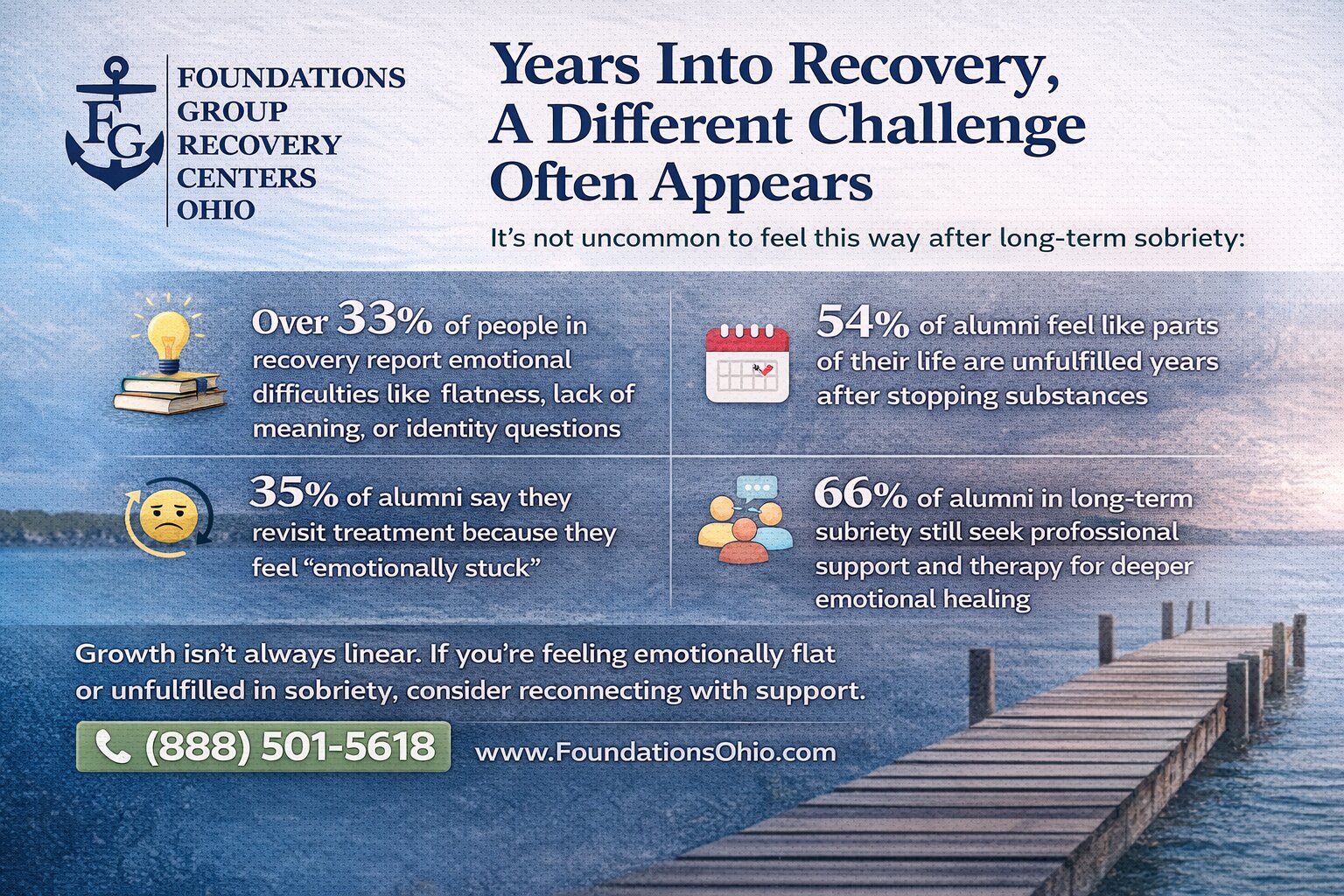
The “Flat Middle” Many Alumni Experience
There’s a phase in long-term recovery that people rarely talk about openly.
Not relapse.
Not early sobriety.
Just a middle stage where life feels steady—but not yet deeply fulfilling.
Some alumni describe it like this:
“I’m grateful to be sober. I just thought I’d feel more alive by now.”
Others describe a kind of emotional fatigue.
They did everything right.
They stopped using.
They rebuilt their lives.
They repaired relationships.
But the internal spark they expected hasn’t fully returned yet.
This “flat middle” doesn’t mean recovery failed.
In many cases, it simply means deeper healing is beginning.
Why Long-Term Stability Can Still Feel Unsettling
There’s a common assumption that sobriety solves everything.
But sobriety actually does something more complicated.
It clears the noise.
Once the chaos is gone, the real emotional landscape becomes visible.
That landscape might include things like:
Identity questions
Who are you now that addiction isn’t running your life?
Many people realize they built entire identities around survival. Without that constant pressure, they suddenly have to redefine themselves.
Emotional skills that never fully developed
Substances often became the primary coping strategy.
After years of sobriety, people sometimes realize they still need to learn new ways to handle stress, anger, or loneliness.
Relationship changes
Relationships shift when someone gets sober.
Some connections deepen. Others fade. Some need rebuilding entirely.
That adjustment period can last longer than people expect.
Why Some Alumni Revisit Structured Support
There’s a misconception that returning to structured care means something went wrong.
In reality, many long-term alumni choose to reconnect with support simply because they want more depth in their recovery.
For example, someone might explore:
- structured daytime care to process long-held emotional patterns
- multi-day weekly treatment while maintaining work and family life
- therapy focused on trauma or identity rebuilding
These environments give people space to focus on emotional growth in ways everyday life doesn’t always allow.
For some individuals, reconnecting with substance use treatment Ohio programs becomes less about crisis and more about continued personal development.
It’s similar to how athletes return to training even after reaching a high level of performance.
Growth doesn’t stop just because stability arrived.
The Identity Shift That Happens Years Into Recovery
Addiction dominates identity for a long time.
Everything revolves around using, hiding, recovering, or surviving.
When that chapter ends, many people expect a clear new identity to appear immediately.
But identity rebuilds slowly.
It often involves exploring things that were neglected for years:
- creativity
- career direction
- spirituality
- hobbies and passions
- emotional intimacy
That process takes time.
Sometimes a lot more time than people expect.
And during that transition, it’s normal to feel uncertain.
Stability Isn’t the End of Recovery
One of the biggest misconceptions about sobriety is that stability equals completion.
In reality, stability is more like a foundation.
Once your life is no longer dominated by substance use, you finally have space to address deeper questions about meaning, connection, and purpose.
For some people, that journey includes reconnecting with professional support through alcohol addiction treatment programs Ohio that focus on long-term emotional recovery.
Others continue through peer support, therapy, or personal exploration.
The important part is recognizing that recovery doesn’t end at the one-year mark—or even the five-year mark.
It evolves.
The Quiet Truth Many Alumni Discover
Here’s something many people in long-term recovery eventually realize:
Sobriety doesn’t instantly create a perfect life.
What it does is create the possibility of building one.
And that building process can include moments of uncertainty, emotional flatness, and reevaluation.
Those moments aren’t signs that something is wrong.
Often, they’re signals that a deeper layer of healing is beginning.
If you’ve ever wondered whether other people in recovery feel this way too, the answer is yes.
More often than you’d think.
Frequently Asked Questions
Is it normal to feel emotionally flat after years of sobriety?
Yes. Many people experience periods of emotional flatness or disconnection after long-term sobriety. Early recovery focuses heavily on stopping substance use, but deeper emotional healing can take much longer.
These phases often signal that the mind is adjusting to a new normal without substances.
Does feeling stuck mean recovery isn’t working?
Not at all.
Feeling stuck can actually mean your recovery is evolving. Once the immediate crisis of addiction is gone, deeper emotional patterns sometimes surface. Addressing those layers can lead to stronger and more meaningful long-term stability.
Why do some people return to treatment years later?
Many people return to structured support not because they relapsed, but because they want to continue growing.
Programs that offer structured daytime care or multi-day weekly treatment allow alumni to focus on deeper emotional work while maintaining daily responsibilities.
Can long-term recovery still involve therapy or structured support?
Absolutely.
Recovery is an ongoing process, and many people continue therapy or structured support for years. Just like physical health or career development, personal growth benefits from continued attention and guidance.
What should I do if I feel disconnected in sobriety?
Start by talking about it.
Many people feel isolated because they assume they’re the only ones experiencing these emotions. Sharing honestly with trusted peers, counselors, or recovery professionals can help reconnect you to purpose and direction.
Long-term recovery doesn’t mean the work is over. It means you finally have the stability to do deeper work that once felt impossible.
If you’re feeling disconnected or wondering what the next step in recovery looks like, support is available.
Call (888)501-5618 or visit our substance use treatment Ohio, alcohol addiction treatment Ohio to learn more about our substance use treatment Ohio, alcohol addiction treatment services in Ohio.