The moment after a diagnosis is rarely dramatic.
More often, it’s quiet.
A doctor finishes explaining things. The room settles. And suddenly you’re left with a question that feels bigger than anything that came before: What happens now?
Many people who walk through our doors have stood in that exact moment unsure, scared, and wondering if treatment will change who they are.
If you’re looking at your options right now, exploring opiate addiction treatment in Ohio, we want you to know something simple first: you’re not the only one feeling this way.
The Fear That Comes First
A lot of people expect relief after a diagnosis.
Instead, many feel fear.
Not just fear of withdrawal or the future but fear of losing control of their own identity.
We hear questions like:
- “Will treatment change my personality?”
- “What if medication makes me feel numb?”
- “What if I can’t do this?”
These questions aren’t weakness. They’re honesty. And honesty is often the first real step toward healing.
The Moment People Decide to Try
It rarely happens because someone suddenly feels brave.
More often, it happens because the alternative feels heavier.
One client once told us:
“I didn’t come in because I was confident. I came in because I was tired of waking up afraid of my own life.”
Sometimes the decision to get help isn’t bold.
Sometimes it’s simply quiet courage.
What Early Treatment Actually Feels Like
Many people imagine treatment as a place where they’ll be forced into changes they aren’t ready for.
The reality tends to look different.
Early days are often about slowing things down.
You meet people who understand what opioids do to the brain and the body. You talk through options. You move step by step sometimes hour by hour learning how to stabilize and breathe again.
Nothing is rushed.
Nothing is forced.
Recovery, when done right, respects your pace.
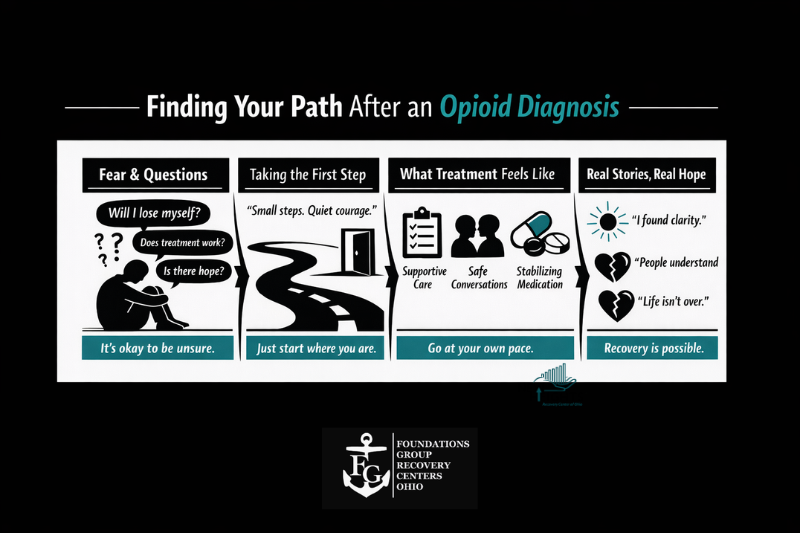
The Stories That Change People’s Minds
When someone first arrives, they often keep their distance. They watch. They listen.
And then they start hearing stories.
Someone who thought medication would erase their personality but instead felt clearer than they had in years.
Someone who came in terrified of judgment and discovered a room full of people who understood.
Someone who believed their life was already ruined and realized it was only paused.
Recovery becomes real when people see someone sitting across the room who once felt exactly the same.
When Medication Becomes Less Scary
One of the biggest fears we hear is about medication.
People worry it will replace one dependency with another, or dull their emotions.
But what many discover is something different: medication can create stability.
Not sedation.
Not personality loss.
Just a steadier foundation—so therapy, connection, and daily life can start working again.
For many, it becomes a bridge back to themselves.
What Hope Actually Looks Like
Hope in recovery doesn’t arrive as fireworks.
It shows up quietly.
It’s the first full night of sleep in months.
The first honest conversation with family.
The moment someone realizes they laughed and didn’t need opioids to do it.
These moments stack up slowly.
But over time, they build something powerful: belief.
You Don’t Have to Figure This Out Alone
If you’ve recently received an opioid diagnosis, it’s normal to feel uncertain about what treatment means for your life.
You don’t have to decide everything today.
You just have to take the next step.
Call 888-501-5618 or visit our page about substance use treatment Ohio, opiate addiction treatment Ohio to learn more about your options and speak with someone who understands what you’re going through.