In early recovery, everything feels loud.
There are breakthroughs and breakdowns. Check-ins and sponsors. Meetings and milestones. People notice your growth. You feel seen, supported—even when it’s hard.
But years later, the volume lowers.
You’re still sober. Life looks stable. But inside? There’s a silence you can’t quite explain. The joy that came with early clarity has faded. The tools that once helped feel distant. You tell yourself you should feel grateful… but something’s missing.
As clinicians, we see this often. Long-term alumni of alcohol addiction treatment don’t necessarily relapse—but they disconnect. From support. From community. From themselves.
If that’s where you are, you’re not alone. And you don’t have to stay stuck.
At Foundations Group Recovery Center in Upper Arlington, we hold space for long-term sobriety that doesn’t feel good anymore—and help people reconnect with the life they worked so hard to build.
It Doesn’t Always Start With a Drink
Drift is subtle. It often begins with small things:
- Skipping a meeting because of work
- Forgetting to call your sponsor back
- Pushing down emotions because “you should be over this by now”
- Brushing off check-ins with “I’m fine”
There’s no crisis. No outward signs of danger. But the inward disconnection grows.
You’re still sober—but not centered. Still functioning—but not flourishing.
And the hardest part? It can feel like there’s no space to say, “I don’t feel connected to my recovery anymore.”
We want to say this clearly: you’re allowed to name that. It doesn’t mean you failed. It means you’ve grown—and you’re ready for more.
What Clinicians See When Alumni Drift
We’ve walked with hundreds of people from day one of sobriety through year ten—and here’s what we’ve learned:
Drift doesn’t usually come from defiance. It comes from fatigue.
Over time, the identity of “being in recovery” can start to feel outdated. You’re managing work, relationships, bills. You’ve proven you can live sober.
But then life shifts:
- A job loss
- A divorce
- A grief that hits unexpectedly
- An injury, move, or emotional plateau
And suddenly, the systems that held you up feel distant.
As clinicians, here are a few quiet red flags we often notice:
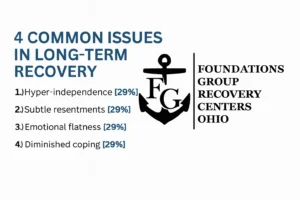
- Hyper-independence: You’re doing everything yourself and feel resistant to help—even though you’re exhausted.
- Subtle resentments: About meetings, about friends who don’t get it, about how “different” you feel in your own life.
- Emotional flatness: Not dramatic sadness—just a lingering sense of “meh” that never lifts.
- Diminished coping: You find yourself zoning out more, overworking, eating emotionally, or using social media as a buffer.
- Irritation toward support: Feeling annoyed at the idea of going to a group or “having to” talk about feelings again.
None of these mean relapse is inevitable. But they’re worth listening to. They’re your body and spirit telling you: you might be overdue for reconnection.
Why Long-Term Sobriety Can Feel Flat
In early recovery, every win feels huge. You remember your first month sober. First holidays without drinking. First time crying in front of someone without shame.
That’s a powerful stage of life. But eventually, the high of “firsts” fades.
And what’s left is ordinary life—which can feel… underwhelming.
Add to that the pressure of appearing like a “model of recovery,” and many long-term alumni end up performing wellness instead of living it. They go from deeply supported to silently performing okay-ness.
But sustained recovery was never meant to be performance. It was always meant to be relationship—with yourself, with others, with something greater.
If you’ve lost access to that spark, it doesn’t mean you’ve lost your way. It just means you’ve outgrown your current tools.
Returning to Support Doesn’t Mean Starting Over
This is the part most people misunderstand.
Coming back to treatment—or even just re-engaging with a therapist, support group, or alumni program—doesn’t mean you’re back at square one.
It means you’re choosing depth over drift.
At Foundations Group Recovery Center, we’ve designed care options specifically for long-term alumni. That might look like:
- A few one-on-one sessions with a clinician who knows long-term recovery isn’t always joyful
- A seasonal alumni check-in track to help you recalibrate before you slip into emotional shutdown
- Therapy for life transitions—new jobs, divorce, loss, aging
- Alumni groups that center emotional honesty over platitudes
This is recovery for people who’ve already done the big work—but want to keep growing, not just staying sober.
Your Recovery Deserves Maintenance, Too
You wouldn’t expect a house to stay structurally sound for 10 years without maintenance.
The same goes for recovery.
Even if your foundation is strong, life will weather it. That doesn’t mean it’s weak. It means it’s alive—and deserves tending.
Whether you’re looking for alcohol addiction treatment in Columbus, Ohio, in Franklin County, or close to Scottsdale, AZ, we’re here. And we understand how to support people who aren’t in crisis—but aren’t fully okay either.
This Isn’t About Relapse. It’s About Renewal.
There’s nothing wrong with you if long-term sobriety feels hollow right now. It happens. More often than most people admit.
At Foundations, we don’t treat your drift like danger. We treat it like a call back home.
You don’t need a full program. You don’t need to explain why you disappeared. You just need a space where you can say, “I think I need a reset.”
We’ve made that space.
FAQs for Long-Term Alumni Feeling Disconnected
I’m not drinking. Why would I reach out?
Because being sober doesn’t mean you’re emotionally well. If you’re feeling numb, flat, or disconnected, that’s a valid reason to reconnect.
Will I have to do a full treatment program again?
No. We offer alumni-focused care paths—brief refreshers, therapeutic sessions, group options—that respect your history and meet your current needs.
What if I feel embarrassed to come back?
There’s nothing to be embarrassed about. Coming back shows courage and self-awareness. At Foundations, we welcome alumni with the same warmth we gave you on day one.
Can I just talk to someone first?
Absolutely. You can call with zero pressure to commit. We’ll listen, help you assess what’s going on, and offer support options that feel right for you.
You’re not starting over. You’re returning to yourself.
Call (888)501-5618 to learn more about our alcohol addiction treatment services in Upper Arlington, OH—including alumni support, emotional reset options, and long-term care you don’t have to earn.
The door was never closed. We’re still here. And so are you.