Something changes, and you can feel it.
Maybe it started with drinking. Then came the mood swings. The isolation. The version of your child you don’t quite recognize anymore.
When alcohol and mental health struggles start feeding each other, families often feel like they’re chasing smoke. If you’re trying to understand what’s happening — and what help might actually look like — you’re not alone.
Many families begin exploring options like alcohol addiction treatment in Ohio after realizing that drinking isn’t the only issue. Something deeper is happening, and it needs attention from more than one angle.
When Alcohol Becomes a Way to Cope
For many young adults, alcohol starts as a social thing. Weekends. Parties. A way to relax.
But sometimes it slowly becomes something else.
Alcohol can become a way to quiet anxiety, numb depression, or push down overwhelming emotions. It’s not always obvious at first — especially in college-age adults who are surrounded by drinking culture.
What parents often notice first isn’t the drinking itself.
It’s the changes.
Your child might seem emotionally distant. Quick to anger. Or exhausted in a way that sleep doesn’t fix. The drinking becomes part of a bigger picture that feels increasingly unstable.
Why Mental Health and Alcohol Often Show Up Together
Alcohol doesn’t exist in a vacuum.
Many young adults who drink heavily are also struggling with things they don’t have words for yet — anxiety, depression, trauma, or emotional overwhelm. Alcohol can feel like relief in the moment.
But the relief doesn’t last.
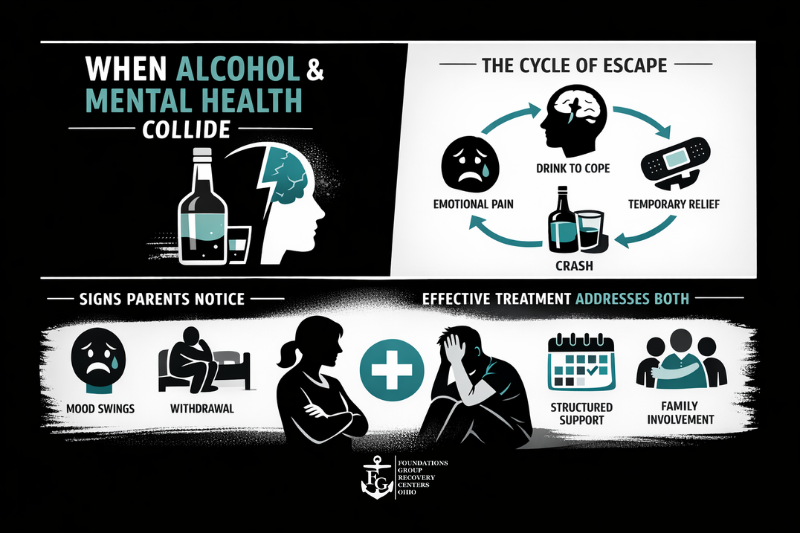
Alcohol can intensify mood swings, deepen depression, and make anxiety worse the next day. Over time, it becomes a cycle:
- Emotional pain
- Drinking to cope
- Temporary relief
- Bigger emotional crash
The cycle tightens slowly, and families often feel like they’re watching their child slip further away.
The Signs Parents Often Notice First
Parents usually arrive at this realization gradually. Rarely is there one dramatic moment.
Instead, there are patterns that start to worry you.
You might notice:
- Drinking that seems tied to emotional breakdowns
- Sudden personality shifts
- Withdrawal from friends, school, or family
- Sleep problems or constant exhaustion
- Anger or defensiveness when drinking is mentioned
And underneath it all is a quiet fear: Something is really wrong, and I don’t know how to help.
That fear is more common than you think.
Why Treating Only the Drinking Often Isn’t Enough
When alcohol misuse is connected to deeper emotional pain, simply telling someone to stop drinking rarely solves the real problem.
Imagine trying to silence a fire alarm without putting out the fire.
If the anxiety, depression, or unresolved trauma stays untreated, alcohol often becomes the coping tool again. Not because someone wants to keep drinking — but because they don’t yet have another way to survive what they’re feeling.
Effective care often focuses on both sides of the struggle at the same time: stabilizing alcohol use while helping the person understand and manage what’s happening inside.
What Healing Often Looks Like for Young Adults
Parents sometimes worry that treatment means punishment or loss of freedom.
In reality, many programs are designed to help young adults rebuild stability step by step.
This might include:
- Structured daytime care that provides support during the hardest parts of the day
- Multi-day weekly therapy that helps young adults develop coping tools
- Mental health counseling alongside addiction support
- Family involvement to repair communication and rebuild trust
Healing rarely happens all at once. But when the right support is in place, many young adults begin to rediscover parts of themselves that alcohol had buried.
Confidence. Motivation. Hope.
What Parents Need to Hear Most
If you’re reading this as a parent, you may be carrying a quiet weight.
Questions like:
Did I miss something?
Did I do something wrong?
How do I help without pushing them away?
Here’s what we want you to know.
Parents don’t cause addiction or mental health crises. And loving your child enough to look for answers is not a failure, it’s one of the strongest things you can do.
Sometimes the most powerful step is simply reaching out and learning what support could look like.
Because even when things feel chaotic or frightening right now, recovery is possible.
Young adults can stabilize. They can learn new ways to cope. And families can heal too.
If you’re worried about your child and want to understand what help might look like, compassionate guidance is available.
Call (888)501-5618 or visit our alcohol addiction treatment services to learn more about our substance use treatment Ohio, alcohol addiction treatment services Ohio.