
I remember the confidence.
Ninety days sober. My mind was finally clear. My family trusted me again. I was sleeping through the night instead of waking up in panic at 3 a.m.
And somewhere inside my head, a quiet belief started forming:
I think I’ve got this.
Looking back now, I understand that moment differently. It wasn’t strength.
It was the beginning of distance.
The same support systems that helped me rebuild my life—like the ones people often start through alcohol addiction treatment—were slowly becoming things I thought I didn’t need anymore.
At the time, though, it felt like progress.
Like graduation.
The Moment Confidence Started Replacing Connection
Early recovery can feel intense.
You’re surrounded by structure. People are checking in. You’re talking about things you’ve buried for years. Every day feels like a small victory.
But when you leave that environment, something subtle changes.
Life gets quiet again.
For me, quiet turned into confidence. And confidence slowly turned into independence.
I started thinking things like:
- I don’t need to talk about this stuff every week anymore.
- I’ve already learned the tools.
- I should be able to handle life on my own now.
None of those thoughts sounded dangerous.
In fact, they sounded healthy.
But underneath them was something I didn’t recognize yet: distance from the very things that helped me stay grounded.
How Support Slowly Slipped Away
It didn’t happen overnight.
There wasn’t some big moment where I announced, “I’m done with recovery.”
Instead, support faded the way habits fade—quietly and gradually.
A meeting missed here. A phone call ignored there.
Then I skipped therapy once because work got busy.
Then again the next week because I felt fine.
Before long, weeks had passed without any real connection to recovery.
And the strange thing was… my life still looked good.
I had a job again. I was paying bills. I was showing up for family events.
From the outside, nothing looked wrong.
But inside, something important was disappearing.
The Myth That Sobriety Should Eventually Run on Autopilot
One belief sat at the center of everything.
I thought recovery was supposed to get easier and easier until it didn’t require much attention anymore.
Like riding a bike.
Once you learn it, you never forget.
But recovery doesn’t work that way.
Life keeps happening.
Stress shows up in new forms. Relationships get complicated. Old emotions you used to drink over start resurfacing in ways you didn’t expect.
Without support, those emotions don’t disappear.
They just sit quietly in the background, waiting for the right moment to grow louder.
And when that moment arrived in my life, I wasn’t ready for it.
The Restlessness I Couldn’t Explain
The first sign something was wrong wasn’t a craving.
It was restlessness.
I started feeling irritated more often. Little things set me off. My patience shrank.
I remember thinking:
Why am I this angry all the time?
The truth was simple, but I couldn’t see it yet.
I had slowly disconnected from the places where I used to process those emotions.
Without that outlet, everything built up inside.
The pressure didn’t explode immediately.
It just sat there.
Growing.
The Thoughts That Came Back
Eventually, the old thoughts returned.
Not loudly. Not dramatically.
Just quiet little ideas that slipped into my mind during stressful moments.
Maybe one drink wouldn’t matter.
I’ve been sober long enough.
I know what I’m doing now.
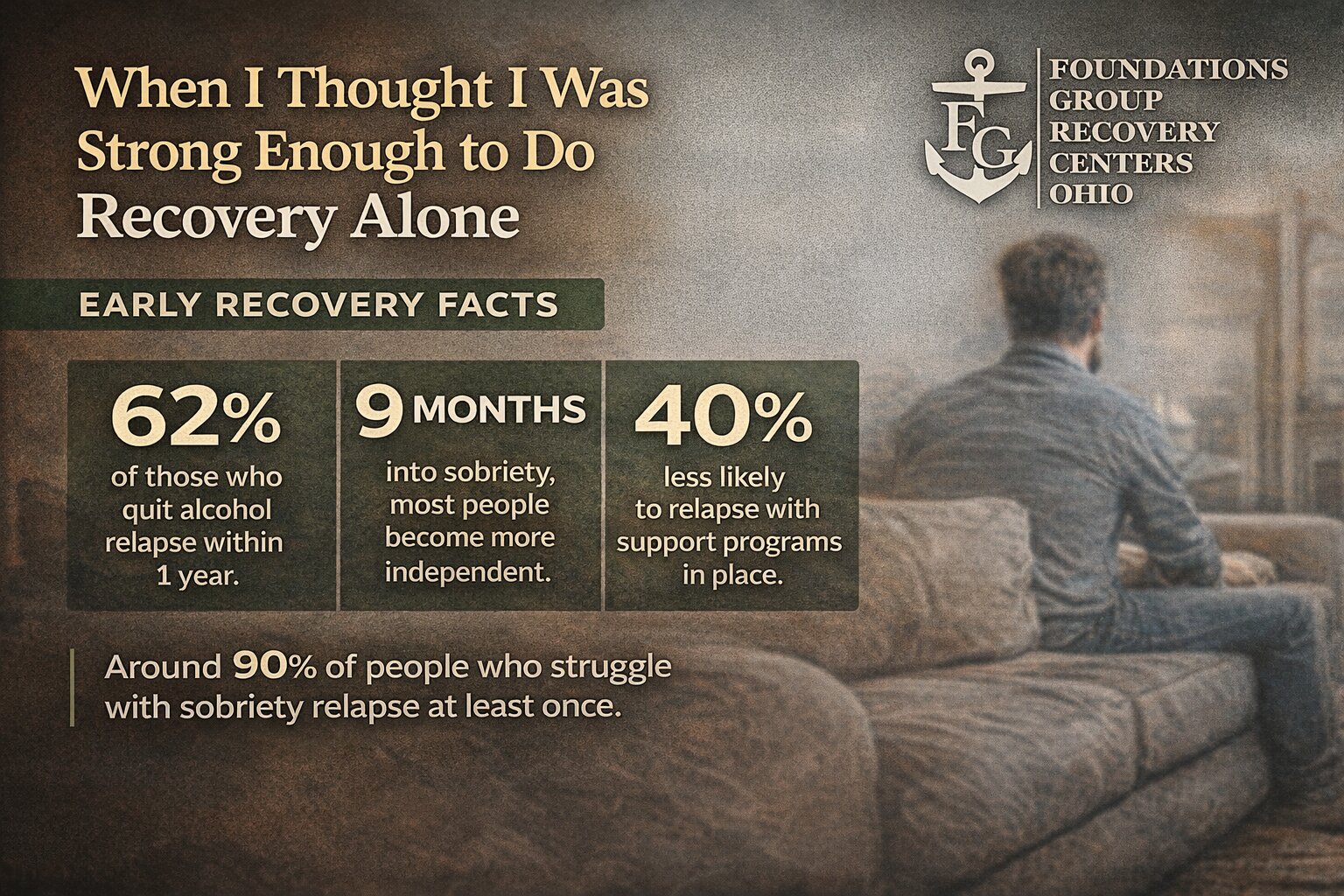
That’s the dangerous thing about distance from recovery.
Your brain slowly starts rewriting the past.
It forgets the worst nights. It forgets the panic, the shame, the damage.
Instead, it remembers the relief alcohol once seemed to offer.
And if you’re alone with those thoughts long enough, they start sounding reasonable.
The Slip That Followed
When I eventually drank again, it wasn’t dramatic.
There was no huge meltdown. No rock-bottom moment.
It was quiet.
Almost ordinary.
And that’s what made it so unsettling.
I remember sitting there afterward thinking:
How did I end up back here?
The answer wasn’t complicated.
It wasn’t because I didn’t know better.
It was because I slowly disconnected from the support that helped me remember why sobriety mattered in the first place.
The Shame That Comes After
If you’ve relapsed before, you probably know this feeling.
It’s not just disappointment.
It’s shame.
The voice that says:
You already knew what to do.
You ruined everything.
You should have been stronger than this.
For a while, I believed that voice.
I thought relapse meant I had failed recovery.
But eventually I started hearing a different perspective from people who had walked the same path.
They told me something simple:
Relapse isn’t the end of recovery.
It’s a signal that something important needs attention again.
And for me, that “something” was connection.
The Courage It Takes to Come Back
Walking back into recovery after slipping is one of the hardest things a person can do.
You’re carrying embarrassment. Doubt. Fear that people will judge you.
I remember sitting in my car before my first meeting back, debating whether to leave.
But when I walked in, something unexpected happened.
No one lectured me.
No one asked for explanations.
People simply said, “We’re glad you’re here.”
That moment changed everything.
Because it reminded me of something I had forgotten:
Recovery isn’t about perfection.
It’s about returning.
Sometimes reconnecting with professional support can help restart that process too. Programs designed for alcohol addiction treatment often help alumni rebuild stability and perspective when things begin to feel shaky again.
And that doesn’t mean starting over.
It means continuing the work.
The Lesson I Finally Understood
Today I look at recovery differently than I did back then.
I don’t see it as a phase of life.
I see it as a relationship.
A relationship with honesty. With support. With the people who help keep me grounded.
When that relationship weakens, things get harder.
When I stay connected, life stays manageable—even when it’s messy.
And the truth is, I don’t try to do this alone anymore.
Not because I’m weak.
Because I’ve already seen where isolation leads.
FAQ: Life After Early Sobriety
Is it common to stop attending meetings or therapy after early sobriety?
Yes. Many people begin to feel confident after several months of sobriety and slowly reduce their recovery routines. While confidence is a positive sign, staying connected to support can help maintain long-term stability.
Why do people relapse after months of doing well?
Relapse often happens when emotional stress builds up without support. Even after months of sobriety, life challenges can trigger old patterns if people feel isolated or disconnected from recovery resources.
Does relapse mean treatment didn’t work?
No. Relapse is often part of the recovery process for many people. It doesn’t erase the progress someone has made. Instead, it can highlight areas where additional support or renewed connection is needed.
How can someone rebuild recovery after slipping?
Rebuilding recovery usually begins with reconnecting to support—whether that’s therapy, peer groups, sponsors, or professional care. Taking small steps toward accountability and connection can help restore stability.
Is it normal to feel ashamed after relapse?
Yes. Shame is a very common reaction. But recovery communities and clinicians understand that setbacks happen. Many people return to recovery stronger because they’ve learned more about their triggers and needs.
You Don’t Have to Do This Alone
If you believed you didn’t need support anymore and things slipped, you’re not alone.
A lot of people in recovery pass through this exact moment.
The important thing isn’t whether you stumbled.
It’s whether you’re willing to reconnect.
Call (888)501-5618 or visit our alcohol addiction treatment services to learn more about our Alcohol addiction treatment services in Ohio.
Sometimes the strongest step in recovery isn’t pushing forward alone.
It’s reaching back toward the support that helped you stand in the first place. Whether you’re in Columbus, Franklin County, Upper Arlington, Foundations Ohio is nearby and ready to help.