You did the hard part. You stopped drinking. Maybe one year ago. Maybe five.
At first, everything changed quickly. Your body healed. Relationships slowly started coming back. Life felt clearer.
But somewhere along the way, the momentum slowed.
And now, on some quiet afternoon or late night, you might catch yourself wondering:
Why do I feel so… disconnected?
This phase surprises a lot of long-term alumni. Early recovery is loud and dramatic. Later recovery is quieter—and sometimes harder to understand.
Many people begin their journey through structured support like alcohol addiction treatment. That early phase focuses on stabilizing life and breaking the drinking cycle. But years later, recovery often asks deeper questions—about identity, purpose, and connection.
And that’s where the second chapter begins.
When the Big Changes Slow Down
The first year of sobriety is full of milestones.
You’re rebuilding your daily routine. Your body is adjusting. Your mind is clearer than it’s been in years. Every month feels like progress.
People notice the difference. You notice the difference.
But eventually, recovery stops feeling like a dramatic transformation and starts feeling like… normal life.
You wake up, go to work, handle responsibilities, maybe attend meetings occasionally. On paper, everything looks stable.
Yet emotionally, something might feel quieter than you expected.
Some alumni describe it like this:
- “I’m grateful to be sober… but something feels missing.”
- “I don’t feel the same urgency about recovery anymore.”
- “I thought life would feel bigger than this.”
That feeling isn’t failure. It’s a sign that recovery is moving into a deeper stage.
The Emotional Plateau No One Warns You About
Early sobriety is fueled by urgency. You’re protecting your life and rebuilding it at the same time.
But years later, that urgency fades.
What replaces it can sometimes feel like emotional flatness.
You might notice:
- Recovery routines feeling mechanical
- Less excitement around milestones
- A sense that you’re “going through the motions”
- Old emotional patterns resurfacing without alcohol involved
This stage can feel confusing because nothing is technically wrong. You’re sober. You’re functioning. Life is stable.
But stability alone doesn’t always create meaning.
Recovery eventually shifts from survival to self-discovery—and that transition can feel uncomfortable.
Why Long-Term Alumni Sometimes Feel Disconnected
There are a few reasons this phase is so common.
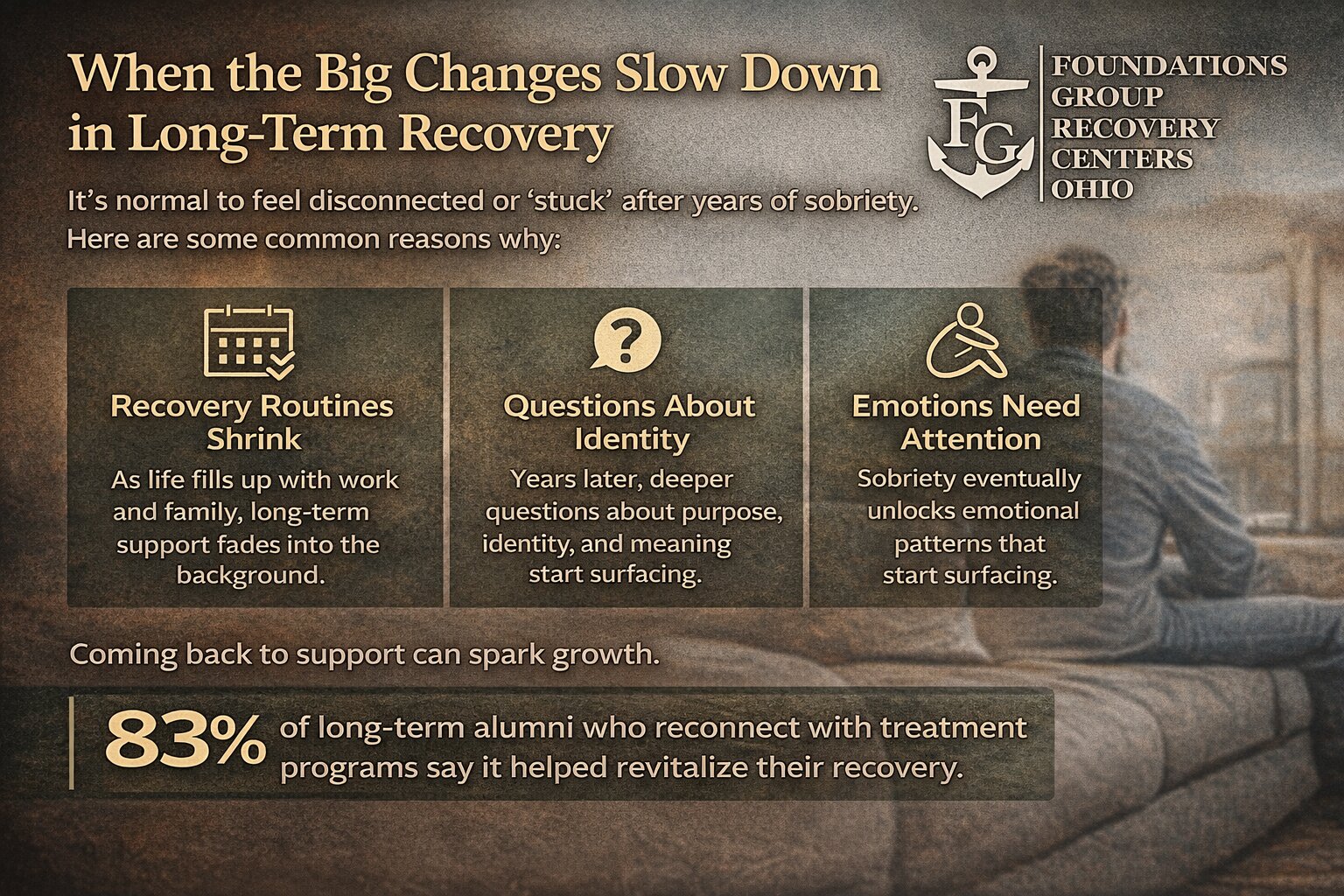
Life Gets Busy Again
Early recovery often includes strong routines—meetings, therapy, check-ins, accountability.
Over time, careers grow. Families expand. Schedules get full.
Recovery practices slowly shrink to make room for everything else.
Without realizing it, the connection that once supported your sobriety becomes quieter.
Identity Questions Start to Surface
During active drinking, life often revolves around alcohol.
When that disappears, it leaves space behind.
At first, that space fills with rebuilding: work, relationships, health. But later, deeper questions begin to show up:
- Who am I now that I’m sober?
- What actually gives my life meaning?
- What do I want the next ten years to look like?
Those questions can feel unsettling, especially if no one talks about them openly.
Emotional Work Evolves
The tools that help someone get sober aren’t always the same tools that help them grow long-term.
Early recovery often focuses on structure, boundaries, and accountability.
Later recovery might focus more on:
- emotional patterns
- unresolved trauma
- deeper relationship dynamics
- purpose and fulfillment
This shift can feel confusing because it requires a new kind of honesty.
The Second Chapter of Recovery
Many people think sobriety has a finish line.
In reality, it unfolds in chapters.
The first chapter is about stopping the damage. It’s about stabilization, safety, and learning how to live without alcohol.
The second chapter is different.
It’s about building a life that actually feels meaningful.
That might include:
- reconnecting with therapy or counseling
- exploring emotional patterns that drinking once masked
- rebuilding relationships at a deeper level
- discovering purpose beyond simply staying sober
For some alumni, reconnecting with structured support—even years later—helps unlock this next stage of growth. Programs focused on alcohol addiction treatment sometimes serve as a reset point, allowing people to revisit recovery with more experience and insight than they had the first time.
Signs You Might Be Entering This Phase
You don’t need to be struggling or close to relapse to notice this shift.
In fact, many long-term alumni who seek deeper support are doing relatively well on the surface.
Common signals include:
- Feeling emotionally flat despite stable sobriety
- Losing interest in recovery routines that once helped
- Feeling disconnected from recovery communities
- Wanting more purpose or direction in life
- Quietly wondering if something is missing
None of these signs mean you’re failing.
They often mean you’re ready for the next level of growth.
Why Reengaging With Support Can Help
One of the most common misconceptions about recovery is that once someone has years of sobriety, they should be able to manage everything alone.
But long-term recovery often benefits from periodic reconnection.
Think of it like maintenance.
Athletes revisit coaches. Professionals attend training. Relationships benefit from counseling.
Recovery works the same way.
Reengaging with experienced clinicians or structured support can help long-term alumni:
- process emotional challenges that surface years later
- reconnect with recovery communities
- rebuild motivation and meaning
- strengthen resilience during life transitions
For some people, returning to alcohol addiction treatment isn’t about crisis—it’s about continuing growth.
Recovery Isn’t a Straight Line
One of the biggest myths in recovery is that it moves forward in a perfectly straight line.
In reality, it moves in waves.
Some years feel expansive and hopeful. Others feel quiet and reflective.
Both phases are part of the process.
The key is recognizing when you need connection again—and giving yourself permission to seek it.
Long-term alumni often carry a lot of pride in their sobriety. That pride is deserved.
But recovery isn’t about proving you can do it alone.
It’s about continuing to build a life that feels honest, connected, and meaningful.
FAQ: Long-Term Sobriety and Feeling Stuck
Is it normal to feel disconnected after years of sobriety?
Yes. Many people experience an emotional plateau after long-term sobriety. Early recovery focuses on stability and survival, while later stages often bring deeper emotional and identity questions. Feeling disconnected doesn’t mean something is wrong—it often means growth is happening.
Does feeling stuck mean relapse is coming?
Not necessarily.
Feeling stuck is often a sign that your recovery needs new energy or deeper exploration. Reconnecting with support systems, therapy, or recovery communities can help people move through this stage without returning to drinking.
Why does recovery feel harder again after several years?
Because recovery evolves.
Early sobriety focuses on stopping harmful behaviors. Later recovery often focuses on deeper emotional work, relationships, and purpose. That transition can feel challenging but is also an important part of long-term healing.
Can returning to treatment help even if I’ve been sober for years?
Yes. Many long-term alumni return to treatment or structured support not because they relapsed, but because they want deeper growth, renewed connection, or help navigating life transitions.
What should I do if sobriety feels flat or meaningless?
Start by talking about it.
Many people keep these feelings private because they believe they “should” feel grateful or happy. Opening up to a therapist, sponsor, or recovery community can help you rediscover purpose and connection in sobriety.
A Quiet Invitation to the Next Chapter
If you’ve been sober for years and something feels off, you’re not alone.
This stage of recovery is rarely talked about—but it’s incredibly real.
Sometimes the next step isn’t starting over.
It’s reconnecting.
Revisiting support, exploring deeper emotional work, and finding new meaning can open a powerful second chapter in recovery. Whether you’re in Columbus, Franklin County, Upper Arlington, Foundations Ohio is nearby and ready to help.
If you’re feeling disconnected or ready to reconnect with support, call (888)501-5618 or visit our alcohol addiction treatment services to learn more about Alcohol addiction treatment services in Ohio.