I didn’t think I’d be here again.
Not in that dramatic way. No headline relapse. No ambulance. Just a quiet undoing. One small compromise followed by another. A drink I justified as “controlled,” a skipped meeting I promised I’d make up for. Before I knew it, I was sitting in the same silence I knew too well—one filled with shame, disconnection, and the familiar ache of wondering how I got here.
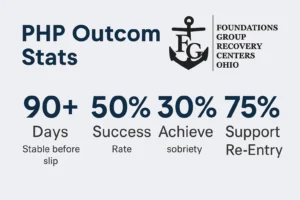
I had 90+ days. I was stable. I was doing well.
But behind the scenes, I was slipping. Slowly, subtly, and then all at once.
The hardest part wasn’t the relapse. It was the voice in my head that said: You should know better. You don’t get to ask for help again.
But I did. And I’m writing this now because I want you to know—you can too.
I Thought Returning Meant Starting Over
I’ll be honest: the idea of re-entering a Partial Hospitalization Program felt like failure. It felt like proof I hadn’t “earned” my recovery. I’d already walked through those doors once. Sat in those chairs. Graduated that program.
I was supposed to be past this.
But when I called Foundations Group Recovery Center in Scottsdale, AZ and asked what it would mean to come back, I wasn’t met with disappointment. I was met with welcome.
Not a lecture. Not a sigh.
Just: “Let’s get you the support you need.”
It was the first time I realized something that now seems so obvious: relapse doesn’t reset your worthiness. It just means you’re human. And that maybe, something needs more care.
The Difference Between Shame and Support
The voice in my head had been punishing me for weeks.
You messed this up. You were doing so well. Why couldn’t you just hold it together?
But in PHP, no one asked me to explain my relapse like it was a crime. No one treated me like a beginner. No one made me feel like I didn’t belong.
Instead, they made space.
For the grief. For the guilt. For the complicated reality of trying again.
The difference between shame and support is this: shame says, You have to fix this alone.
Support says, You don’t have to.
Returning to PHP Wasn’t Defeat—It Was Relief
I remembered the rhythm of the program: the grounding check-ins, the calm of being around people who get it, the way each session helped put language to the spiral I’d been stuck in.
But this time, I also brought new insight with me. I wasn’t brand-new to recovery. I knew more about my patterns, my needs, my limits. I asked different questions. I listened in a new way.
And PHP gave me what I couldn’t give myself at home: structure, perspective, and the chance to pause the self-blame spiral long enough to heal again.
If you’re looking for a Partial Hospitalization Program in Columbus, Ohio, I hope you know this—PHP isn’t just for first-timers. It’s for anyone who needs support, again.
What It Feels Like to Re-Enter a Partial Hospitalization Program
I walked back in afraid they’d think I failed. What I didn’t expect was to feel like I’d come home.
There was a quiet dignity in being there again—not because I relapsed, but because I didn’t let that relapse stay secret.
There’s a different kind of courage required the second time around. Not the kind that comes from desperation, but the kind that comes from hope: I believe it’s still worth trying. I believe I’m still worth trying for.
PHP gave me space to reconnect with that belief. To work through not just the relapse, but the grief of losing my “perfect” recovery streak—and replacing it with something more real.
You’re Allowed to Begin Again Without Starting Over
This isn’t about day counts or milestones. It’s about what happens after the stumble.
Re-entering PHP didn’t erase my progress. It honored it. It told the truth about how hard life can get—and how strong it is to ask for help before it gets worse.
So if you’re in that strange limbo—past 30 days, 60, 90, or more—and now quietly slipping, know this:
You don’t have to go all the way back down to come back in.
You can walk in right now. Right from where you are.
And if you’re in Upper Arlington, Franklin County, or anywhere nearby, Foundations Ohio has space for you—again.
FAQs: What to Know About Re-Entering PHP After a Relapse
Do I have to “start over” in the program?
No. Your clinical team will assess what you need now—not what you did before. You’re not a beginner; you’re someone with experience who deserves care.
Will insurance cover another round of PHP?
In many cases, yes. Coverage depends on your provider and your clinical need, but relapses are recognized as a legitimate reason to re-engage in treatment. Foundations can help you check.
Is it common to relapse after 90 days?
Unfortunately, yes. It’s also incredibly common to feel ashamed about it. But early recovery is a fragile time—and re-entering support is a strong, smart response.
Will I be in groups with first-timers?
Possibly—but that doesn’t mean you don’t belong. Many PHP groups include a mix of first-time clients, returners, and people with various recovery timelines. Your perspective might be just what someone else needs.
What if I’m not sure if it was a “real” relapse?
That’s okay. If you’re questioning whether your return to substances or behaviors is something to worry about—that’s already a sign that reaching out is worth it.
I Didn’t Need a Perfect Streak. I Needed Support.
There’s this quiet lie in recovery that says: if you relapse, you’re back at square one. But the truth is, I didn’t go back to square one.
I went back to community. To clarity. To care.
That’s what re-entering PHP gave me. Not a do-over. A doorway.
If you’re in Ohio and wondering if it’s time to return, call (888) 501-5618 or visit our Partial Hospitalization Program page. Whether you’re in Upper Arlington, Franklin County, or surrounding areas—this isn’t the end of your story.
It’s a chapter worth writing.