When your 20-year-old starts using again, it doesn’t always look like it did the first time. The signs may be subtler. The grief, sharper. And the fear? Constant. You’ve been here before—watching someone you love slowly disconnect, wondering if they’ll make it back this time.
You’re not imagining things. And you’re not the only one walking through this.
A partial hospitalization program (PHP) is often the right next step after a setback. It offers daily, structured support without pulling your child entirely out of their life. For many families, it’s a lifeline—one that offers stability, clinical care, and a chance to try again without shame.
When Inpatient Isn’t Right—and Outpatient Isn’t Enough
The hardest part of relapse is knowing what to do next. Full inpatient care can feel like overkill. But letting things ride with weekly therapy or IOP can feel like not enough. You need something in the middle.
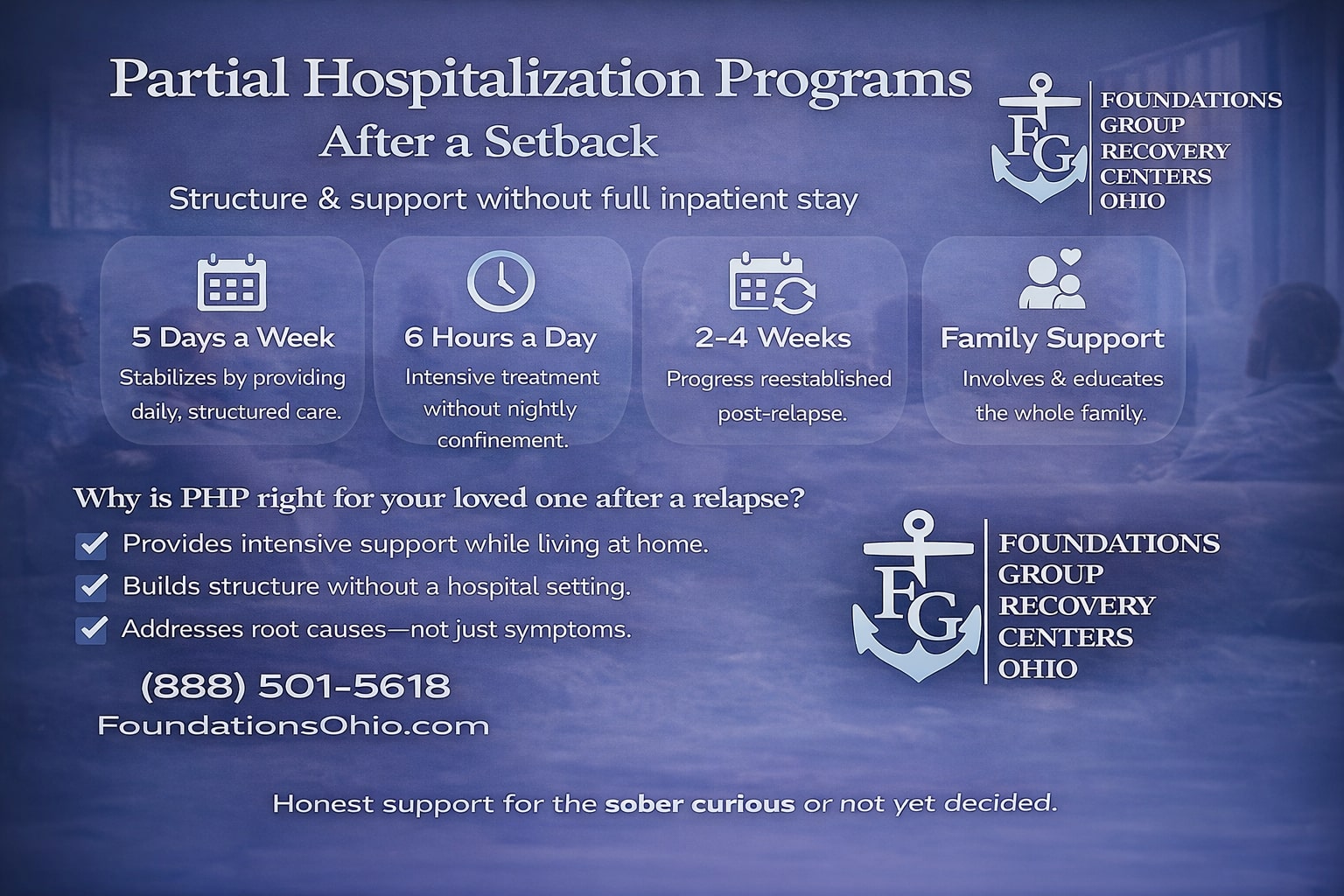
That’s where PHP comes in. It’s high-touch without being high-disruption. Clients attend treatment five days a week—usually 5–6 hours per day—then return home in the evenings. It delivers focused care and daily accountability while allowing them to sleep in their own bed and stay connected to family.
PHP = Intensive help without hospitalization.
What a PHP Includes (And Why It Matters)
At Foundations Group Recovery Center, our PHP isn’t just a schedule. It’s a comprehensive clinical program that addresses the roots of relapse—not just the symptoms.
Here’s what your loved one can expect:
- Daily group therapy sessions for peer connection and insight
- One-on-one counseling for personalized support
- Psychiatric evaluation and medication management, if appropriate
- Psychoeducation classes to build coping skills and insight
- Family involvement—because you’re part of the healing too
Each piece is intentional. Together, they create a rhythm of care that stabilizes crisis and rebuilds trust—in themselves and in the process.
Why PHP Is Especially Effective for Young Adults
Young adults live in between worlds. They’re adults legally—but not fully developed emotionally. They crave independence, but still need scaffolding. That’s why treatment for them must balance structure and freedom, challenge and compassion.
Partial hospitalization provides:
- Daily clinical oversight, which reduces risk
- Room for responsibility, like work or school in the evenings
- Reinforcement of routine, which helps with motivation and mood
- Opportunities for family healing, without disrupting life completely
It’s not “rehab lite.” It’s a focused, high-impact option for people who are struggling—but not so far gone that they need round-the-clock supervision.
Relapse Doesn’t Mean Starting Over
If you’re blaming yourself, stop. If you think this means everything before was a waste, it wasn’t.
Relapse—while painful—is common in early recovery. Especially for young adults. Especially in their 20s, when so much of life is unformed and uncertain.
What matters now isn’t that your child used again. What matters is what happens next.
Partial hospitalization is a way to:
- Interrupt the pattern early
- Reengage skills learned in previous treatment
- Rebuild momentum before things get worse
It’s not a punishment. It’s a second chance that respects what’s already been tried—and what’s still possible.
Signs PHP Might Be the Right Fit
You don’t need to wait for rock bottom. PHP works best when families act early, when you notice something’s off and want to intervene with structure—not emergency.
A partial hospitalization program might be right if:
- Your loved one recently relapsed or resumed substance use
- They’re withdrawing, skipping work or school, or isolating
- You’ve tried outpatient therapy and it’s not working
- Their mental health symptoms are escalating
- They express motivation to get better—but can’t maintain it alone
Still not sure? That’s okay. A professional assessment can help determine if PHP is the appropriate level of care. You’re not expected to figure this out alone.
Healing the Family, Not Just the Individual
Let’s name something hard: this isn’t just about your child. It’s about you, too.
You’ve probably been walking on eggshells for months. Managing crisis after crisis. Wondering if your love is helping—or hurting. It’s exhausting. And you deserve support, too.
At Foundations, we include family work in our partial hospitalization program. Because recovery isn’t an individual pursuit. It’s a systemic healing process. You’ll have space to ask questions, set boundaries, and rebuild your relationship with your child—with professional guidance.
What Makes Foundations Group Recovery Center Different
We’re not a one-size-fits-all treatment center. We specialize in meeting young adults and their families where they are—especially when things feel uncertain or messy.
Our PHP program in Ohio is designed to:
- Combine clinical excellence with emotional attunement
- Offer real-world readiness, not just recovery talk
- Support the entire family system—not just the client
Our team is made up of therapists, clinicians, and peer specialists who understand the nuance of relapse, shame, and second chances. You’ll never be treated like a failure here. Whether you’re in Columbus, Franklin County, Upper Arlington, Foundations Ohio is nearby and ready to help.
Frequently Asked Questions About PHP
Is PHP covered by insurance?
Yes, many insurance plans cover partial hospitalization. Our admissions team can verify your benefits and help you understand any out-of-pocket costs before you commit to care.
How long does PHP last?
Most programs last between 2–6 weeks, depending on clinical need and progress. Our team will regularly assess your loved one and adjust care accordingly.
Can my child work or attend school during PHP?
Yes—though PHP is a daytime commitment, some clients are able to work part-time or take evening classes. We’ll help your family find a sustainable balance.
What’s the difference between PHP and IOP?
PHP is more intensive. It typically involves 5–6 hours of treatment per day, five days a week. IOP (Intensive Outpatient Program) is fewer hours—often 3 days a week—and can be a step down from PHP once your loved one is more stable.
Can family be involved in the treatment process?
Absolutely. We strongly encourage family participation. You’ll be offered education, family therapy sessions, and guidance on how to support your child without enabling them.
You Don’t Have to Do This Alone
You’ve loved hard. You’ve tried everything you know. Now it’s time for help that works with you.
A partial hospitalization program in Ohio can be the safety net your family needs right now. It meets relapse with structure. It meets fear with clarity. And it meets your child with respect—not shame.
You don’t have to wait for things to get worse. You don’t have to manage this by yourself.
📞 Ready to take the next step?
Call (888) 501-5618 or visit to learn more about our partial hospitalization program services in Columbus, Ohio.