She didn’t come in saying she wanted to quit.
She came in saying she was tired.
Tired of planning her day around pills. Tired of the crash after the glow. Tired of wondering if she could get through a dinner, a date, or a creative deadline without something to take the edge off.
But what scared her most wasn’t withdrawal. It wasn’t even the stigma.
It was this:
“If I stop… what if I lose the best parts of me?”
In the early conversations about support—including options like opiate addiction Treatment—this fear comes up more than people expect.
Not loudly.
Not dramatically.
But honestly.
The Part No One Talks About
There’s a version of recovery messaging that sounds very clean.
You’ll feel better.
You’ll think clearer.
Your life will improve.
All of that can be true.
But what often goes unspoken is that substances sometimes feel like they gave you something.
Confidence.
Warmth.
Creative flow.
Relief from the constant self-critique.
For some people—especially artists, performers, entrepreneurs, deep feelers—substances don’t feel like destruction at first.
They feel like access.
And it’s hard to willingly give up something that feels like a key.
When the Substance Feels Like Your Muse
I’ve sat with musicians who swear their best lyrics came during a high.
Writers who say they can’t access vulnerability without chemical help.
Charismatic social people who believe they’ll become awkward and invisible without it.
It makes sense.
Opiates, in particular, can create a softening effect. They can quiet anxiety, dull shame, and blur sharp emotional edges. For someone who feels everything intensely, that softening can feel like balance.
But here’s what’s important:
Relief is not the same as authenticity.
What substances often do is lower inhibitions and dampen internal criticism. The creativity, the insight, the humor—that was already there.
The drug just made it easier to reach.
The problem is that over time, the brain begins to rely on the substance to access those states. What started as occasional support becomes dependency.
And dependency slowly narrows your world.
The Nervous System Needs Time
One of the hardest parts of early recovery is the adjustment period.
When someone stops using, especially after long-term opiate use, the nervous system has to recalibrate. Dopamine pathways shift. Emotional regulation changes. Energy levels fluctuate.
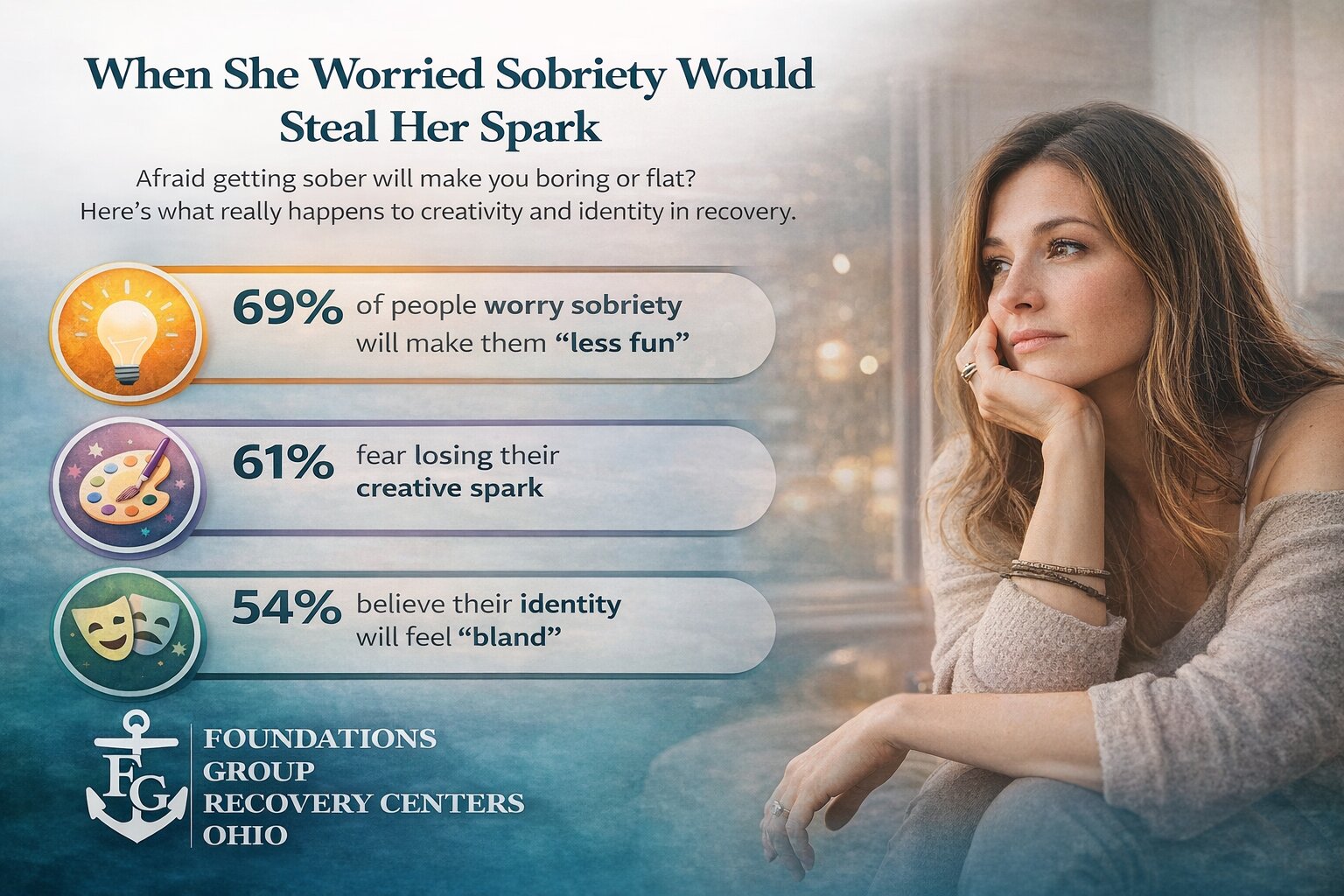
That transition can feel… flat.
Colors aren’t as bright. Music doesn’t hit the same. Social situations feel more effortful.
This is often the moment when someone says, “See? I knew it. I’m not as creative sober.”
But what’s actually happening is neurological repair.
The brain has been used to chemical surges. Without them, it needs time to relearn natural rhythms.
This phase is temporary. It’s not a personality verdict.
Identity Is More Than Intensity
Many people confuse intensity with identity.
If you’ve always been the passionate one, the dramatic one, the life of the party, the tortured artist—it can feel like you’re being asked to become mild.
But recovery doesn’t erase intensity. It stabilizes it.
Instead of emotional peaks and valleys dictated by chemistry, you begin to experience emotion in a more sustainable way.
You still feel deeply.
You still think creatively.
You still connect.
You just don’t crash afterward.
There’s a quiet confidence that develops over time—a sense of self that isn’t dependent on a pill, a powder, or a performance.
What She Learned About Her Spark
About six months into care, she told me something that felt like a turning point.
“I thought the pills made me more open,” she said. “But I think they just made me less afraid.”
That’s a powerful distinction.
When fear decreases, expression increases. But you can work on fear directly—through therapy, community, structured daytime care, or multi-day weekly treatment—without relying on something that slowly harms your body and mind.
Her art shifted. It became less chaotic, more intentional. She didn’t produce in manic bursts anymore. She created consistently.
Her relationships deepened. She remembered conversations. She followed through.
Her spark didn’t disappear.
It became steadier.
The Hidden Cost of “Keeping the Edge”
There’s often a belief that suffering fuels brilliance.
But chronic substance use doesn’t just amplify emotion—it eventually dulls it.
Over time, many people notice:
- Reduced motivation
- Memory issues
- Emotional numbness
- Increased isolation
- A shrinking world built around access and recovery
The very thing that once felt like fuel starts to become a cage.
When someone enters Opiate addiction Treatment, the goal isn’t to flatten personality. It’s to restore choice.
Choice about how you access emotion.
Choice about how you connect.
Choice about whether your creativity comes from pain—or from presence.
A Different Kind of Freedom
The creative, identity-focused person often fears becoming ordinary.
But what I’ve seen, again and again, is this:
Recovery doesn’t make people smaller.
It often makes them more precise.
They know what they’re feeling and why. They aren’t chasing the next surge. They aren’t building their art or their social life around secrecy.
There’s something magnetic about that kind of stability.
It’s not loud.
It’s grounded.
And grounded people don’t disappear. They become reliable—to themselves and to others.
If This Is the Fear You Haven’t Said Out Loud
You’re not shallow for worrying about your spark.
You’re not dramatic for wondering who you’ll be without the edge.
You’re human.
If you’re considering support but afraid of what it might cost you creatively or socially, it may help to talk through those fears with someone who won’t dismiss them.
At Foundations Group Recovery Center Ohio, we understand that identity is deeply tied to recovery. Our approach to care honors who you are—not just what you’re trying to stop.
You don’t have to choose between being healthy and being yourself.
Frequently Asked Questions
Will I lose my creativity if I stop using opiates?
In the short term, creativity may feel different as your brain adjusts. This is part of neurological recalibration. Long term, many people find their creativity becomes more sustainable and focused without the crash-and-burn cycle.
Why does sobriety feel flat at first?
Opiates artificially increase certain neurotransmitters related to pleasure and relief. When you stop, your brain needs time to restore natural balance. During that adjustment, emotions can feel muted—but this phase is temporary.
What if substances helped my anxiety in social settings?
That’s common. Many people use to reduce social fear. In treatment, we work directly on anxiety—through therapy, skill-building, and community support—so confidence isn’t chemically dependent.
Is it normal to feel scared about changing my identity?
Yes. For many people, substance use becomes intertwined with personality, creativity, and social roles. Untangling that can feel destabilizing. Good care respects that fear rather than dismissing it.
How do I know if I need structured support?
If you’ve tried to stop and couldn’t…
If your use is impacting relationships or work…
If you feel anxious at the thought of going without…
It may be worth exploring options. Support can range from structured daytime care to more immersive programs, depending on your needs.
If part of you is curious—but afraid—about what life could feel like without the constant cycle, that curiosity matters.
You don’t have to decide everything today.
Call (888)501-5618 or visit our opiate addiction Treatment services in Ohio to learn more about our Opiate addiction Treatment services in Columbus.