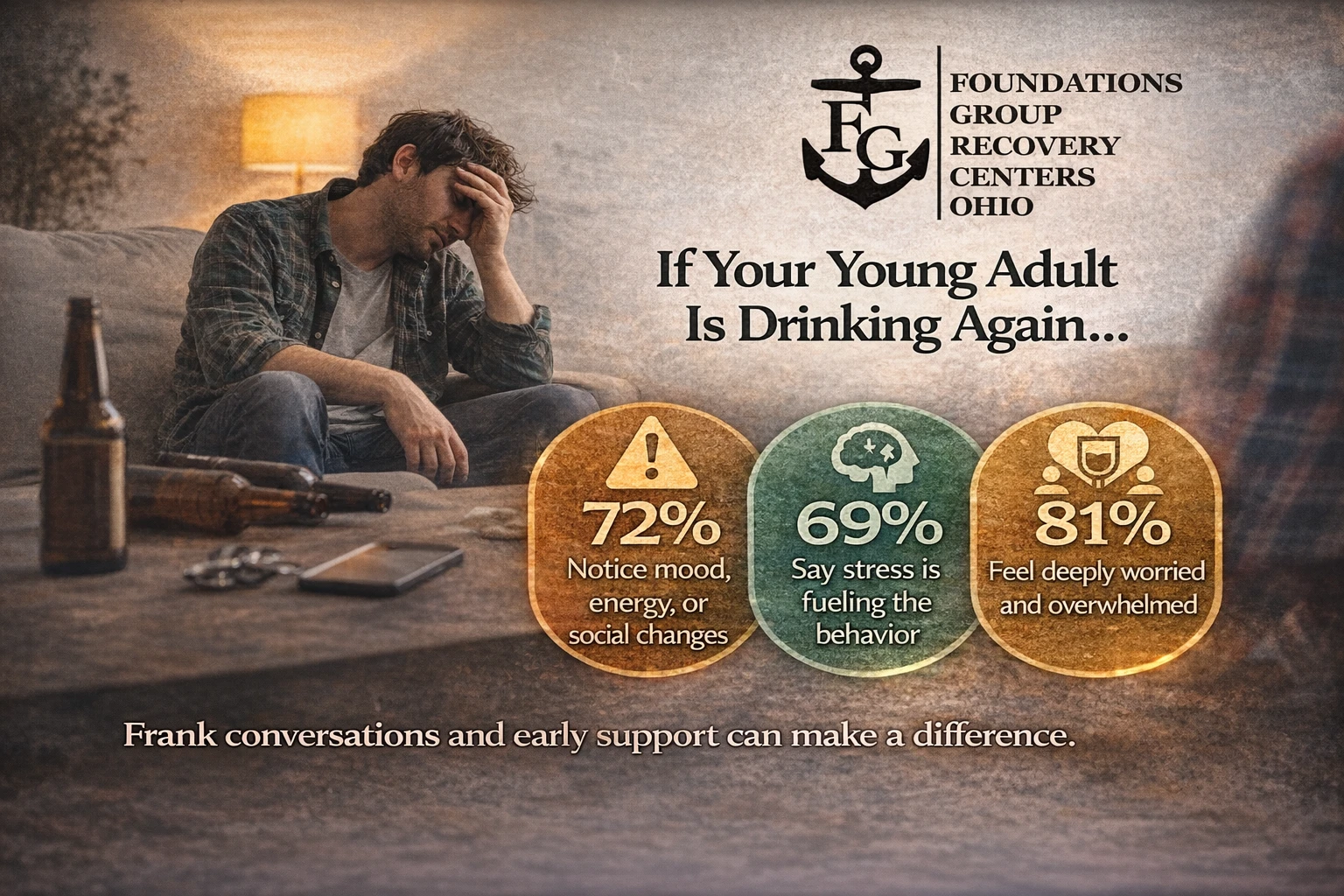
You may have sensed it before you could fully explain it. A shift in tone. A pattern returning. Something familiar—and unsettling—about how alcohol is showing up again in your young adult’s life.
If you’re here, you’re likely carrying a mix of fear, frustration, and quiet heartbreak. Many parents describe this moment as heavier than the first time. Not because they care more—but because they already know what can happen.
As a clinician, I want to meet you in that space with honesty and steadiness: this situation is painful, but it is not without hope.
Within the first signs of change, it can help to understand what you’re seeing and what support can look like. If you’re already questioning whether something deeper is happening, exploring alcohol addiction treatment options early can help you move from fear into clarity.
Why a Return to Drinking Feels So Personal
There’s something uniquely painful about watching progress unravel.
You may be asking yourself:
- Did I miss the warning signs?
- Was there something more I should have done?
- Why is this happening again?
These thoughts are incredibly common—and deeply human. But they often place responsibility on you in ways that aren’t accurate or fair.
Substance use doesn’t follow a straight line, especially in young adulthood. Growth, independence, peer influence, stress, and identity all collide during this stage of life. For many, alcohol becomes a shortcut to coping before they even realize what’s happening.
This isn’t about failure. It’s about a condition that sometimes takes more than one attempt—and more than one approach—to stabilize.
The Small Shifts That Often Mean More Than They Seem
Parents are usually the first to notice subtle changes.
It might not look like a clear problem at first. In fact, it often hides behind “normal” behavior:
- Going out more frequently, but coming home withdrawn
- A change in sleep patterns or energy levels
- Increased defensiveness around simple conversations
- Needing a drink to relax, socialize, or get through stress
Over time, these patterns can point to early signs of problem drinking, even if your young adult insists everything is under control.
One of the most important things to trust here is your intuition. If something feels off, it usually is.
What Might Be Driving the Behavior Right Now
At 20, your child is navigating a complicated emotional landscape.
They may be facing:
- Pressure to succeed academically or professionally
- Social expectations that revolve around drinking
- Anxiety they don’t know how to name
- A sense of being overwhelmed or stuck
Alcohol can quietly become a tool—not just for fun, but for relief.
And here’s the part that’s easy to miss: many young adults don’t consciously decide to rely on alcohol. It happens gradually. What begins as occasional use can slowly become something they feel they need.
So when they push back or minimize concerns, it’s not always denial in the traditional sense. Sometimes it’s confusion. Sometimes it’s fear.
How to Stay Connected Without Losing Yourself
You’re walking a very fine line right now.
You want to protect your child—but also avoid pushing them away.
A few approaches that tend to help:
- Lead with observation, not accusation.
“I’ve noticed you seem more stressed lately” opens more space than “You’re drinking again.” - Stay grounded during difficult conversations.
Even if emotions run high, your calm presence can lower defensiveness. - Avoid trying to win the argument.
This isn’t about proving a point—it’s about keeping the relationship intact. - Set boundaries that protect your well-being.
Supporting your child doesn’t mean sacrificing your own stability.
There’s no perfect script here. Just a steady effort to remain present, clear, and compassionate.
What Treatment Can Look Like—Without Starting Over
One of the biggest misconceptions parents carry is that returning to treatment means going back to square one.
That’s not how it works.
Your child brings everything they’ve already learned with them—even if it doesn’t feel like it right now.
Treatment today might look like:
- Structured daytime care to stabilize routines and reduce risk
- Multi-day weekly support that allows them to stay engaged with school or work
- Therapy that goes deeper into emotional triggers and coping patterns
- Family sessions to rebuild trust and communication
Sometimes, a different environment or level of care is what finally clicks.
Recovery evolves. It’s not erased by a setback.
The Emotional Weight You’re Carrying Matters Too
Parents often become the quiet support system holding everything together.
But inside, it can feel like:
- Constant worry in the background of your day
- Exhaustion from trying to stay hopeful
- Fear of what might happen next
You may also feel alone in ways that are hard to explain to others.
This is where it’s important to gently shift some attention back to yourself.
Support might look like:
- Speaking with a counselor who understands family dynamics in addiction
- Joining a support group for parents
- Creating small boundaries that give you space to breathe
Caring for your child and caring for yourself are not opposing goals. They are deeply connected.
A Local Perspective That Can Help Ground Your Next Step
For families navigating this in Columbus, Ohio, especially within Franklin County, Ohio, access to supportive, structured care can make the situation feel less overwhelming.
Being able to connect with treatment that understands both young adults and family dynamics—close to home—can remove one of the biggest barriers to getting help.
Sometimes, proximity matters more than perfection. What matters most is starting.
What Progress Can Look Like From Here
Progress may not look dramatic at first.
It might look like:
- A slightly more open conversation
- A willingness to attend one appointment
- A moment of honesty that wasn’t there before
These small shifts are not insignificant. They are often the beginning of something more stable.
Think of recovery less like a straight path—and more like learning to walk steady ground after slipping. It takes time. It takes repetition. But it’s possible.
Frequently Asked Questions
How do I know if this is serious or just a phase?
It’s a common question—and not always easy to answer. If alcohol is starting to affect your child’s mood, behavior, responsibilities, or relationships, it’s worth paying attention. Patterns matter more than isolated events.
Should I confront my child directly about drinking?
Direct conversations can help—but how you approach them matters. Focus on what you’ve observed and how you feel, rather than labeling or accusing. This reduces defensiveness and keeps communication open.
What if they refuse help?
This is one of the hardest parts. You can’t force readiness, but you can keep expressing concern, setting boundaries, and offering options. Change often starts with repeated, calm conversations over time.
Does going back to treatment mean the first one didn’t work?
Not at all. Many people need different levels or types of care at different stages. Each experience can build awareness and skills that contribute to long-term recovery.
How can I support without enabling?
Support focuses on connection and encouragement. Enabling removes natural consequences. This might mean offering emotional support while not covering up missed responsibilities or minimizing the impact of their behavior.
Is it too early to seek professional guidance?
It’s rarely too early. In fact, early conversations with a professional can provide clarity and direction before things escalate further.
A Gentle Next Step
If you’re noticing patterns that concern you, you don’t have to wait for things to get worse before reaching out.
Call (888)501-5618 to learn more about our substance use treatment ohio, alcohol addiction treatment ohio services in Upper Arlington, OH.
And if you’re feeling worn down by all of this, that makes sense. Loving someone through uncertainty takes strength most people never see.
You’re still here. Still paying attention. Still trying.
That matters more than you know.