If you’ve started searching for the signs of opioid addiction, chances are you’re worried about someone you love—or perhaps you’re beginning to recognize changes in yourself that are becoming harder to ignore. In Ohio, where opioid overdoses have affected families in nearly every community, recognizing the warning signs isn’t about judgment. It’s about knowing when someone may need help before a crisis occurs.
Whether opioid use began with a legitimate prescription or with illicit opioids, addiction often develops gradually. The earlier it is recognized, the more opportunities there are for intervention and recovery. If you’re looking for treatment options, learning more about opioid addiction treatment can help you understand what professional care looks like and what the next steps may be.
Knowing what to watch for—and what to do during an overdose—could save a life.
Physical Signs of Opioid Addiction
Many of the physical signs of opioid addiction result from the way opioids affect the brain, nervous system, and breathing. While no single symptom confirms addiction, several changes occurring together often warrant concern.
Pinpoint Pupils
One of the most recognizable signs of opioid use is extremely small, constricted pupils, even in dim lighting. This occurs because opioids affect the muscles that control pupil size.
Drowsiness or “Nodding Off”
People struggling with opioid addiction may appear unusually sleepy or drift in and out of consciousness during conversations, meals, or other activities.
You might notice someone:
- Falling asleep unexpectedly
- Struggling to stay awake
- Appearing unusually difficult to wake
This “nodding off” is especially common after opioid use.
Slowed Breathing
Opioids slow the body’s respiratory drive.
Someone may have:
- Slow breathing
- Shallow breathing
- Long pauses between breaths
This symptom becomes particularly dangerous because slowed breathing can progress to an overdose.
Constipation
Chronic constipation is extremely common among people using prescription or illicit opioids because these medications slow movement through the digestive system.
Track Marks or Injection Sites
If opioids are being injected, you may notice:
- Small puncture wounds
- Bruising
- Scarring
- Skin infections
These often appear on the arms but can occur anywhere veins are accessible.
Weight Loss and Poor Physical Health
As addiction progresses, nutrition, sleep, and self-care often decline.
You may notice:
- Weight loss
- Pale appearance
- Frequent sweating
- Poor hygiene
- General decline in health
Limited Facial Expression or Emotional Flatness
Many people experiencing opioid addiction appear emotionally “shut down.”
Family members sometimes describe their loved one as looking distant, detached, or emotionally unavailable, even during meaningful conversations.
Behavioral Signs of Opioid Addiction
Behavioral changes are often the first things family members notice. These changes can appear gradually and are sometimes mistaken for stress, depression, or personality changes.
Increased Secrecy
People may begin:
- Locking doors
- Hiding medications
- Avoiding conversations
- Becoming defensive about their schedule
- Spending more time alone
Secrecy often grows as addiction progresses.
Withdrawal From Family and Friends
Activities that once mattered may suddenly seem unimportant.
Someone may stop:
- Attending family gatherings
- Returning phone calls
- Participating in hobbies
- Spending time with close friends
Relationships often become strained as obtaining and using opioids becomes the primary focus.
Financial Problems
Money difficulties frequently accompany addiction.
Warning signs include:
- Frequently borrowing money
- Missing cash
- Selling belongings
- Unexplained debt
- Theft from family members
These behaviors can be painful for loved ones but are often driven by addiction rather than a lack of caring.
Doctor Shopping
Among the classic signs of prescription opioid addiction is seeking opioid prescriptions from multiple healthcare providers.
Other prescription-related warning signs include:
- Reporting lost medications repeatedly
- Requesting early refills
- Visiting multiple pharmacies
- Becoming unusually focused on prescription timing
Neglecting Responsibilities
Opioid addiction often begins interfering with everyday life.
You might notice:
- Missing work
- Declining academic performance
- Neglecting children
- Poor attendance
- Missed appointments
Mood Swings
Opioids can produce temporary feelings of relaxation or euphoria, followed by fatigue, irritability, or emotional withdrawal.
Family members often notice a repeating cycle of:
- High energy or unusual calm
- Sleepiness
- Irritability
- Emotional distance
Signs of Opioid Addiction in a Loved One
One of the hardest parts of recognizing addiction is wondering whether you’re overreacting.
Many parents ask themselves:
- “Maybe they’re just stressed.”
- “Could this be depression?”
- “Did I cause this?”
- “Am I imagining things?”
These questions are understandable.
Rather than focusing on one isolated symptom, look for patterns that continue over time.
Prescription Opioids
When addiction develops from prescription medications, early changes may be subtle.
You may first notice:
- Running out of medication early
- Increased focus on pain medication
- Multiple medical appointments
- Mood changes between doses
- Sleepiness that seems unusual
Because prescriptions originate from legitimate medical care, families sometimes overlook these early warning signs.
Heroin or Illicit Opioids
With heroin or illicit fentanyl use, changes often become more noticeable.
You may see:
- Rapid physical decline
- Significant weight loss
- Track marks
- New friend groups
- Legal or employment problems
- More obvious secrecy
How to Start the Conversation
Approaching someone with concern is rarely easy.
Instead of accusing them, try focusing on specific observations.
For example:
- “I’ve noticed you’ve been sleeping much more lately.”
- “I’m worried because you don’t seem like yourself.”
- “I care about you and want to understand what’s going on.”
Try to:
- Speak when they’re sober.
- Stay calm.
- Listen more than you talk.
- Avoid arguing about whether addiction exists.
- Offer support instead of ultimatums whenever possible.
Not every conversation leads to immediate change, but compassionate communication can help keep the door open.
Overdose Warning Signs and What to Do
Recognizing opioid overdose signs quickly is one of the most important things anyone can learn.
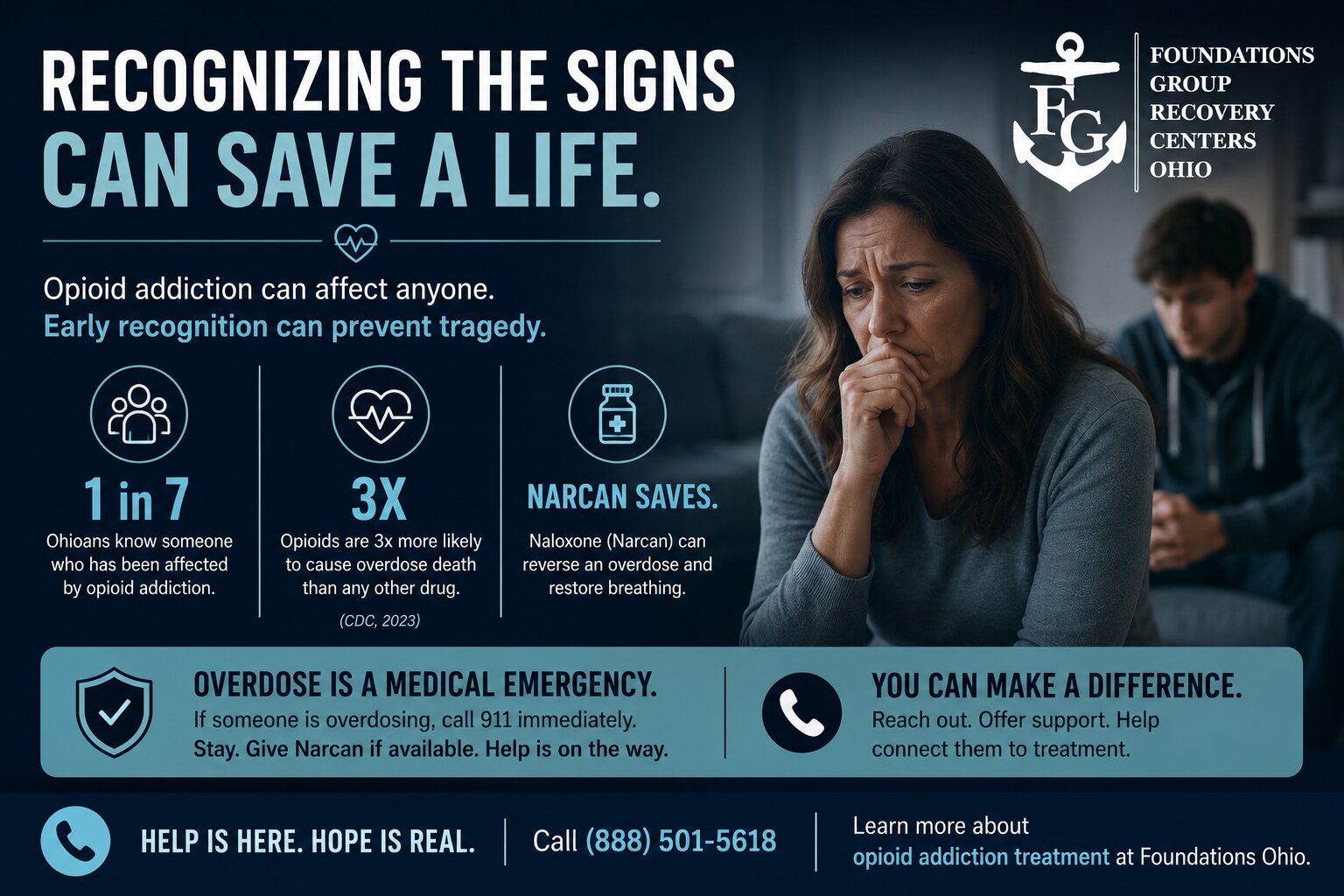
An opioid overdose is a medical emergency.
Warning Signs of an Opioid Overdose
Someone may be overdosing if they have:
- Blue or gray lips or fingertips
- Very slow, shallow, or stopped breathing
- Pinpoint pupils
- Loss of consciousness
- No response to shouting or shaking
- Gurgling, choking, or loud snoring sounds
- Limp body
- Cold or clammy skin
Even if you’re unsure, treat the situation as an emergency.
What to Do Immediately
If you suspect an overdose:
- Call 911 immediately.
- Administer Narcan (naloxone) if it is available.
- If trained, provide rescue breathing.
- Place the person in the recovery position if they are breathing but unconscious.
- Stay with the person until emergency responders arrive.
Do not assume someone will “sleep it off.” Opioid overdoses can worsen rapidly because breathing continues to slow.
Narcan in Ohio
Given Ohio’s ongoing opioid crisis, naloxone is an important safety tool for families.
Ohio has a statewide standing order for naloxone, which means people can obtain Narcan without an individual prescription at most pharmacies throughout the state.
Naloxone temporarily reverses the effects of an opioid overdose by restoring breathing. Its effects may wear off before the opioids leave the body, which is why emergency medical care is still necessary even if someone wakes up after receiving Narcan.
Having naloxone available does not encourage opioid use. It provides an opportunity for survival during an otherwise life-threatening emergency.
How to Help Someone Showing Signs of Opioid Addiction
Watching someone struggle with addiction can leave families feeling exhausted, frightened, and unsure what to do next.
If you’re supporting someone else:
- Learn about addiction as a medical condition.
- Encourage a professional evaluation.
- Avoid enabling behaviors while continuing to show compassion.
- Keep naloxone available if overdose risk exists.
- Seek support for yourself through trusted family members, counselors, or support groups.
If you’re recognizing these signs in yourself, remember that asking for help is not a sign of failure. Many people recover with evidence-based treatment, medical support, and ongoing counseling.
Recovery rarely begins with having everything figured out. It often begins with one conversation.
If you or someone you love may be experiencing opioid addiction, call (888) 501-5618 or learn more about opioid addiction treatment at Foundations Ohio. Whether you’re in Columbus, Franklin County, Upper Arlington, Foundations Ohio is nearby and ready to help.
Frequently Asked Questions
What are the signs of opioid addiction?
Common signs of opioid addiction include pinpoint pupils, excessive drowsiness, slowed breathing, constipation, weight loss, mood swings, secrecy, financial problems, neglecting responsibilities, doctor shopping, and withdrawing from family or friends. These symptoms often occur together and become more noticeable over time.
How do you recognize an opioid overdose?
An opioid overdose may involve blue or gray lips or fingertips, pinpoint pupils, slow or stopped breathing, unconsciousness, inability to wake the person, and gurgling or snoring sounds. If you suspect an overdose, call 911 immediately, administer naloxone if available, and stay with the person until emergency responders arrive.
Where can I get Narcan in Ohio?
Ohio residents can obtain Narcan (naloxone) without an individual prescription through the state’s standing order. Most pharmacies carry naloxone, making it available to family members, caregivers, and others who may need it during an emergency.
Crisis Resource
If someone is showing signs of an opioid overdose, call 911 immediately. Even if naloxone is administered and the person appears to recover, emergency medical evaluation is still necessary.