
Many people assume crack and cocaine are two completely different drugs.
They’re not.
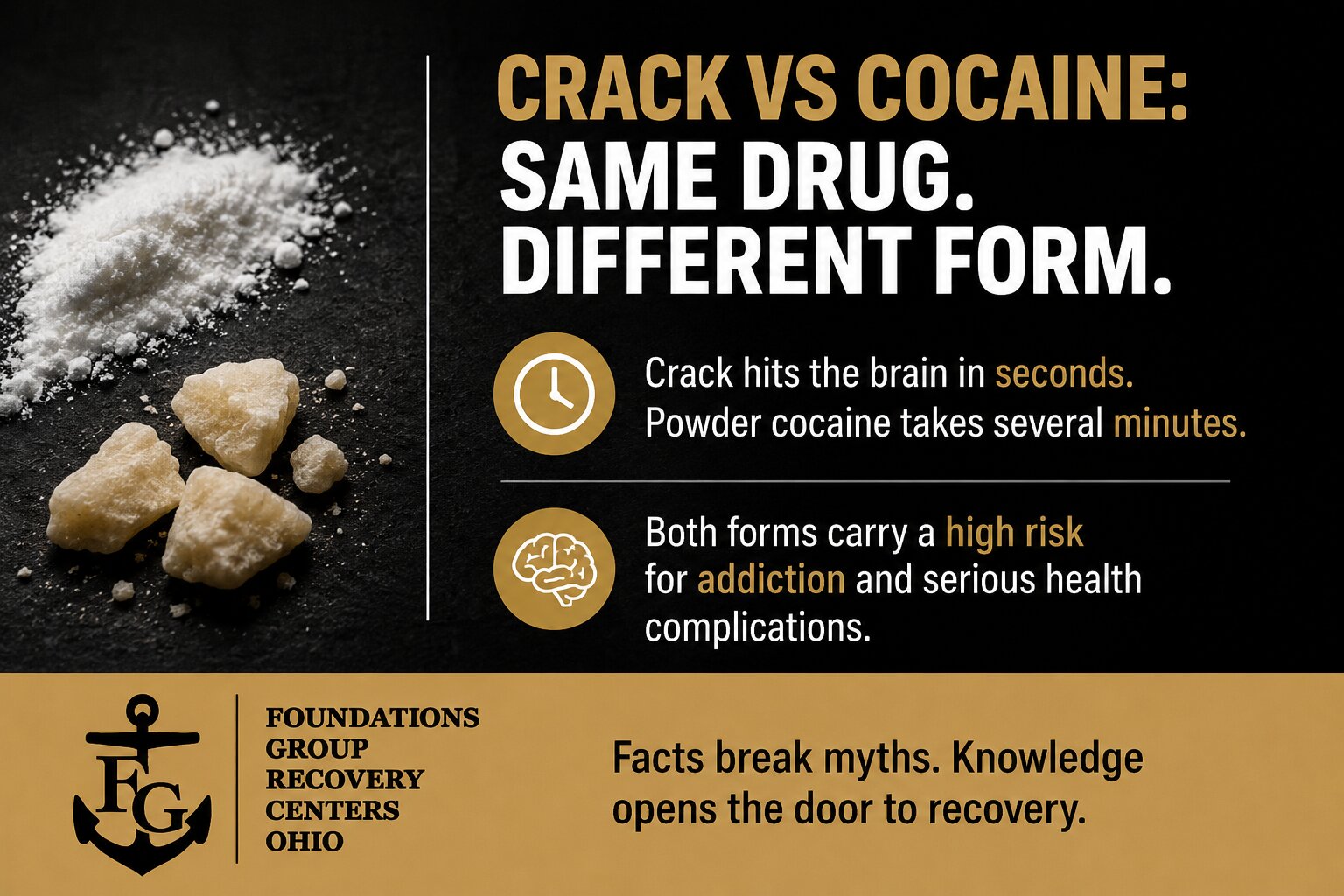
The most important fact to understand in any crack vs cocaine comparison is that both contain the same active drug: cocaine. What differs is the chemical form, how each is used, and how quickly the drug reaches the brain. Those differences can significantly affect the intensity of the high, the duration of its effects, and the likelihood of repeated use.
If you’re researching this topic because of your own substance use or concerns about someone you care about, understanding the facts can help separate myth from reality. If cocaine has begun affecting your health, relationships, or daily life, learning about cocaine addiction treatment is an important first step toward recovery.
Rather than asking which drug is “worse,” it’s more helpful to understand how the route of use changes the risks—and why both forms of cocaine can lead to addiction.
Crack vs Cocaine: At a Glance
Feature |
Powder Cocaine |
Crack Cocaine |
|---|---|---|
| Chemical Form | Cocaine hydrochloride (salt form) | Freebase cocaine |
| Common Route of Use | Snorted, sometimes injected | Smoked |
| Onset of Effects | Usually within a few minutes | Within seconds |
| Duration of High | About 15–30 minutes when snorted | Often 5–10 minutes |
| Intensity of High | Strong but develops more gradually | More rapid and intense peak |
| Perceived Potency | Often viewed as “less intense” because of slower onset | Frequently perceived as stronger because effects arrive almost immediately |
| Historical Legal Context | Historically received significantly lighter federal sentencing than crack | Subject to much harsher federal sentencing before reforms |
| Addiction Risk | High | High, with faster onset increasing the risk of compulsive repeated use |
While this table highlights important differences, one point cannot be overstated:
Crack and powder cocaine are the same drug in different forms.
How They’re the Same Drug—and How the Form Changes Everything
One of the biggest misconceptions is that crack is a completely different substance from cocaine.
It isn’t.
Powder cocaine is cocaine hydrochloride, a salt form that dissolves in water but cannot easily be smoked because it breaks down at high temperatures.
Crack cocaine is created by processing cocaine hydrochloride into a freebase form, allowing it to be smoked.
Although their chemical forms differ, the active molecule affecting the brain remains cocaine.
Why the Route of Use Matters
The major difference between crack and cocaine is not the drug itself—it’s how quickly it reaches the brain.
When powder cocaine is snorted:
- It must first pass through nasal tissues.
- Absorption is slower.
- Effects develop over several minutes.
When crack cocaine is smoked:
- Cocaine enters the lungs.
- It rapidly passes into the bloodstream.
- It reaches the brain within seconds.
This rapid delivery creates a very intense but short-lived high.
Because the rewarding effects happen almost immediately, the brain forms powerful associations between smoking crack and experiencing pleasure. This rapid reinforcement contributes to the higher risk of compulsive binge use seen with smoked cocaine.
In other words:
The form changes the experience—not the identity of the drug.
Effects and Risks by Form and Route of Use
Although both forms of cocaine stimulate the central nervous system, the route of administration changes both the experience and some of the health risks.
Powder Cocaine
Powder cocaine is most commonly snorted.
Typical effects include:
- Increased energy
- Alertness
- Euphoria
- Reduced appetite
- Increased confidence
- Faster heart rate
- Elevated blood pressure
Because absorption occurs through the nose, long-term use can damage nasal tissues.
Potential complications include:
- Frequent nosebleeds
- Chronic sinus infections
- Loss of smell
- Damage to the nasal septum
- Difficulty breathing through the nose
Although the onset is slower than crack, powder cocaine remains highly addictive.
Crack Cocaine
Smoking crack produces effects almost immediately.
Users often describe:
- An intense rush
- Extreme euphoria
- Increased energy
- Heightened confidence
- Reduced fatigue
However, the high fades quickly.
This shorter duration often leads individuals to smoke again within minutes, increasing the likelihood of binge use.
Smoking crack may also damage the lungs and airways.
Potential complications include:
- Persistent cough
- Wheezing
- Chest pain
- Shortness of breath
- Burns to the lips or fingers
- A condition sometimes called “crack lung,” an acute inflammatory lung injury that can occur after smoking crack cocaine
Risks Shared by Both Forms
Whether someone uses powder cocaine or crack cocaine, many serious health risks remain the same.
Both can increase the risk of:
- Heart attack
- Dangerous heart rhythm abnormalities
- Stroke
- High blood pressure
- Seizures
- Anxiety
- Panic attacks
- Aggression
- Paranoia
- Hallucinations
- Cocaine-induced psychosis with heavy or prolonged use
- Overdose, especially when cocaine is mixed with fentanyl or other substances
Today’s illicit drug supply has become increasingly unpredictable, making overdose possible even when someone believes they know what they’re taking.
Myths About Crack vs Cocaine
Public understanding of cocaine has been shaped by decades of misinformation and stigma.
Here are some of the most common myths.
Myth 1: “Crack Is a Completely Different Drug”
False.
Crack and powder cocaine contain the same active drug.
The primary difference is the chemical form and route of administration.
Smoking delivers cocaine to the brain much faster than snorting, creating a more intense but shorter-lived high.
That faster delivery—not a different drug—is what changes the addiction risk profile.
Myth 2: “Crack Is Only a Problem in Certain Communities”
False.
People from every background, income level, race, and geographic area can develop cocaine use disorder.
Historically, however, public policy treated crack and powder cocaine very differently.
For many years, federal law imposed a 100:1 sentencing disparity, meaning possession of a much smaller amount of crack cocaine triggered the same mandatory penalties as a far larger amount of powder cocaine.
Public health experts, legal scholars, and policymakers widely recognized that this disparity disproportionately affected Black communities and was not supported by the pharmacology of the drug itself.
The Fair Sentencing Act of 2010 substantially reduced this disparity, although discussions about fairness and equity in drug sentencing continue.
Understanding this history is important because it explains why misconceptions about crack cocaine persist despite both forms containing the same active drug.
Myth 3: “Powder Cocaine Isn’t as Addictive”
False.
Both forms of cocaine can cause addiction.
What differs is how rapidly the drug reaches the brain.
Because smoked crack produces almost immediate effects, many people experience stronger reinforcement and are more likely to repeat use over a short period.
That does not mean powder cocaine is safe.
Repeated use of either form can lead to cocaine use disorder, serious health complications, and significant impacts on work, relationships, finances, and mental health.
Getting Help for Cocaine or Crack Use
Whether someone uses powder cocaine, crack cocaine, or both, recovery is possible.
There is no “right” point to ask for help.
Some people seek treatment after recognizing early warning signs.
Others reach out following health problems, relationship difficulties, or repeated unsuccessful attempts to stop using on their own.
Treatment plans are individualized and may include:
- Medical evaluation
- Withdrawal support
- Individual counseling
- Cognitive behavioral therapy (CBT)
- Group therapy
- Family counseling
- Relapse prevention planning
- Treatment for co-occurring mental health conditions
- Long-term recovery support
The earlier treatment begins, the greater the opportunity to reduce health risks and rebuild daily life before cocaine use causes more serious consequences.
If you’re concerned about your own cocaine use—or that of someone you care about—learning more about cocaine addiction treatment can help you understand the options available.
Frequently Asked Questions
What is the difference between crack and cocaine?
The main difference between crack and cocaine is their chemical form and route of use. Powder cocaine is cocaine hydrochloride and is most often snorted, while crack cocaine is freebase cocaine that is typically smoked. Smoking produces a much faster onset and a shorter, more intense high.
Is crack more addictive than cocaine?
Both forms are highly addictive because they contain the same active drug. However, smoking crack delivers cocaine to the brain within seconds, creating a rapid and intense high that may increase the likelihood of repeated, compulsive use.
Are crack and cocaine the same drug?
Yes. Crack and powder cocaine contain the same active substance: cocaine. The primary differences involve how the drug is processed, how it is used, and how quickly it reaches the brain.
Final Thoughts
Understanding the difference between crack and cocaine isn’t about deciding which one is “better” or “worse.” It’s about recognizing that both forms carry serious health risks and the potential for addiction. The route of use changes how quickly cocaine affects the brain, but both forms can disrupt physical health, mental well-being, and everyday life.
If cocaine use has become difficult to control, help is available. Recovery is possible with compassionate, evidence-based care. Whether you’re in Columbus, Franklin County, Upper Arlington, Foundations Ohio is nearby and ready to help.
Call (888) 501-5618 or learn more about cocaine addiction treatment at Foundations Ohio.