Heroin withdrawal symptoms can feel overwhelming, especially if you’ve tried to stop using before. The muscle aches, nausea, anxiety, cravings, and sleepless nights are often enough to convince someone to use again simply to make the discomfort stop.
If you’re reading this, you or someone you love may already be facing that reality.
Ohio communities have experienced the devastating effects of heroin and fentanyl-contaminated opioids for years. Many people seeking help today are not only withdrawing from heroin but also from fentanyl mixed into the drug supply without their knowledge. The good news is that effective medical treatment exists. Learning about heroin addiction treatment before withdrawal reaches its peak can make the process safer, more manageable, and far more likely to lead to lasting recovery.
The goal isn’t simply getting through withdrawal—it’s creating the best possible chance for long-term recovery.
What Are Heroin Withdrawal Symptoms?
Heroin withdrawal occurs because the brain has adapted to the presence of opioids. When heroin use suddenly stops or is significantly reduced, the nervous system becomes overactive while trying to regain balance.
Although heroin withdrawal is often described as feeling like “the worst flu imaginable,” that comparison doesn’t fully capture the emotional distress many people experience. While withdrawal is usually not life-threatening in otherwise healthy adults, it can become medically complicated because of dehydration, co-occurring health conditions, or the high risk of relapse.
Physical Heroin Withdrawal Symptoms
Common physical symptoms include:
- Muscle aches and body pain
- Sweating
- Chills
- Goosebumps (“cold turkey”)
- Frequent yawning
- Runny nose
- Watery eyes
- Restless legs
- Dilated pupils
- Nausea
- Vomiting
- Diarrhea
- Stomach cramps
- Increased heart rate
- Elevated blood pressure
- Fatigue
- Tremors
Some people experience only moderate discomfort, while others find the symptoms nearly impossible to tolerate without medical support.
Psychological Symptoms
The emotional effects of heroin withdrawal can be just as difficult as the physical ones.
Common psychological symptoms include:
- Anxiety
- Restlessness
- Irritability
- Agitation
- Depression
- Difficulty concentrating
- Intense drug cravings
- Insomnia
- Feelings of hopelessness
Many people say the cravings become strongest when withdrawal symptoms peak, making this one of the highest-risk periods for returning to opioid use.
Heroin Withdrawal Timeline
One of the most common questions people ask is, “How long does heroin withdrawal last?”
The answer depends on several factors, including whether heroin was mixed with fentanyl or other synthetic opioids. However, a general heroin withdrawal timeline looks like this:
Time After Last Use |
What to Expect |
|---|---|
| 6–12 Hours | Early withdrawal begins. Anxiety, yawning, sweating, runny nose, watery eyes, muscle aches, and cravings often appear first. |
| 24–36 Hours | Symptoms continue intensifying. Nausea, stomach cramps, restless legs, insomnia, and stronger cravings become more noticeable. |
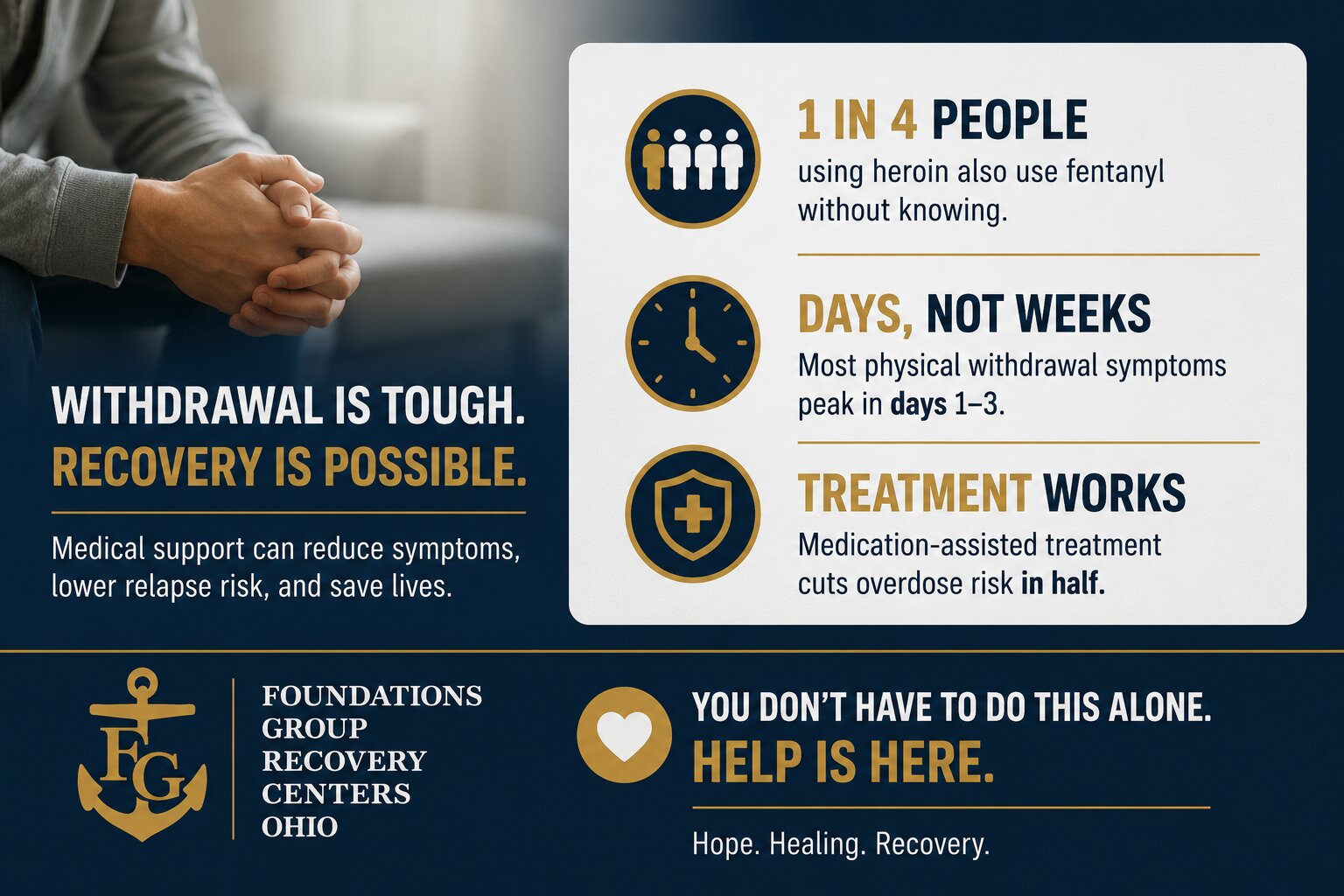
| Days 1–3 | Withdrawal usually reaches its peak. Vomiting, diarrhea, chills, goosebumps, body aches, insomnia, and severe cravings are often at their worst. |
| Days 5–7 | Physical symptoms usually begin improving, although fatigue, disrupted sleep, and emotional distress often remain. |
| Weeks to Months | Some people experience post-acute withdrawal syndrome (PAWS), including cravings, mood changes, anxiety, difficulty sleeping, and reduced motivation. |
While the most intense physical heroin detox symptoms often improve within about a week, emotional recovery generally takes longer.
This is one reason ongoing treatment matters even after detox is complete.
What Affects Withdrawal Severity?
Not everyone experiences heroin withdrawal the same way.
Several factors influence how severe symptoms become and how long they last.
Length of Heroin Use
Someone who has used heroin daily for years will often experience more intense withdrawal than someone who has been using for a shorter period.
Amount Used
Higher doses generally create greater physical dependence, resulting in stronger withdrawal symptoms.
Method of Use
People who inject heroin often develop dependence more rapidly because the drug reaches the brain very quickly, although withdrawal can occur regardless of whether heroin was injected, smoked, or snorted.
Previous Withdrawal Attempts
Each withdrawal experience can feel different. Individuals who have repeatedly cycled through withdrawal and relapse may find subsequent withdrawals more difficult emotionally and physically.
Mental Health Conditions
Anxiety disorders, depression, PTSD, or other mental health conditions can intensify emotional withdrawal symptoms and increase relapse risk without appropriate support.
Fentanyl in the Drug Supply
One of the most important considerations today is fentanyl.
Throughout Ohio, fentanyl has become increasingly common in the illicit opioid supply. Many people believe they are using heroin alone when fentanyl is also present.
Because fentanyl behaves differently in the body and may remain in tissues longer, withdrawal can sometimes last longer, become more severe, or require more careful medication timing during treatment.
This is one reason medically supervised assessment has become increasingly valuable.
MAT Options for Heroin Withdrawal
Medication-assisted treatment (MAT) has transformed opioid treatment over the past two decades.
Instead of expecting people to simply endure withdrawal through willpower alone, MAT uses carefully selected medications to reduce symptoms, lower cravings, and dramatically improve recovery outcomes.
For many people, this approach makes the difference between repeated relapse and lasting recovery.
Buprenorphine (Suboxone)
Buprenorphine—commonly prescribed as Suboxone when combined with naloxone—is one of the most widely used medications for opioid use disorder.
It works by partially activating opioid receptors, providing enough stimulation to relieve withdrawal symptoms and cravings without producing the intense euphoria associated with heroin.
Benefits include:
- Significant relief from withdrawal symptoms
- Reduced cravings
- Lower overdose risk than untreated opioid use
- Ability to begin treatment during early withdrawal under medical guidance
- Strong evidence supporting both short-term stabilization and long-term maintenance
For many people, starting buprenorphine early helps prevent the most severe heroin detox symptoms and allows them to focus on recovery rather than simply surviving withdrawal.
Methadone
Methadone is another highly effective medication for opioid use disorder.
Unlike buprenorphine, methadone is a full opioid agonist and is dispensed through licensed Opioid Treatment Programs (OTPs).
Methadone may be especially appropriate for individuals who:
- Have high opioid tolerance
- Have not responded well to buprenorphine
- Have long histories of opioid use
- Require more structured daily treatment
Research consistently shows methadone reduces opioid use, decreases overdose deaths, and helps people remain engaged in treatment.
MAT Is Not “Trading One Addiction for Another”
This misconception prevents many people from seeking treatment.
Taking buprenorphine or methadone under medical supervision is fundamentally different from uncontrolled heroin use.
Heroin produces rapid intoxication, unpredictable potency, and a high risk of overdose.
Medication-assisted treatment provides:
- Stable medication dosing
- Medical supervision
- Reduced cravings
- Improved daily functioning
- Lower overdose risk
- Better long-term recovery outcomes
These medications are evidence-based treatments supported by decades of research.
Using medication to treat opioid use disorder is no different than using insulin to manage diabetes or inhalers to control asthma. They treat a chronic medical condition using therapies that have been shown to improve health and save lives.
Ohio has expanded access to medication-assisted treatment in recent years, making evidence-based care more available than ever before.
Why Going Cold Turkey Can Be Dangerous
Many people attempt to quit heroin on their own because they feel embarrassed or believe they should be able to stop without help.
Unfortunately, withdrawal often becomes so uncomfortable that relapse occurs before symptoms improve.
One of the greatest dangers comes after that relapse.
During withdrawal, opioid tolerance begins decreasing quickly.
If someone returns to the amount they were using before quitting—especially if fentanyl is present—they face a much higher risk of overdose because their body can no longer tolerate the same dose.
Medical support helps reduce this risk by managing withdrawal symptoms while creating a structured transition into ongoing treatment.
Instead of cycling between withdrawal and relapse, people can begin building recovery immediately.
Getting Support Before Withdrawal Peaks
Many people wait until withdrawal becomes unbearable before asking for help.
In reality, reaching out earlier often makes treatment smoother and more comfortable.
Whether you’re worried about your own heroin use or supporting someone you love, you don’t have to wait until symptoms become overwhelming.
Professional treatment may include:
- Medical assessment
- Medication-assisted treatment
- Withdrawal monitoring
- Counseling
- Individual therapy
- Family support
- Relapse prevention planning
- Ongoing recovery services
At Foundations Ohio, compassionate clinicians understand that opioid use disorder is a medical condition—not a personal failure. Treatment is designed to reduce suffering, improve safety, and help people move toward lasting recovery.
If you’re considering taking the next step, learning more about heroin addiction treatment can help you understand your options before withdrawal becomes more difficult.
Frequently Asked Questions
How long does heroin withdrawal last?
Most physical heroin withdrawal symptoms improve within five to seven days, although the most intense symptoms usually occur during the first one to three days. Some people continue experiencing cravings, sleep problems, or mood changes for weeks or even months as part of post-acute withdrawal syndrome (PAWS).
Is heroin withdrawal dangerous?
Withdrawal itself is usually not life-threatening in otherwise healthy adults, but it can become medically complicated due to dehydration, underlying medical conditions, or severe vomiting and diarrhea. The greatest danger is often relapse after tolerance has decreased, which significantly increases the risk of overdose—especially when fentanyl is involved.
What medication helps with heroin withdrawal?
The two most commonly used medications are buprenorphine (Suboxone) and methadone. Both are evidence-based treatments that reduce withdrawal symptoms, decrease cravings, and improve long-term recovery outcomes when used under medical supervision.
Final Thoughts
Heroin withdrawal symptoms can feel overwhelming, but they do not have to be faced alone. Medical care, medication-assisted treatment, and ongoing support have helped countless people move beyond withdrawal and begin rebuilding their lives.
Whether this is your first attempt at recovery or you’ve tried before, seeking professional help is a sign of strength—not failure. Whether you’re in Columbus, Franklin County, Upper Arlington, Foundations Ohio is nearby and ready to help.
Call (888) 501-5618 or learn more about heroin addiction treatment at Foundations Ohio.