As a clinician, I’ve had conversations with executives, business owners, healthcare professionals, parents, teachers, and skilled tradespeople who all started with some version of the same sentence:
“I don’t have time for treatment.”
Sometimes they say it confidently.
Sometimes they say it apologetically.
Most of the time, they genuinely believe it.
They’re not being dismissive. They’re overwhelmed.
Their calendar is full.
Their responsibilities are real.
People rely on them.
And somewhere in the middle of holding everything together, they’ve started relying on alcohol, opioids, or other substances more than they ever intended.
What makes these situations especially difficult is that high-functioning individuals often become experts at hiding their struggles.
From the outside, everything appears fine.
Inside, it’s a different story.
If you’ve been searching for answers while trying to maintain your career, support your family, and protect the life you’ve built, you’re not alone. Many people begin by exploring opioid recovery support because they want help that fits into real life rather than replacing it.
Success Can Become a Reason to Avoid Help
One executive I worked with managed hundreds of employees.
He traveled regularly.
Led major meetings.
Made critical business decisions every day.
Nobody questioned his competence.
Nobody knew how much energy he spent worrying about opioids.
When he finally sought help, he told me something that stayed with me.
“I thought needing treatment meant I wasn’t as strong as everyone believed.”
That belief kept him stuck far longer than the substance itself.
High-functioning people often tie their identity to capability.
They’re the problem-solvers.
The dependable ones.
The people who carry extra weight when others can’t.
Asking for help can feel like threatening that identity.
But needing support doesn’t erase strength.
In many cases, it’s one of the clearest examples of strength.
The Hidden Cost of Looking Fine
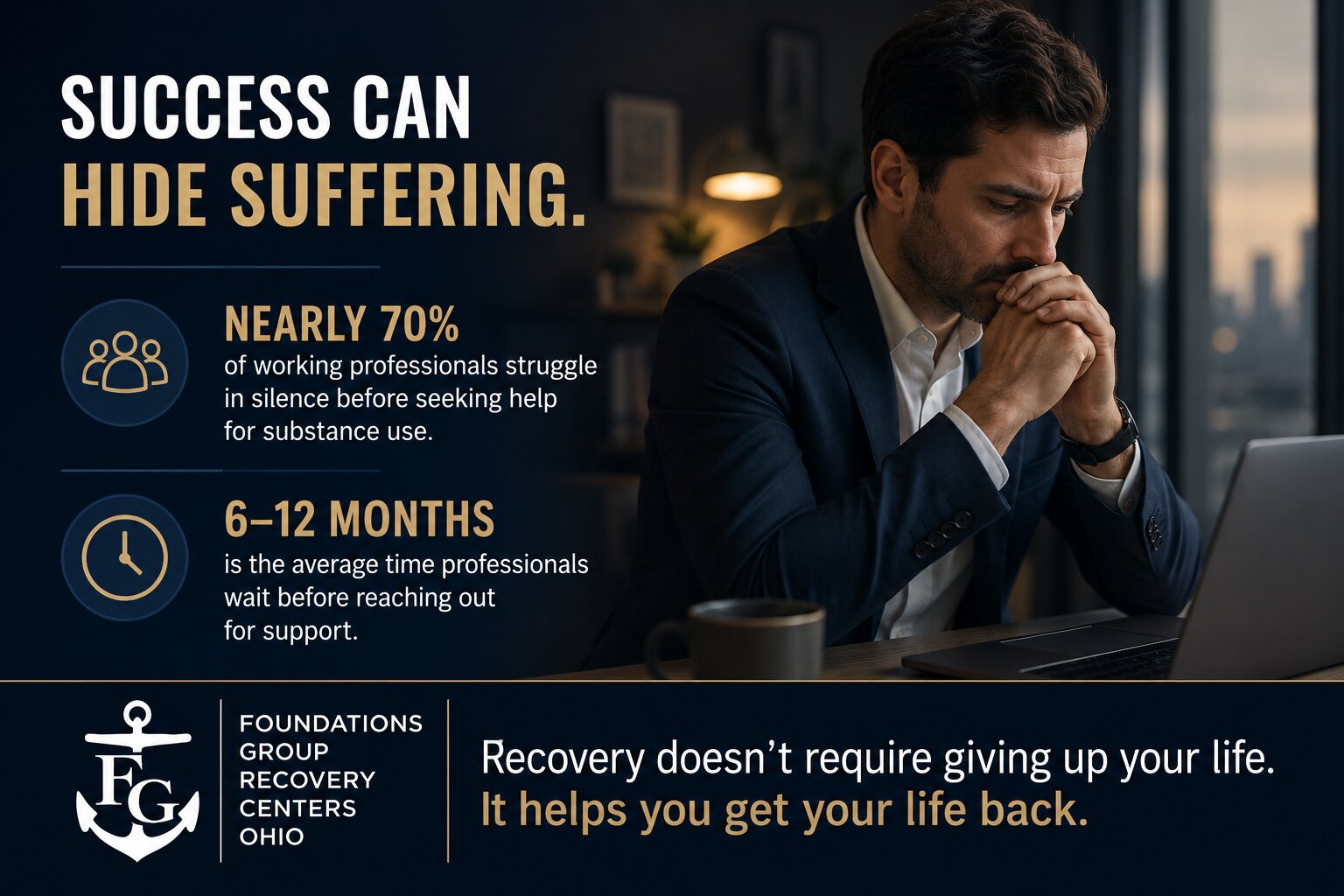
One challenge with being high-functioning is that success can hide suffering.
When someone loses a job because of substance use, the problem becomes obvious.
When someone continues succeeding professionally, it’s easier to convince themselves everything is manageable.
But functioning isn’t the same thing as thriving.
I’ve met people who looked successful on paper while privately experiencing:
- Constant anxiety about medication access
- Fear of running out
- Physical dependence
- Relationship strain
- Emotional exhaustion
- Growing isolation
- Chronic stress
Their careers remained intact.
Their peace of mind did not.
Many described feeling like they were living two separate lives.
One life everyone saw.
One life nobody knew existed.
That kind of double life is exhausting.
The Question Most People Are Really Asking
When people search online about treatment schedules, insurance coverage, or program length, they’re often asking a deeper question.
The real question isn’t:
“How long will treatment take?”
It’s:
“Can I actually do this without destroying my life?”
That’s an understandable concern.
Many people imagine treatment as an all-or-nothing decision.
Either continue struggling alone or disappear from everyday life entirely.
The reality is usually much more flexible.
Recovery support exists across different levels of care because people’s lives, responsibilities, and needs vary.
That flexibility can make a tremendous difference for people who have spent years believing treatment wasn’t realistic.
Why Waiting Feels Safer Than It Actually Is
One thing I’ve noticed repeatedly is that high-functioning people become excellent at postponing difficult decisions.
There’s always a reason.
After this project.
After this quarter.
After the holidays.
After the kids finish school.
After things settle down.
The problem is that life rarely settles down.
Responsibilities don’t disappear.
Stress doesn’t stop.
There is always another deadline waiting.
I’ve had clients who delayed seeking help for years because they were waiting for the perfect time.
Eventually, they realized something important.
Waiting was not protecting their life.
It was quietly shrinking it.
While they postponed treatment, their world became smaller.
More worry.
More secrecy.
More mental energy spent managing a problem that wasn’t getting better on its own.
Recovery Doesn’t Require Perfection
Another myth keeps people stuck.
They believe recovery starts with certainty.
Confidence.
Motivation.
Complete readiness.
In reality, many successful recoveries begin with skepticism.
Fear.
Frustration.
Doubt.
I’ve worked with countless people who entered treatment convinced it wouldn’t work.
Not because they were negative.
Because they had already tried other approaches.
They had already promised themselves they would stop.
They had already attempted moderation.
They had already relied on willpower.
The fact that previous attempts didn’t work didn’t mean recovery was impossible.
It meant they needed more support than self-discipline alone could provide.
That’s a very different conclusion.
Why Flexibility Matters More Than People Realize
One reason many individuals engage more consistently in recovery today is because support can often be adapted to real-world circumstances.
Not everyone enters treatment from the same place.
Some people require significant structure.
Others need support that allows them to continue working, parenting, or managing responsibilities.
The goal isn’t forcing people into identical experiences.
The goal is helping people stay engaged.
Engagement matters because recovery isn’t built through a single breakthrough moment.
It’s built through consistent participation.
Consistent support.
Consistent effort.
Consistent connection.
The easier it becomes for someone to remain engaged, the more likely meaningful change becomes.
A Story I Think About Often
Several years ago, I worked with a business owner who delayed treatment for nearly eighteen months.
Every time we spoke, he had another reason to wait.
His company needed him.
His employees depended on him.
The timing wasn’t right.
One day he said something unexpectedly honest.
“If I step away to get help, everything might fall apart.”
Months later, after beginning recovery, he laughed when he remembered that statement.
“You know what actually almost fell apart?” he asked.
“Me.”
That perspective shift was powerful.
Many high-functioning individuals spend years protecting every responsibility except themselves.
Eventually, the cost becomes impossible to ignore.
Recovery wasn’t what threatened his business.
Untreated addiction was.
Progress Often Looks Smaller Than Expected
People sometimes expect dramatic transformations.
They imagine a single moment where everything changes.
Most of the time, recovery looks quieter.
A better morning routine.
Improved sleep.
More patience.
Reduced anxiety.
Less preoccupation with obtaining substances.
More energy for family.
More focus at work.
Greater confidence in handling stress.
These changes may seem small individually.
Together, they can completely transform someone’s quality of life.
Recovery often resembles compound interest.
The benefits accumulate slowly at first.
Then one day the difference becomes impossible to ignore.
Looking Beyond Program Length
A lot of people researching opioid rehab length Ohio are trying to determine whether treatment fits into their life.
That’s understandable.
Time matters.
Responsibilities matter.
Insurance questions matter.
But eventually, most people discover that length isn’t the most important factor.
The better question is:
“What kind of support will help me stay engaged long enough to build lasting change?”
Recovery isn’t measured by how quickly someone completes a program.
It’s measured by what happens afterward.
The goal isn’t finishing treatment.
The goal is creating a life where recovery remains sustainable.
The People Who Succeed Are Not Usually the Strongest
This may surprise some readers.
The people who do best in long-term recovery are rarely the people who insist on handling everything alone.
They’re often the people willing to stay connected.
To ask questions.
To remain honest.
To accept support.
To keep showing up.
Strength matters.
But connection matters too.
No one was designed to carry every burden alone.
Not even the people who seem capable of carrying everything.
You Are Probably Less Alone Than You Think
If you’re reading this while balancing a career, a family, financial responsibilities, and concerns about substance use, I want you to know something.
Many people around you have stood in the exact same place.
Some are people you’d never suspect.
Successful professionals.
Parents.
Leaders.
Business owners.
People who appeared completely fine.
The struggle is more common than most people realize.
At Foundations Group Recovery Center Ohio, individuals can explore support in Areas We Serve or find additional help in Upper Arlington while learning about recovery options that fit their circumstances.
The goal isn’t to stop being dependable.
It’s to stop carrying everything alone.
Frequently Asked Questions
Can I continue working while receiving treatment?
Many people are able to continue working while participating in treatment. The appropriate level of care depends on individual circumstances, recovery needs, and professional responsibilities.
Why do high-functioning people wait so long to seek help?
Many successful individuals minimize their struggles because they remain productive. They often assume needing help would mean admitting weakness, which can delay treatment.
Does addiction always affect someone’s career?
Not immediately. Some people maintain successful careers for years while struggling privately. However, substance use often impacts stress levels, relationships, health, and overall quality of life long before professional consequences appear.
How do I know if I need treatment?
If substance use is creating stress, dependence, secrecy, relationship problems, or concerns about your health and well-being, it may be worth exploring professional support.
What if I have too many responsibilities to step away?
Many people share this concern. Treatment planning often considers work schedules, family obligations, and other responsibilities when determining appropriate care options.
How long does opioid recovery take?
Recovery timelines vary significantly. Individuals searching for opioid rehab length Ohio often discover that meaningful recovery is more about consistent engagement and support than reaching a specific finish line.
What is the first step toward getting help?
The first step is usually a conversation. Learning about available options can help reduce uncertainty and provide clarity about what support may fit your needs.
Call (888)501-5618 or visit our substance use treatment Ohio page to learn more about our substance use treatment Columbus, Ohio, opiate addiction treatment Franklin County, Ohio.