If you’re wondering how long does detox take, you’re probably trying to plan ahead. You may be thinking about taking time off work, arranging childcare, or simply preparing yourself for what lies ahead. Those are practical questions, and understanding the timeline can make the process feel less uncertain.
The short answer is that detox looks different for everyone. The biggest factor is the substance involved. Alcohol, opioids, benzodiazepines, and stimulants each affect the body differently, so withdrawal follows a different timeline. If you’re considering professional care, learning more about medical detox can help you understand what to expect before treatment begins.
This guide provides a clear detox timeline by substance, explains why detox length varies, and outlines what happens during medically supervised detox.
General Detox Timeline Overview
Detox is the process of allowing the body to clear alcohol or drugs while managing withdrawal symptoms safely.
Although people often think of detox as a single event, it actually happens in stages.
Acute Detox
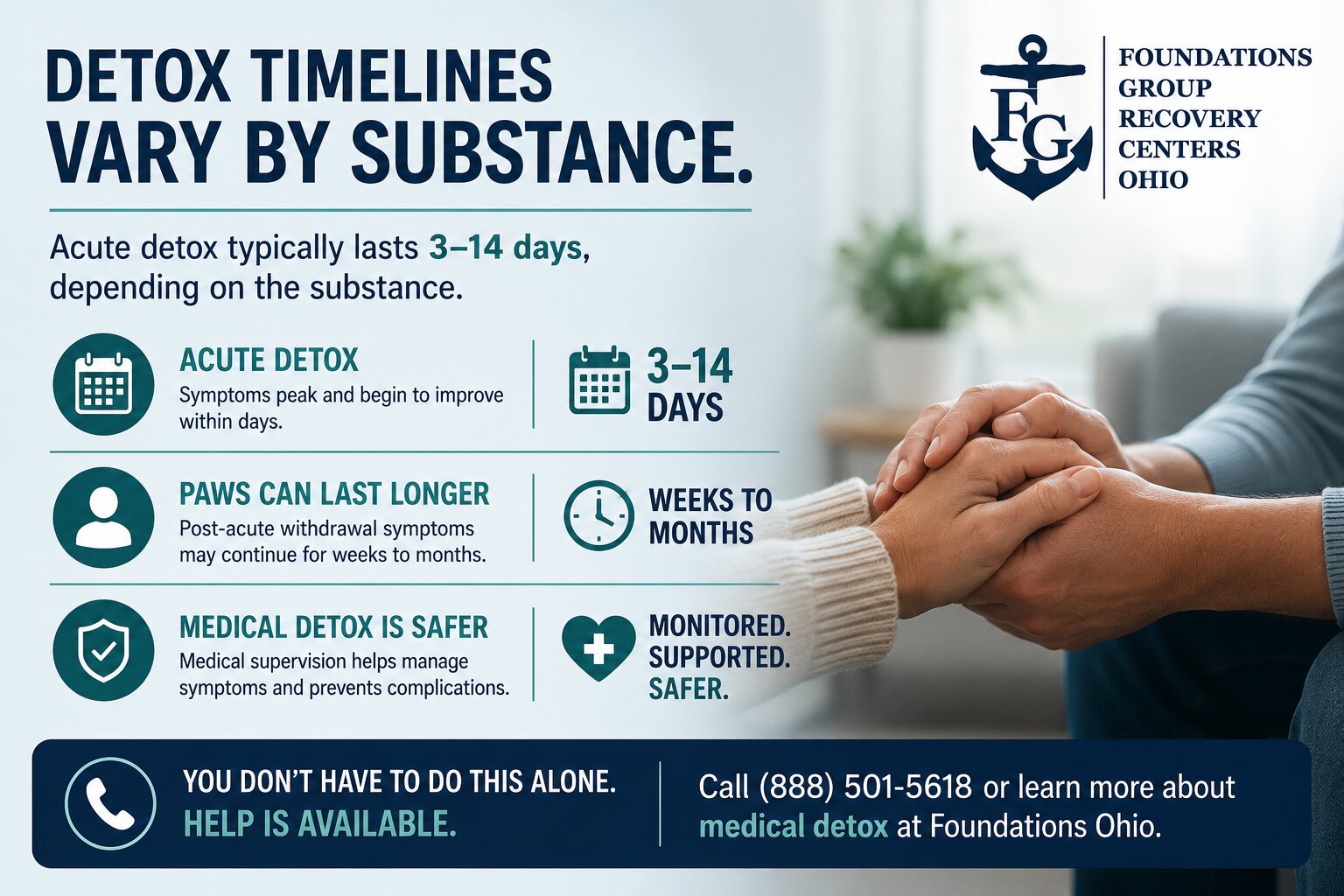
Acute detox is the period when withdrawal symptoms are strongest. For most substances, this phase lasts somewhere between 3 and 14 days, although some substances fall outside that range.
During acute detox:
- The body eliminates the substance.
- Withdrawal symptoms develop and peak.
- Medical monitoring may be necessary depending on the substance.
Post-Acute Withdrawal (PAWS)
For some people, symptoms don’t disappear once acute detox ends.
Post-Acute Withdrawal Syndrome (PAWS) may include:
- Sleep disturbances
- Mood changes
- Anxiety
- Difficulty concentrating
- Low energy
- Cravings
These symptoms can continue for weeks or even months, particularly after long-term alcohol, opioid, or benzodiazepine use. PAWS is different from acute detox and is typically managed through ongoing treatment and recovery support rather than detox alone.
Detox Timeline by Substance
The following table provides a general overview of common withdrawal timelines. Individual experiences vary depending on the amount used, length of use, overall health, and whether multiple substances are involved.
| Substance | Withdrawal Begins | Symptoms Peak | Acute Detox Duration | Medical Supervision Needed? |
|---|---|---|---|---|
| Alcohol | 6–12 hours | 24–72 hours | 5–7 days | Yes (risk of seizures and delirium tremens) |
| Opioids | 6–24 hours | 1–3 days | 5–10 days | Recommended |
| Benzodiazepines | 24–72 hours | Varies | 2–4 weeks | Yes (risk of seizures) |
| Stimulants (Meth/Cocaine) | 12–24 hours | 1–5 days | 1–2 weeks | Recommended |
Alcohol
Many people ask, how long does alcohol detox take?
Alcohol withdrawal often begins within 6 to 12 hours after the last drink, with symptoms typically reaching their peak between 24 and 72 hours. Most acute withdrawal resolves within five to seven days, although some people experience lingering symptoms afterward.
Because alcohol withdrawal can lead to seizures or delirium tremens (DTs), medical supervision is strongly recommended for anyone with heavy or long-term alcohol use.
Opioids
The opioid detox timeline depends on the specific opioid being used, but withdrawal generally begins within 6 to 24 hours after the last dose.
Symptoms often peak during the first one to three days before gradually improving over the next several days. Acute opioid detox usually lasts five to ten days.
Although opioid withdrawal is rarely life-threatening on its own, medical detox can make the process safer and significantly more comfortable by helping manage withdrawal symptoms and cravings.
Benzodiazepines
Benzodiazepines typically produce the longest acute detox among commonly misused substances.
Withdrawal may begin one to three days after the last dose, depending on whether the medication is short-acting or long-acting. Symptoms can continue for two to four weeks—and sometimes longer in people who have used benzodiazepines for extended periods.
Because withdrawal can cause seizures and other serious complications, benzodiazepine detox should never be attempted without medical supervision.
Stimulants (Methamphetamine and Cocaine)
Withdrawal from stimulants such as methamphetamine or cocaine usually begins within the first day after stopping.
Symptoms often peak over the first several days and generally improve within one to two weeks.
Unlike alcohol or benzodiazepines, stimulant withdrawal usually isn’t medically dangerous, but it can involve severe fatigue, depression, anxiety, cravings, and emotional distress. Professional support can help people safely navigate this difficult period.
What Affects How Long Detox Takes?
Even when two people use the same substance, their detox experiences may be very different.
Several factors influence detox length.
Length and Amount of Use
Someone who has used a substance daily for years generally experiences a longer detox than someone with a shorter history of use.
Higher doses often lead to more prolonged withdrawal as well.
Age and Overall Health
The body’s ability to process drugs and alcohol changes with age.
Liver function, kidney function, nutrition, hydration, and other medical conditions all influence how quickly the body clears substances.
Polydrug Use
Many people entering treatment have used more than one substance.
For example:
- Alcohol and benzodiazepines
- Opioids and benzodiazepines
- Cocaine and alcohol
Multiple substances complicate withdrawal and often extend the medical detox length, requiring careful monitoring and individualized treatment.
Metabolism
Genetics, body composition, liver function, and overall metabolism all affect how quickly substances leave the body.
These differences explain why detox timelines can vary even among people using similar amounts.
Co-Occurring Mental Health Conditions
Anxiety, depression, PTSD, bipolar disorder, and other mental health conditions may not necessarily prolong detox itself, but they can make withdrawal feel more difficult and may require additional clinical support during treatment.
What Happens During Medical Detox?
Many people worry that detox simply means being left alone to suffer through withdrawal.
Medical detox is very different.
The goal is to keep patients as safe and comfortable as possible while their bodies adjust to functioning without alcohol or drugs.
During detox, medical professionals may provide:
- 24-hour medical monitoring
- Regular vital sign checks
- Hydration and nutritional support
- Medication to reduce withdrawal symptoms
- Immediate response if complications develop
Medication may also be used depending on the substance involved.
Examples include:
- Benzodiazepines to reduce the risk of seizures during alcohol withdrawal
- Buprenorphine (Suboxone®) or methadone to help manage opioid withdrawal
- Other medications to address nausea, insomnia, anxiety, muscle aches, or elevated blood pressure
Why Medical Detox Is Different From Going Cold Turkey
Some people consider stopping drugs or alcohol at home without medical supervision.
While that may sound simpler, it isn’t always safe.
Alcohol and benzodiazepine withdrawal can become life-threatening without medical care because of seizure risk and other serious complications.
Even when withdrawal is not medically dangerous, symptoms such as severe vomiting, dehydration, intense cravings, anxiety, or depression can make it much harder to complete detox successfully.
Medical detox provides a safer environment where symptoms can be monitored and treated as they arise.
Detox Is the Beginning, Not the End
Completing detox is a major accomplishment, but it’s only the first step in recovery.
Detox helps the body become physically stable. It does not address the underlying patterns, emotional challenges, or behavioral changes that contribute to addiction.
After detox, many people continue with:
- Residential treatment
- Partial hospitalization programs (PHP)
- Intensive outpatient programs (IOP)
- Individual therapy
- Group counseling
- Medication-assisted treatment when appropriate
- Long-term recovery support
Continuing treatment after detox greatly improves the chances of maintaining long-term recovery.
If you’re considering taking that first step, call (888) 501-5618 or learn more about medical detox at Foundations Ohio. Whether you’re in Columbus, Franklin County, Upper Arlington, Foundations Ohio is nearby and ready to help.
Frequently Asked Questions
How long does alcohol detox take?
Alcohol withdrawal typically begins within 6 to 12 hours after the last drink, peaks between 24 and 72 hours, and most acute detox resolves within five to seven days. Because alcohol withdrawal can cause seizures and delirium tremens, medical supervision is recommended for many individuals.
How long does opioid detox take?
Opioid withdrawal generally begins within 6 to 24 hours after the last dose, peaks during the first one to three days, and acute detox usually lasts between five and ten days. Professional medical care can help manage symptoms and improve comfort throughout the process.
What is the longest detox?
Among the substances discussed, benzodiazepines typically involve the longest acute detox. Withdrawal may continue for two to four weeks, and in some cases longer, depending on the medication used and the length of use. Because withdrawal can be medically dangerous, benzodiazepine detox should always occur under professional supervision.