
Seeing someone you love become intensely paranoid, hear voices, or react to things that are not there can be terrifying. You may feel as though the person you know has suddenly disappeared. Meth psychosis can closely resemble schizophrenia, but it is triggered by methamphetamine use and may develop during intoxication, after a prolonged binge, or shortly after use stops.
Although the experience is serious, it does not automatically mean that the person will remain psychotic permanently. Many people improve after meth use stops, sleep is restored, and appropriate medical care is provided. However, symptoms can sometimes persist, particularly after repeated or heavy use.
If meth use has become difficult to stop, learning about meth addiction treatment can help you understand the clinical support available.
What Is Meth Psychosis?
Meth psychosis is a state in which methamphetamine use disrupts a person’s ability to accurately interpret reality. The person may see or hear things that are not present, develop fixed false beliefs, become extremely suspicious, or behave in ways that seem confusing and out of character.
Meth strongly affects dopamine, a chemical involved in motivation, reward, movement, attention, and the way the brain assigns importance to information. Meth causes a large release of dopamine while also interfering with its normal regulation. At high levels, this disruption can contribute to psychotic symptoms. (NIDA)
Meth-induced psychosis can take two general forms:
Acute meth psychosis begins during meth use, after a high dose, or following a binge that may involve several days without adequate sleep.
Persistent meth psychosis continues beyond the immediate intoxication or withdrawal period. Symptoms may remain for weeks or months after the person stops using meth.
Not everyone who uses meth develops psychosis. Risk may increase with heavier or more frequent use, sleep deprivation, previous episodes of meth psychosis, and a personal or family vulnerability to psychotic disorders.
Symptoms of Meth Psychosis
The exact presentation varies. Some people primarily become suspicious and fearful, while others experience vivid hallucinations or severe agitation.
Common methamphetamine psychosis symptoms include the following.
Paranoia
Paranoia is one of the most common features of meth psychosis. A person may firmly believe that:
- Someone is watching or following them
- Their phone, home, or vehicle is being monitored
- Family members are plotting against them
- Strangers intend to hurt or arrest them
- Ordinary events contain secret threats or messages
These fears feel real to the person experiencing them. Logical explanations may not change the belief, and attempts to prove them wrong can sometimes increase fear or agitation.
Persecutory delusions and auditory hallucinations are among the most consistently reported symptoms of meth-associated psychosis. (PubMed)
Hallucinations
Hallucinations are sensory experiences that occur without an external source.
They may include:
- Auditory hallucinations: Hearing voices, footsteps, whispers, alarms, or threatening sounds
- Visual hallucinations: Seeing shadows, people, lights, animals, or movement that is not there
- Tactile hallucinations: Feeling sensations on or beneath the skin without a physical cause
Some people experience a sensation commonly described as “meth mites,” in which they feel as though insects are crawling on or underneath their skin. This may lead to repeated scratching or picking, sometimes causing sores and infections.
Delusions
Delusions are firmly held beliefs that remain in place despite clear evidence that they are not true.
For example, a person might believe that cameras have been hidden inside the walls or that family members have been replaced by impostors. These beliefs are not ordinary misunderstandings. They arise from a serious disruption in the person’s perception of reality.
Disorganized Thinking and Behavior
Someone experiencing meth psychosis may:
- Jump rapidly between unrelated subjects
- Speak in ways that are difficult to follow
- Repeat the same phrase or concern
- Search rooms for hidden people or devices
- Barricade doors or cover windows
- Take apart electronics or household objects
- Wander without a clear purpose
The person may appear unable to organize their thoughts or respond appropriately to what is happening around them.
Agitation or Aggression
Meth increases activity in the nervous system. During psychosis, fear and overstimulation can lead to pacing, shouting, threatening behavior, impulsive actions, or aggression.
Aggression does not occur in every case. However, someone who sincerely believes they are being attacked or followed may react defensively because the perceived danger feels real.
Symptoms That Resemble Schizophrenia
Meth psychosis may look very similar to schizophrenia, particularly when hallucinations, paranoia, and disorganized behavior are prominent. In some cases, symptoms alone are not enough to distinguish the two conditions.
Clinicians consider several factors, including:
- When symptoms began
- Whether they began during or after meth use
- Whether psychosis occurred before meth use
- How long symptoms continue after stopping
- Drug screening results
- Personal and family psychiatric history
Persistent meth psychosis and schizophrenia can be difficult to differentiate based only on a person’s behavior or reported symptoms. (PubMed Central (PMC))
How Long Does Meth Psychosis Last?
The answer to how long does meth psychosis last depends on how much meth was used, how long the person stayed awake, whether psychosis has happened before, and whether there is an underlying vulnerability to a psychotic disorder.
Acute Meth Psychosis
When psychosis develops during a binge or shortly afterward, symptoms often begin improving once meth use stops and the person receives sleep, food, hydration, and medical support.
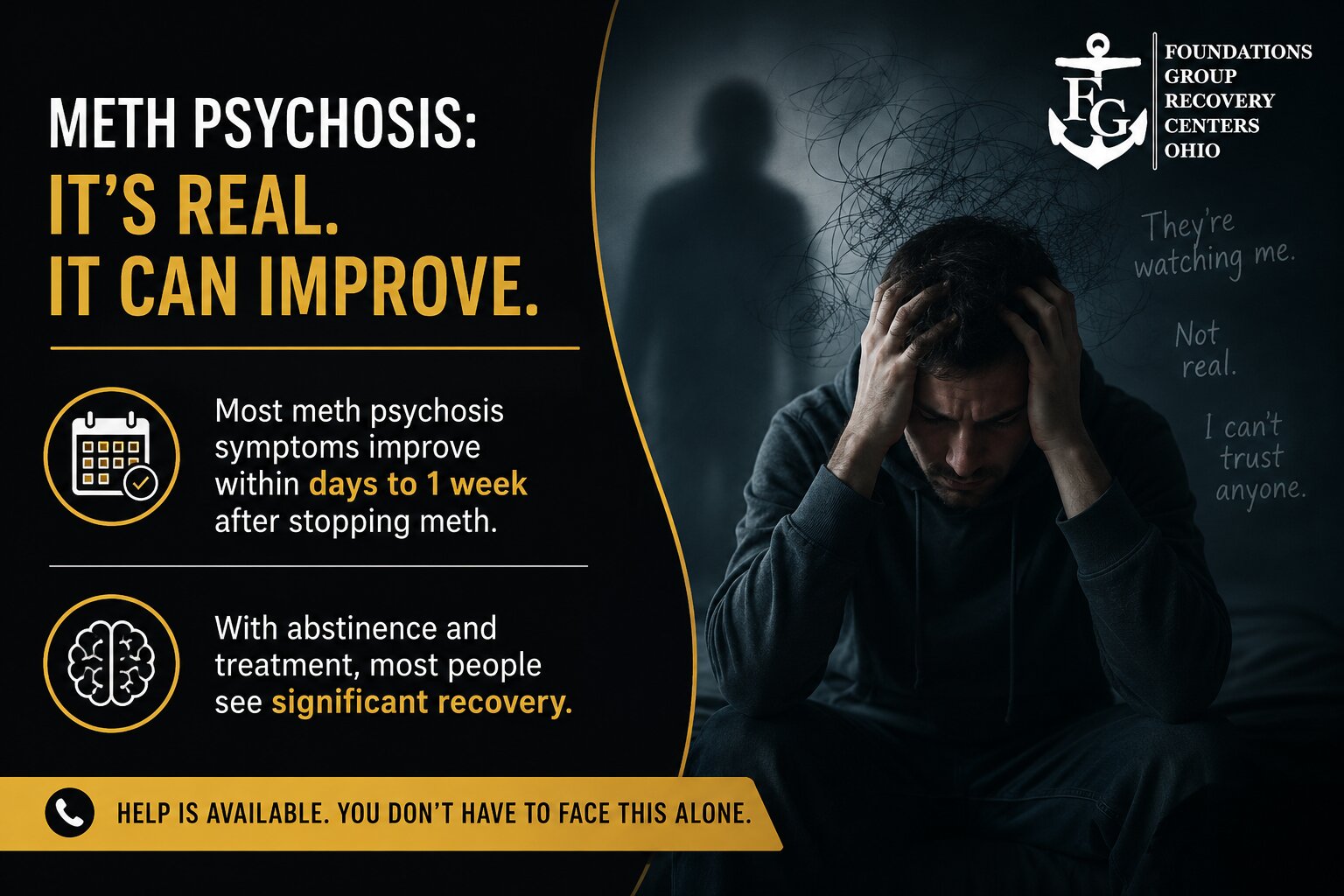
In many acute cases, symptoms resolve within several days. Some episodes may last approximately one week. Research generally describes meth-induced psychosis as temporary for most affected individuals, with symptoms often subsiding within days after meth use ends. (PubMed Central (PMC))
Improvement may not happen all at once. A person may sleep for an extended period and then remain anxious, suspicious, confused, or emotionally unsettled for a while after waking.
Persistent Meth Psychosis
With frequent, long-term, or heavy meth use, psychotic symptoms can continue for weeks or months after the last use.
Research has documented cases in which symptoms remain beyond one month of abstinence. A smaller group of people develop a persistent pattern of psychosis requiring continued psychiatric monitoring and treatment. (PubMed)
Repeated episodes also matter. Someone who has experienced meth psychosis before may become more vulnerable to another episode. In some cases, future psychosis may be triggered by smaller amounts of meth, stress, or significant sleep deprivation.
Is Meth Psychosis Permanent?
For most people, meth psychosis is not permanent. Symptoms often resolve when meth use stops and the person receives adequate sleep, stabilization, and treatment.
Still, it would not be accurate to promise that every case will disappear within a few days.
Some people experience symptoms that persist for weeks or months. Others may continue to have recurring psychotic episodes, especially if they return to meth use. Meth may also reveal or trigger an underlying vulnerability to schizophrenia or another psychotic disorder in certain individuals.
This does not necessarily mean meth “caused schizophrenia” in every persistent case. The relationship can be difficult to untangle. A person may have had an existing vulnerability that had not yet become visible, or repeated meth exposure may have contributed to lasting changes in how the brain responds to stress and dopamine.
The most honest answer is:
- Most acute episodes improve after meth use stops.
- Persistent symptoms are possible but less common.
- Repeated meth use increases the risk of psychosis returning.
- Symptoms that continue after abstinence require psychiatric evaluation.
- Early treatment and continued abstinence offer the best chance of recovery.
A prolonged episode should not be treated as hopeless. Even when symptoms do not resolve immediately, ongoing psychiatric care, addiction treatment, stable housing, sleep, and family support can help the person regain stability.
When Meth Psychosis Is a Medical Emergency
It can be difficult to know whether to call for emergency help, especially when you are afraid that involving emergency responders will upset the person.
Call 911 when the person:
- Threatens or attempts to harm themselves
- Threatens or attempts to harm someone else
- Has access to a weapon
- Is severely agitated or cannot be safely redirected
- Is running into traffic or engaging in other dangerous behavior
- Has a seizure
- Collapses or loses consciousness
- Has chest pain or severe difficulty breathing
- Has a dangerously high body temperature
- Appears extremely confused or medically unstable
Meth toxicity can involve seizures, dangerously high body temperature, severe cardiovascular problems, and delirium in addition to psychosis. These symptoms require immediate medical care. (MSD Manuals)
What to Do While Help Is Coming
Keep your voice calm and your sentences simple. Reduce noise, bright lights, and the number of people in the room when this can be done safely.
Do not argue with hallucinations or delusions. Saying, “That isn’t real,” may feel dismissive or threatening to someone whose fear is intense.
Instead, try statements such as:
- “I can see that you’re frightened.”
- “I don’t see what you’re seeing, but I believe that this feels real to you.”
- “I want to help keep you safe.”
- “We are going to get medical help.”
Do not corner, restrain, chase, or touch the person unexpectedly. Keep a safe distance and make sure you have access to an exit. Remove children and other vulnerable people from the immediate area.
Your safety matters too. You are not expected to manage severe psychosis alone.
Treatment and Recovery
The immediate goal of treatment is to protect the person and others, reduce dangerous agitation, restore sleep, and address any medical complications.
Depending on the circumstances, acute care may include:
- A medical and psychiatric evaluation
- Monitoring of heart rate, blood pressure, temperature, and hydration
- A calm, low-stimulation environment
- Medication for severe agitation
- Antipsychotic medication when clinically appropriate
- Benzodiazepines in some emergency settings
- Treatment for overheating, dehydration, seizures, or other complications
- Observation until the person is medically and psychiatrically stable
Treatment decisions depend on the person’s symptoms and physical condition. Medications should be administered by qualified medical professionals rather than given informally at home.
Once the immediate crisis passes, the most important step for preventing another episode is stopping meth use. Continued or renewed meth use can quickly bring psychotic symptoms back, even after a long period of stability.
Long-term care may include:
- Residential or outpatient addiction treatment
- Individual and group therapy
- Psychiatric medication management when needed
- Relapse-prevention planning
- Sleep and nutrition support
- Family education
- Ongoing monitoring for returning psychotic symptoms
A parent may be thinking, “We have already tried treatment. Why would this time be different?” A return to meth use does not mean recovery is impossible or that every previous effort was wasted. It means the treatment plan needs to be reassessed and adjusted.
You did not cause the psychosis by failing to say the perfect thing. You also cannot reason someone out of an active psychotic state through willpower or love alone. What you can do is recognize danger, seek professional help, maintain reasonable boundaries, and keep the path to treatment open.
Call (888) 501-5618 or learn about meth addiction treatment at Foundations Ohio. Whether you’re in Columbus, Franklin County, Upper Arlington, Foundations Ohio is nearby and ready to help.
Frequently Asked Questions
How long does meth psychosis last?
Acute meth psychosis often improves within several days to about one week after meth use stops, particularly once the person sleeps and receives medical support. However, symptoms can last for weeks or months in some people with chronic or repeated meth use. Persistent symptoms require evaluation by a medical and psychiatric professional.
Is meth psychosis permanent?
Meth psychosis is not permanent for most people. Many episodes resolve with abstinence, sleep, and treatment. A smaller group experiences persistent or recurring psychosis, particularly after repeated heavy meth use or when an underlying vulnerability to a psychotic disorder is present.
What does meth psychosis look like?
Meth psychosis may involve intense paranoia, hearing voices, seeing things, feeling insects crawling beneath the skin, fixed false beliefs, disorganized speech, unusual behavior, agitation, or aggression. The person may seem frightened and may be unable to recognize that their experiences are not based in reality.