You’ve been watching someone you love, and something feels different.
Maybe they’ve started canceling family plans, drinking more than they used to, or becoming someone you barely recognize after a few drinks. Perhaps you’ve noticed empty bottles hidden around the house, late-night phone calls that don’t make sense, or mood swings that leave everyone walking on eggshells.
You may have asked yourself countless questions.
Am I overreacting? Is this just stress? Will it pass on its own?
If you’re searching for the signs of alcoholism, you’re likely hoping for clarity—not judgment.
Alcohol use disorder rarely develops overnight. It often begins with subtle changes that become more noticeable over time. Recognizing those changes early can make a meaningful difference for both the person drinking and the people who love them.
If alcohol has begun affecting someone’s health, relationships, or ability to function, learning more about alcohol addiction treatment can be an important first step. The earlier support begins, the greater the opportunity to prevent more serious consequences.
Physical Signs of Alcoholism
Alcohol affects nearly every organ system in the body. While not everyone develops the same symptoms, persistent heavy drinking often produces noticeable physical changes.
Changes in Appearance
One of the earliest things loved ones notice is that someone simply “looks different.”
Possible physical signs include:
- Persistent redness of the face
- Flushed skin
- Broken facial capillaries
- Bloodshot or glassy eyes
- A frequent smell of alcohol
- Poor personal hygiene
- Looking tired or unwell
These changes may become more obvious after drinking but can eventually persist even when someone is sober.
Morning Tremors
Shaking hands—especially first thing in the morning—can be an important warning sign.
Some individuals notice their tremors improve after having a drink, which may indicate that alcohol withdrawal symptoms are beginning between periods of drinking.
This doesn’t happen to everyone, but when it does, it deserves medical attention.
Weight and Appetite Changes
Alcohol contains calories but offers very little nutritional value.
Over time, someone may experience:
- Weight gain from increased calorie intake
- Weight loss from poor nutrition
- Reduced appetite
- Vitamin deficiencies
- Muscle weakness
These changes often develop gradually, making them easy to overlook.
Sleep Problems
Many people believe alcohol helps them sleep because it causes drowsiness.
In reality, alcohol disrupts normal sleep cycles and often leads to:
- Difficulty staying asleep
- Early morning waking
- Poor sleep quality
- Daytime fatigue
Someone may spend enough hours in bed but still wake feeling exhausted.
Signs of Long-Term Liver Damage
As alcohol-related liver disease progresses, more serious symptoms can develop, including:
- Abdominal swelling
- Enlarged liver
- Yellowing of the skin or eyes (jaundice)
- Easy bruising
- Persistent fatigue
These symptoms generally appear later and require prompt medical evaluation.
Behavioral and Psychological Signs
While physical changes can be concerning, loved ones often notice behavioral changes first.
These patterns may offer some of the clearest signs of alcohol use disorder.
Drinking Alone or Secretly
Someone may begin:
- Hiding alcohol
- Drinking before social events
- Pouring alcohol into different containers
- Sneaking drinks throughout the day
- Drinking after everyone else has gone to bed
Secretive drinking often reflects growing concern about how much alcohol they’re consuming—or how others might react.
Needing Alcohol to Feel Normal
One of the more significant symptoms of alcoholism is when drinking shifts from something someone wants to do to something they feel they need to do.
They may say things like:
- “I need a drink after work.”
- “I can’t relax without it.”
- “I just need one to take the edge off.”
Over time, alcohol becomes less about enjoyment and more about avoiding discomfort.
Inability to Stop After One Drink
Many people occasionally drink more than they intended.
The difference with alcohol use disorder is that this pattern becomes frequent.
Someone may sincerely plan to have one or two drinks but repeatedly find themselves continuing until they’re intoxicated.
Blackouts and Memory Loss
Alcohol-related blackouts occur when someone cannot remember events that happened while they were awake and interacting with others.
These episodes may include:
- Forgotten conversations
- Missing hours of time
- No memory of driving home
- Friends describing events the person cannot recall
Blackouts are not simply “passing out.” They indicate alcohol has significantly impaired memory formation.
Mood Changes
Alcohol often changes more than behavior.
Loved ones may notice:
- Irritability
- Increased anger
- Anxiety
- Depression
- Emotional withdrawal
- Defensiveness when drinking is discussed
Sometimes these changes appear only while drinking.
Other times, they become part of everyday life.
Making Excuses
As drinking becomes more important, explanations often become more frequent.
Examples include:
- “Everyone drinks.”
- “I’ve had a stressful week.”
- “It’s only on weekends.”
- “I deserve to relax.”
While these statements may sound reasonable individually, a pattern of justifying drinking despite growing problems can signal something more serious.
Neglecting Responsibilities
Alcohol begins affecting daily life when someone consistently struggles to meet responsibilities at home, work, or school.
Examples include:
- Missing work
- Poor job performance
- Financial problems
- Relationship conflicts
- Forgetting commitments
- Losing interest in hobbies
Continuing to drink despite these consequences is one of the defining characteristics of alcohol use disorder.
The Difference Between Heavy Drinking and Alcohol Use Disorder
Many families wonder whether someone is simply drinking too much or whether they have alcoholism.
The distinction matters.
Not everyone who drinks heavily meets the clinical criteria for alcohol use disorder (AUD).
Healthcare professionals diagnose AUD based on patterns of behavior rather than the number of drinks alone.
Questions that often matter include:
- Can they stop once they start drinking?
- Have they tried to cut back unsuccessfully?
- Do they experience cravings?
- Is alcohol interfering with work, school, or relationships?
- Do they continue drinking despite health or family problems?
- Do they become distressed when they cannot drink?
In other words, the pattern matters more than any single drinking episode.
If alcohol is beginning to control someone’s decisions instead of simply being an occasional part of life, it may be time to seek professional guidance.
The Stages of Alcoholism
Alcohol use disorder often develops gradually rather than all at once.
Although everyone’s experience is different, many clinicians describe three broad stages of alcoholism.
Early Stage
In the early stage, drinking becomes more frequent.
Someone may:
- Drink to manage stress
- Build tolerance
- Look forward to drinking
- Begin minimizing how much they consume
Family members may notice changes before the individual recognizes a problem.
Middle Stage
Alcohol begins causing more noticeable consequences.
Common signs include:
- Frequent blackouts
- Relationship conflict
- Missed responsibilities
- Drinking despite negative outcomes
- Increasing dependence
At this point, stopping without support may become much more difficult.
Late Stage
In the later stage, alcohol affects nearly every aspect of life.
Possible features include:
- Severe physical health problems
- Withdrawal symptoms
- Significant family disruption
- Financial difficulties
- Loss of employment
- Serious liver disease
- Continued drinking despite obvious harm
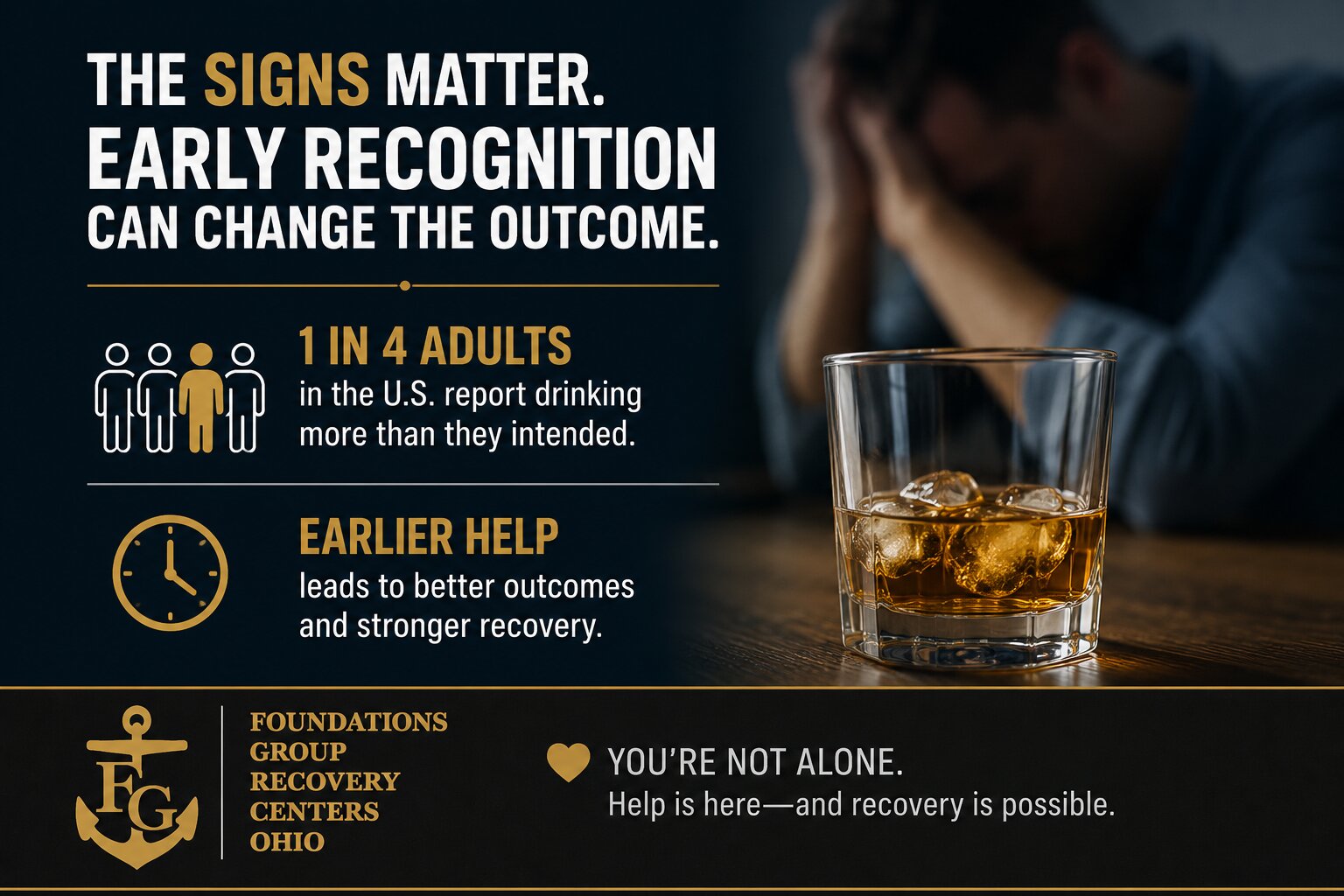
The encouraging news is that recovery remains possible at every stage.
Earlier recognition simply gives someone more opportunities to receive help before the condition progresses further.
Across Ohio—including Franklin County and the Columbus area—alcohol use disorder continues to affect thousands of individuals and families every year. Effective treatment is available, and no one has to face this alone.
How to Help a Loved One With Alcoholism
Watching someone struggle with alcohol can leave families feeling exhausted, frightened, and unsure what to do next.
You cannot force someone to change.
But you can influence how you respond.
Choose the Right Time
Avoid discussing drinking when someone is intoxicated.
Instead, look for a calm, private moment when everyone is able to communicate clearly.
Speak From Concern
Focus on what you’ve observed rather than making accusations.
For example:
- “I’ve noticed you’ve seemed different lately.”
- “I’m worried about you.”
- “I’m concerned about how alcohol seems to be affecting your health.”
These statements often feel less confrontational than labels or criticism.
Avoid Shame
Comments such as:
- “Why can’t you just stop?”
- “You’re ruining everyone’s life.”
- “You clearly don’t care.”
may increase defensiveness rather than encourage treatment.
Alcohol use disorder is a medical condition, not a character flaw.
Set Healthy Boundaries
Supporting someone does not mean protecting them from every consequence of drinking.
Healthy boundaries may include:
- Refusing to cover for missed responsibilities
- Not providing money that could be used for alcohol
- Protecting your own emotional well-being
- Seeking support for yourself when needed
Boundaries are acts of care—for both you and your loved one.
Encourage Professional Help
Recovery often begins with a conversation.
If your loved one seems open to getting help, encourage them to learn about alcohol addiction treatment. Professional care can provide medical evaluation, counseling, and individualized treatment options designed to support long-term recovery.
Remember that even if someone is not ready today, your compassionate, consistent support can still matter.
Frequently Asked Questions
What are the signs of alcoholism in a loved one?
Common signs include secretive drinking, frequent intoxication, blackouts, mood changes, hiding alcohol, neglecting responsibilities, physical changes such as bloodshot eyes or facial redness, and continuing to drink despite negative consequences.
How do you know if someone is an alcoholic?
No single symptom confirms alcohol use disorder. Healthcare professionals evaluate patterns such as loss of control over drinking, cravings, unsuccessful attempts to cut back, withdrawal symptoms, and alcohol continuing to interfere with work, relationships, or health.
What’s the difference between heavy drinking and alcoholism?
Heavy drinking refers to consuming large amounts of alcohol. Alcoholism, or alcohol use disorder, involves a pattern of impaired control over drinking, continued use despite harm, and increasing difficulty stopping or reducing alcohol consumption.
Final Thoughts
Recognizing the signs of alcoholism can be painful, especially when the person struggling is someone you love. It’s natural to question yourself or wonder whether you’re seeing the situation clearly. But trusting your concerns and seeking information is often the first step toward helping.
Recovery is possible, and families don’t have to carry this burden alone. Whether you’re in Columbus, Franklin County, Upper Arlington, Foundations Ohio is nearby and ready to help.
Call (888) 501-5618 or learn more about alcohol addiction treatment at Foundations Ohio.