I always thought relapse would look obvious.
I thought there would be some dramatic collapse. A disaster. A moment where everyone around me knew something was wrong.
Instead, it felt quiet.
It looked like waking up tired every day. Smiling through conversations I didn’t emotionally feel part of anymore. Sitting in meetings while secretly wondering if everyone else felt as disconnected as I did.
I had years sober. People trusted me again. My life looked stable from the outside. That’s what made it confusing.
Because nothing was technically falling apart.
And yet internally, I felt like a house with water slowly leaking through the walls. No explosion. No sirens. Just damage quietly spreading where nobody could see it.
If you’ve ended up searching for support for opiate addiction treatment in Ohio after years of recovery, there’s a good chance you understand this feeling better than you wish you did.
Long-Term Recovery Can Feel Emotionally Strange
People celebrate sobriety milestones a lot in early recovery.
And they should.
Getting sober is hard. Staying sober through the first year can feel almost impossible some days. Everything is intense in the beginning:
- Cravings
- Emotions
- Fear
- Hope
- Constant self-awareness
Early recovery often has structure built into it automatically. Meetings. Phone calls. Accountability. Daily survival mode.
But eventually life calms down.
And honestly? That calm can become dangerous if you stop paying attention to yourself emotionally.
Because once the emergency phase ends, many long-term alumni quietly drift into something they don’t know how to describe.
It’s not exactly depression.
Not exactly hopelessness.
More like emotional distance.
You begin functioning instead of living.
A lot of people in long-term sobriety secretly struggle with things like:
- Feeling emotionally flat
- Losing connection to recovery communities
- Isolating more often
- Feeling restless for reasons they can’t explain
- Missing relief more than they miss substances
- Feeling guilty for not feeling grateful enough
That last part matters more than people realize.
Some alumni stop talking honestly because they think:
“I should feel lucky to be sober.”
So instead of admitting they feel disconnected, they perform gratitude while quietly deteriorating internally.
Emotional Relapse Usually Happens Before Physical Relapse
This is something I wish more people understood.
Relapse rarely starts the day someone uses again.
Most of the time, it starts emotionally months earlier.
For me, it began with isolation.
I stopped calling people back. I stopped sharing honestly in meetings. I became extremely skilled at giving socially acceptable answers.
“How are you doing?”
“Busy, but good.”
“How’s recovery?”
“Solid.”
None of it was fully true.
But admitting I was struggling after years sober felt humiliating somehow.
That emotional isolation slowly changed the way I thought:
- I minimized stress
- I stopped asking for help
- I convinced myself I didn’t need support anymore
- I quietly romanticized escape
- I began feeling emotionally trapped inside my own life
The dangerous part is that none of this looked alarming from the outside.
I still paid bills. Still showed up. Still functioned.
And that’s why high-functioning relapse can become so dangerous.
The Mind Starts Bargaining Long Before the Body Relapses
The mental shift is subtle at first.
You don’t wake up thinking:
“I want to relapse.”
You start thinking things like:
- “I’m exhausted.”
- “I just want relief.”
- “Nobody really knows how disconnected I feel.”
- “Maybe I’m overthinking this.”
- “I’ve already done enough recovery work.”
Then eventually the bargaining begins:
“Maybe I could handle it differently now.”
That thought terrified me the first time it appeared.
Then slowly, it stopped terrifying me.
That’s what emotional depletion does.
It lowers the emotional alarms that once protected you.
Addiction is patient like that. It waits quietly while isolation, burnout, grief, stress, or emotional numbness wear you down from the inside.
The Shame of Relapse After Long-Term Sobriety Is Heavy
There’s a specific kind of shame that comes with needing help again after years sober.
It feels different than early addiction shame.
Because now people know you as “the recovered one.”
You’ve rebuilt trust. Maybe you mentor people. Maybe your family finally relaxed after years of fear. Maybe you became the example everyone points to when they talk about recovery success.
Then relapse happens and suddenly your mind starts attacking you:
“You ruined everything.”
“People won’t trust you again.”
“You should’ve known better.”
That shame can keep people sick for a long time.
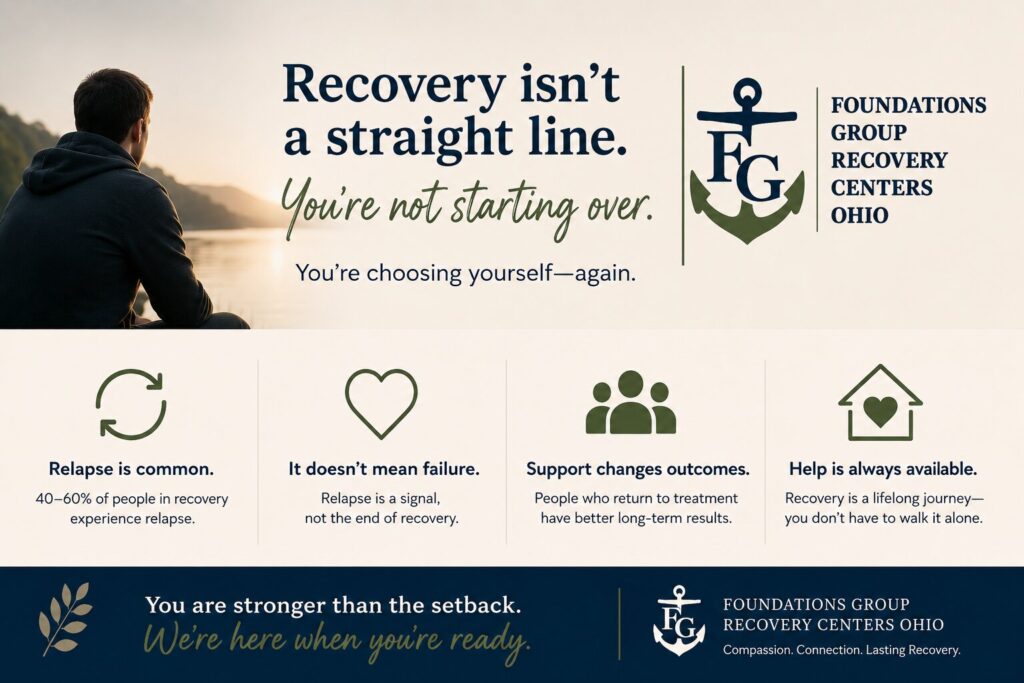
A lot of long-term alumni delay reaching out because they cannot emotionally tolerate the idea of “starting over.”
But honestly, returning to treatment is not the same thing as erasing your recovery.
The years you stayed sober still mattered.
The healing still mattered.
The relationships still mattered.
Relapse doesn’t rewrite your entire life story into failure.
High-Functioning Relapse Can Stay Hidden for a Long Time
This is why many people searching for opioid detox near Columbus do so quietly and privately.
They may still:
- Have jobs
- Maintain relationships
- Parent children
- Attend family events
- Pay bills
- Appear stable outwardly
But internally, addiction slowly narrows their world again.
You start managing your life around secrecy:
- Hiding emotional pain
- Hiding use
- Hiding exhaustion
- Hiding how scared you actually are
And because you’re still functioning externally, you convince yourself things aren’t “bad enough” to ask for help yet.
That belief becomes dangerous.
Because many relapses escalate gradually—not all at once.
The Loneliness Becomes Harder Than the Substance Use
Honestly, loneliness was the part that almost destroyed me.
Not just physical loneliness.
Emotional loneliness.
Feeling disconnected even in rooms full of people. Feeling like nobody fully understood how exhausted I was from pretending I felt okay all the time.
Long-term recovery can create pressure to always seem stable. People assume once you’ve been sober long enough, you’re “past it.”
But addiction recovery doesn’t remove:
- Grief
- Trauma
- Burnout
- Anxiety
- Relationship struggles
- Mental health issues
- Emotional emptiness
Sometimes people relapse because they stop feeling emotionally alive—not because they stopped caring about sobriety.
And that distinction matters deeply.
Going Back to Treatment Felt Like Swallowing Glass
I delayed getting help because I couldn’t handle the embarrassment.
I imagined people judging me. Thinking I was weak. Looking at me differently.
Part of me thought:
“You already had your chance.”
But eventually the exhaustion became stronger than the pride.
And honestly? Returning to treatment was not what I expected.
Nobody treated me like a lost cause.
Most people treated me like someone who was hurting.
That broke something open emotionally for me.
Because underneath the relapse was not some evil desire to self-destruct.
It was pain. Disconnection. Burnout. Emotional isolation I stopped talking about years earlier.
Sometimes relapse is less about substances and more about what happens when someone quietly disappears from themselves emotionally.
The Second Recovery Can Be More Honest
This might sound strange, but parts of my second recovery became deeper than my first.
Not easier.
But more emotionally honest.
The first time I got sober, I mostly focused on survival:
- Stop using
- Stay alive
- Don’t destroy everything
The second time forced me to ask deeper questions:
- Why did I become emotionally disconnected?
- Why was I terrified to ask for help?
- Why did I believe struggling made me a failure?
- Why did I isolate instead of reaching out?
That work was painful.
But it also changed the way I understood recovery entirely.
Because recovery cannot only be about avoiding substances.
It has to include:
- Emotional connection
- Rest
- Honesty
- Community
- Purpose
- Mental health support
- Willingness to be vulnerable again
Otherwise sobriety can slowly become survival mode with better public behavior.
And eventually survival mode exhausts people.
You Are Allowed to Need Support Again
A lot of alumni secretly believe they only get one shot at recovery.
That if they relapse after years sober, they somehow lose the right to ask for help compassionately.
That’s simply not true.
You are allowed to come back.
You are allowed to admit you’re struggling before your life fully collapses.
You are allowed to feel emotionally exhausted.
You are allowed to need connection again.
And honestly, many people quietly searching for opioid detox near Columbus are not hopeless people.
They are tired people.
People who spent years holding themselves together while slowly drifting away from their emotional center.
People who finally reached a moment where pretending became more painful than asking for help.
Recovery Is Not About Never Struggling Again
This may be the hardest truth long-term sobriety teaches.
Recovery does not make you invincible.
You still experience:
- Loneliness
- Fear
- Burnout
- Emotional numbness
- Trauma
- Anxiety
- Disconnection
- Grief
And sometimes those experiences reopen vulnerabilities people thought they had already conquered.
That does not mean recovery failed.
It means you are still human.
The goal is not perfection.
The goal is learning to come back to yourself honestly before isolation convinces you there’s no way back.
Because there usually is.
Even after relapse.
Even after shame.
Even after years sober.
FAQ: Long-Term Sobriety, Relapse, and Returning to Treatment
Is relapse common after years of sobriety?
Yes. Relapse can happen even after long-term recovery. Emotional isolation, stress, grief, burnout, untreated mental health struggles, and disconnection can increase vulnerability over time.
Why do some long-term alumni feel emotionally disconnected?
Many people experience emotional flatness after the intensity of early recovery fades. Without ongoing emotional connection and support, sobriety can begin feeling repetitive or emotionally distant.
Does relapse erase recovery progress?
No. The years someone spent sober, healing relationships, rebuilding trust, and growing emotionally still matter deeply. Relapse does not erase that progress.
Can someone relapse while still functioning normally?
Absolutely. Many people continue working, parenting, and maintaining responsibilities while privately struggling with substance use or emotional relapse.
What is emotional relapse?
Emotional relapse often begins before physical substance use returns. Common signs include isolation, secrecy, emotional numbness, avoiding support systems, romanticizing past use, and feeling disconnected from purpose or relationships.
Why do people delay seeking help after relapse?
Shame is one of the biggest reasons. Many alumni fear disappointing loved ones or feeling like they “failed” recovery after years sober.
Why are some people searching for opioid detox near Columbus after long-term sobriety?
Some individuals recognize warning signs early and seek help before their lives completely unravel. Early intervention can prevent deeper physical and emotional consequences.
Can returning to treatment actually help after relapse?
Yes. Many people experience deeper emotional healing during later recovery attempts because they begin addressing underlying isolation, burnout, trauma, or mental health struggles more honestly.
Is it weak to need treatment again?
Not at all. Returning to treatment often takes tremendous courage, especially for someone carrying shame about needing support again.
What if I feel embarrassed to ask for help?
That feeling is extremely common. But many people in recovery understand relapse personally and respond with compassion rather than judgment.
If you’re feeling emotionally exhausted, disconnected, or quietly slipping back into old patterns, you do not have to carry it alone.
Call (888)501-5618 or visit substance use treatment in Ohio to learn more about our substance use treatment Columbus, Ohio, opiate addiction treatment services in Ohio.