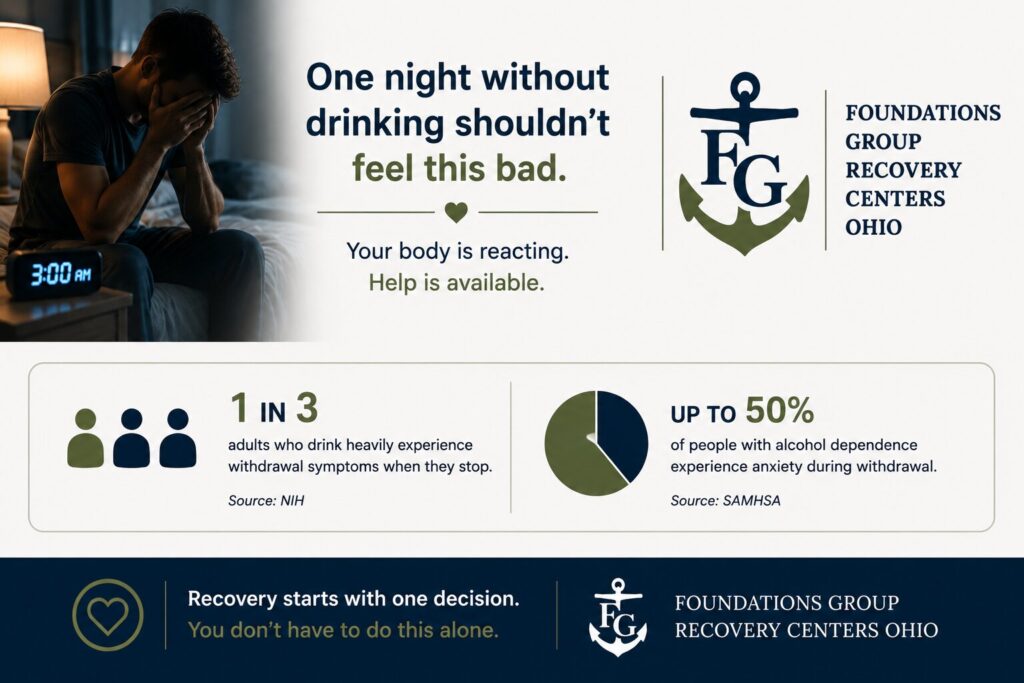
You wake up at 3 a.m. soaked in sweat.
Your hands are shaking. Your heart feels too loud in your chest. Anxiety is crawling through your body for no clear reason, and suddenly your brain lands on a thought you’ve probably been trying to avoid:
“Why does one night without drinking feel this bad?”
That moment can feel deeply unsettling.
Not because you’ve officially decided you have a problem. Not because you’ve lost everything. But because your body is reacting in a way you can’t easily explain away anymore.
A lot of people searching for help with alcohol addiction treatment in Ohio are not trying to become completely different people overnight. They’re trying to understand why stopping alcohol—even briefly—suddenly feels physically and emotionally overwhelming.
And honestly, that confusion deserves compassion, not judgment.
Dependence Can Build Quietly Over Time
Many people believe alcohol dependence only happens to someone whose life looks visibly chaotic.
But for a lot of people, it develops slowly and privately.
At first, drinking may have felt harmless:
- A way to unwind after work
- Something to quiet anxiety
- A nightly routine
- A social habit
- A shortcut to sleep
Over time, though, your body adapts to alcohol being present regularly.
That adaptation can become physical dependence.
And when alcohol suddenly disappears—even for one night—your nervous system can react hard.
You may experience:
- Sweating
- Tremors or shaking
- Racing heartbeat
- Panic or severe anxiety
- Restlessness
- Trouble sleeping
- Nausea
- Feeling emotionally overwhelmed
- Difficulty concentrating
For many people, these alcohol withdrawal symptoms feel terrifying precisely because they arrive before someone fully considers themselves “dependent.”
That realization can hit like cold water.
Your Nervous System Is Trying to Rebalance
Alcohol slows down parts of the brain and nervous system. Over time, your body adjusts by working harder to stay balanced while alcohol is consistently present.
When drinking suddenly stops, your nervous system can temporarily become overstimulated.
That’s why people often describe feeling:
- Jittery
- Hyper-alert
- Panicked
- Unable to relax
- Emotionally raw
It can feel like your body forgot how to calm itself down.
One person once described withdrawal this way:
“It felt like my brain slammed the gas pedal while my body was begging for brakes.”
That experience is more common than people realize.
And because symptoms often overlap with panic attacks or severe anxiety, many people spend months minimizing what’s happening.
They tell themselves:
- “I’m just stressed.”
- “I haven’t been sleeping.”
- “I probably just have anxiety.”
- “It’s not withdrawal because I’m still functioning.”
But functioning and struggling are not opposites.
The Fear Can Make People Keep Drinking Longer
This is something people rarely say out loud.
Sometimes the fear of withdrawal becomes one of the reasons someone continues drinking.
Not necessarily to get drunk. Just to stop feeling awful.
That can create a painful cycle:
- You drink to avoid discomfort
- Your body becomes more dependent
- The symptoms become harder to ignore
- Anxiety about stopping grows stronger
Eventually, people can feel trapped between two fears:
“I’m scared to keep drinking.”
“I’m scared to stop.”
That emotional middle ground is exhausting.
And many people stay there far longer than they need to because they feel ashamed or unsure whether their experience is “serious enough” to ask for help.
High-Functioning Doesn’t Mean Safe
One of the biggest myths around alcohol dependence is that someone must completely fall apart before their drinking deserves attention.
That simply isn’t true.
Many people experiencing alcohol withdrawal symptoms are still:
- Going to work
- Taking care of kids
- Paying bills
- Maintaining relationships
- Showing up socially
- Looking “fine” from the outside
But internally, things can feel very different.
You may start organizing your life around alcohol more than you realize:
- Feeling nervous if there’s no alcohol at home
- Watching the clock until you can drink
- Struggling to sleep without it
- Feeling physical relief after drinking again
- Avoiding situations where you can’t drink
The body often notices dependence before the person emotionally accepts it.
And honestly, that realization can feel deeply vulnerable.
Shame Keeps a Lot of People Silent
People often delay seeking help because they think:
“If I admit this, it means I’m officially an alcoholic.”
But many treatment seekers spend months—or years—living in uncertainty before reaching out.
They don’t know what label fits yet. They only know:
- Their body feels different
- Their anxiety is worsening
- They’re scared by their own reactions
- Stopping feels harder than it used to
That matters.
You do not need to have every answer before asking for support.
You also don’t need to earn help by reaching some catastrophic breaking point.
Sometimes people wait because they think:
“Other people have it worse.”
But suffering is not a competition.
If alcohol withdrawal symptoms are affecting your body, sleep, emotional health, or sense of safety, that deserves attention now—not years later.
Withdrawal Can Become Dangerous Faster Than People Expect
This is the part where honesty matters.
Alcohol withdrawal is not always mild.
For some people, symptoms remain uncomfortable but manageable. For others, symptoms can escalate into medical emergencies, including:
- Seizures
- Hallucinations
- Severe confusion
- Dangerous blood pressure changes
- Delirium tremens (DTs)
The difficult part is that people often cannot predict on their own how severe withdrawal will become.
That’s why medical guidance matters—especially for people who:
- Drink heavily or daily
- Have experienced withdrawal before
- Have underlying medical conditions
- Experience severe symptoms quickly
- Feel unable to stop drinking safely
Seeking help is not weakness.
Sometimes it’s the safest thing you can do for your nervous system, your body, and your future.
The Good News Is That Recovery Often Starts Earlier Than People Think
There’s a common belief that treatment only works for people who “hit bottom.”
But many successful recoveries begin much earlier.
Sometimes recovery begins with a single frightening night:
- Waking up shaking
- Sitting on the bathroom floor sweating
- Realizing anxiety has become unmanageable
- Recognizing alcohol no longer feels optional
That moment can become a turning point.
We’ve seen people arrive feeling terrified and ashamed—convinced their lives were about to collapse.
And we’ve also watched those same people stabilize physically, reconnect emotionally, sleep through the night again, and rebuild trust in themselves step by step.
Not instantly. Not perfectly.
But genuinely.
One of the hardest things about alcohol dependence is how convincing hopelessness can feel in the middle of it.
The nervous system tells you:
“This is permanent.”
“You can’t handle life without alcohol.”
“You’ve already gone too far.”
Those thoughts are common.
They are also often wrong.
You Don’t Need to Wait for a Rock Bottom Story
This matters deeply.
You do not need:
- A DUI
- Job loss
- Divorce
- Hospitalization
- Public humiliation
- Complete life collapse
before you deserve support.
If your body is sounding alarms after one night without alcohol, that is worth listening to.
Not with panic. Not with shame.
With honesty.
Because sometimes the body tells the truth before the mind is emotionally ready to hear it.
And while alcohol withdrawal symptoms can feel frightening, many people safely recover with medical support, emotional guidance, and treatment designed to help them stabilize physically and mentally.
You are not weak for being scared.
Most people are scared at first.
FAQ: Shaking, Sweating, and Anxiety After Stopping Alcohol
Can shaking after one night without alcohol really be withdrawal?
Yes, it can be. Tremors, sweating, anxiety, nausea, and insomnia are common alcohol withdrawal symptoms for some people who have developed physical dependence on alcohol over time.
How quickly can alcohol withdrawal symptoms begin?
Symptoms can start within several hours after the last drink, though timing varies based on drinking history, overall health, and individual body chemistry.
Why does my anxiety feel so intense after stopping alcohol?
Alcohol affects the nervous system and brain chemistry. When alcohol suddenly leaves the body, the nervous system can become overstimulated, which may create severe anxiety, panic, restlessness, or emotional distress.
Is alcohol withdrawal dangerous?
It can be. Some people experience mild symptoms, while others may develop serious complications such as seizures, hallucinations, or delirium tremens. Medical guidance is often important for safety.
What if I’m still functioning normally in daily life?
Many people with alcohol dependence continue working, parenting, and maintaining responsibilities. Physical dependence does not always look dramatic from the outside.
Can I detox safely at home?
It depends on the severity of dependence and withdrawal history. Because alcohol withdrawal can become dangerous unpredictably, professional medical evaluation is often recommended before attempting to stop completely on your own.
Does needing help mean I’ve failed?
No. Reaching out for help is often one of the healthiest and bravest decisions a person can make. Many people seek treatment before their lives completely fall apart.
What happens during treatment for alcohol dependence?
Treatment may involve medical detox support, therapy, emotional stabilization, group support, and ongoing recovery planning. The goal is not punishment—it’s helping your body and mind recover safely.
Will the anxiety ever calm down?
For many people, yes. Once the nervous system stabilizes and alcohol is no longer controlling the cycle, anxiety often becomes significantly more manageable with proper support and care.
What if I’m scared to admit how bad it’s gotten?
That fear is incredibly common. Many people entering treatment worried they would be judged, but instead found relief in finally being honest about what they were carrying.
If you’ve been waking up shaky, sweating, anxious, or frightened after going without alcohol, you do not have to navigate this alone.
Call (888)501-5618 or visit substance use treatment in Ohio to learn more about our substance use treatment Upper Arlington, Ohio, alcohol addiction treatment services in Ohio.