Ninety days.
For a while, that number meant everything to me.
Ninety days without alcohol. Ninety days of meetings. Ninety days of rebuilding trust with people I loved. Ninety days of waking up without shame hanging over me like a storm cloud.
Then one night, I drank.
Not because I stopped caring.
Not because treatment failed.
Not because I wanted to throw everything away.
I drank because I was hurting, exhausted, overconfident, scared, and human all at the same time.
The next morning felt worse than any hangover I can remember. The alcohol was unpleasant enough, but the shame was brutal.
I kept thinking the same thing:
“Now what?”
If you’re reading this after a relapse, or if you’re trying to decide what level of treatment makes sense after struggling with alcohol again, I want you to hear something that took me a long time to understand:
Needing more support does not mean you’ve failed.
In fact, many people who begin researching PHP vs IOP aren’t really trying to compare programs.
They’re trying to figure out how to recover without making another mistake.
If that’s where you are, learning more about structured daytime recovery support can help you understand what options exist and how different levels of care fit different stages of recovery.
The Search for Answers Usually Starts With Self-Doubt
After a relapse, your confidence takes a hit.
You start questioning decisions that once felt easy.
Should I go back to treatment?
Am I overreacting?
Am I underreacting?
Do I need more help than last time?
Can I handle this on my own?
Those questions can become exhausting.
What makes it harder is that many people compare themselves to everyone else.
Someone else relapsed and only needed meetings.
Someone else returned to treatment.
Someone else seemed to bounce back immediately.
Recovery doesn’t work that way.
Your needs are not determined by someone else’s story.
They’re determined by your story.
Why Relapse Feels So Personal
One of the cruelest parts of relapse is how quickly it becomes tied to identity.
You don’t just feel like someone who drank.
You feel like someone who failed.
That distinction matters.
Because when shame takes over, people often make decisions based on embarrassment instead of recovery.
I’ve seen people choose less support than they needed because they wanted to prove they were okay.
I’ve seen people delay treatment because they were worried about what others would think.
I’ve seen people spend months struggling alone because asking for help felt humiliating.
The reality is much simpler.
If your recovery plan isn’t working, adjusting it isn’t failure.
It’s wisdom.
Nobody expects a broken bone to heal without proper treatment.
Addiction deserves the same level of compassion.
More Structure Isn’t a Punishment
For a long time, I viewed treatment intensity the wrong way.
I thought needing more support meant I was doing worse.
Now I see it differently.
Imagine trying to rebuild a house after a storm.
Some houses need a few repairs.
Others need extensive work before they’re safe again.
Neither situation says anything about the value of the house.
It only reflects what happened during the storm.
Alcohol addiction recovery works similarly.
Sometimes people need a greater amount of structure because their environment, stress levels, cravings, mental health challenges, or relapse history make recovery more vulnerable.
That isn’t punishment.
It’s protection.
The goal isn’t to prove how independent you can be.
The goal is to stay sober long enough for healing to take root.
When Daily Accountability Makes a Difference
There are moments in recovery when alcohol seems to occupy every corner of your mind.
You wake up thinking about it.
You drive past familiar places and think about it.
You feel stressed and think about it.
You celebrate something and think about it.
It becomes exhausting.
During periods like these, more frequent support can create breathing room.
Instead of spending every day fighting the same battle alone, people have opportunities to process challenges, build coping skills, and strengthen accountability on a regular basis.
Many alumni who return after relapse describe this experience as regaining traction.
They stop feeling like they’re sliding downhill.
They start feeling like they’re moving forward again.
That shift can be powerful.
Why Some People Need Flexibility Instead
Not every relapse requires the same response.
This is important.
Some individuals have stable housing, strong support systems, reliable accountability, and relatively short slips that are addressed quickly.
In these situations, multi-day weekly treatment may provide enough structure to help reinforce recovery while still allowing people to maintain work schedules, family responsibilities, and daily commitments.
Recovery isn’t measured by how much treatment you receive.
It’s measured by whether the support you’re receiving is actually helping.
That’s why there isn’t a universal answer to which option is “better.”
The better choice is the one that matches your reality.
The Question That Changed Everything for Me
I spent weeks asking the wrong question.
I kept asking:
“Which option sounds less serious?”
What I should have asked was:
“Which option gives me the strongest chance of staying sober?”
Those are very different conversations.
One is driven by pride.
The other is driven by healing.
Pride wants the smallest possible intervention.
Healing wants the most effective one.
When I finally became honest with myself, I realized I wasn’t afraid of treatment.
I was afraid of admitting I needed it.
That realization changed everything.
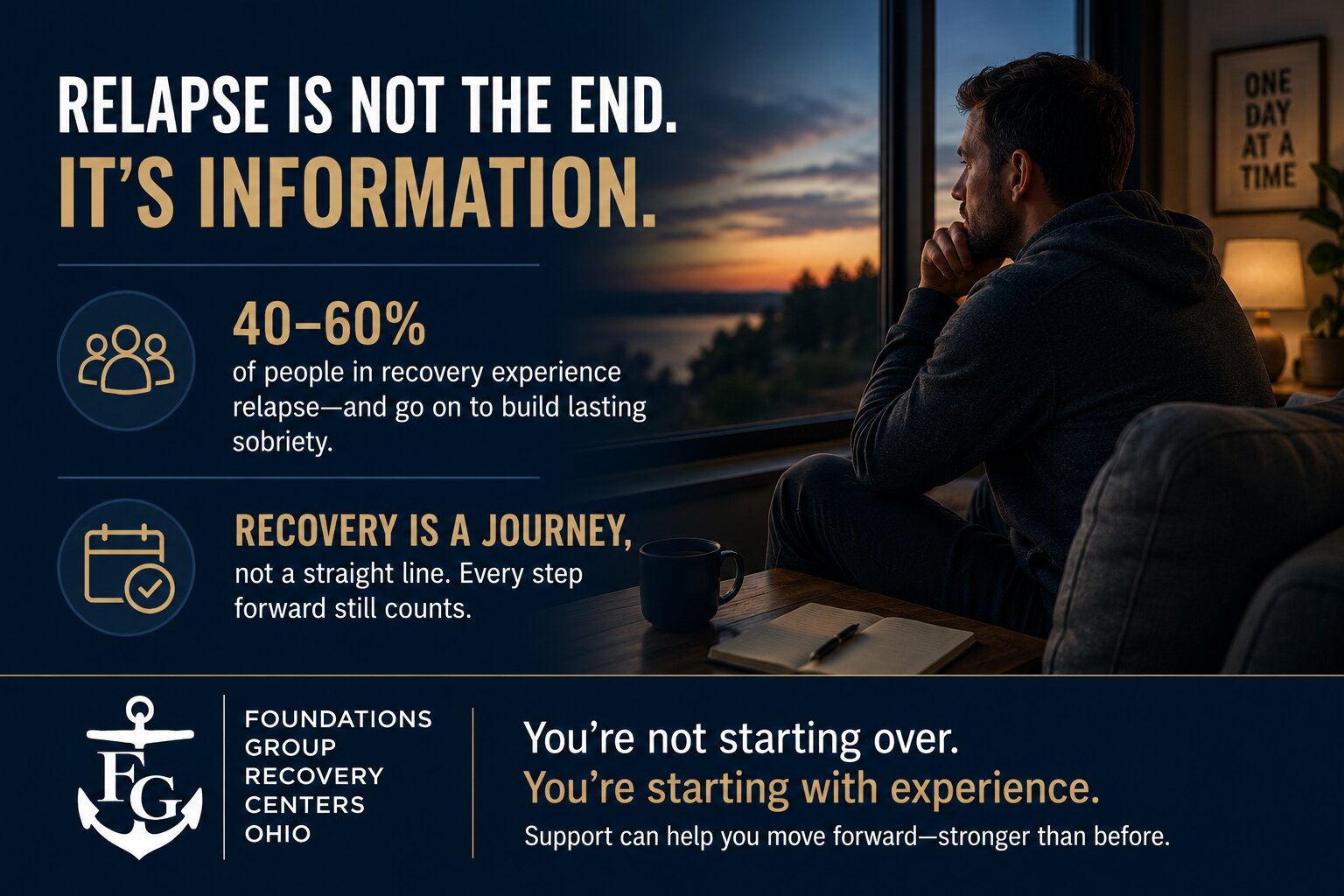
Recovery Is Not a Straight Line
One reason relapse feels devastating is because people imagine recovery as a staircase.
Every sober day moves you up.
One relapse sends you back to the bottom.
But that isn’t how recovery works.
Recovery is more like learning a language.
If you stop practicing for a week, you don’t lose everything you’ve learned.
The knowledge remains.
The growth remains.
The experience remains.
You may need to reconnect with those skills, but they haven’t disappeared.
The same thing is true after relapse.
The lessons from your sober time still matter.
The coping strategies still matter.
The progress still matters.
Nothing can erase the work you’ve already done.
The Strongest People I Know Ask for Help Earlier
One thing I’ve noticed among people with long-term recovery is that they become better at recognizing warning signs.
They stop waiting for complete collapse.
They stop convincing themselves they can power through everything.
They stop treating support as a last resort.
Instead, they reach out sooner.
They ask questions sooner.
They adjust their recovery plans sooner.
That isn’t weakness.
It’s experience.
And if you’re sitting here today trying to decide what kind of help you need after struggling with alcohol again, the fact that you’re searching for answers already says something important.
You haven’t given up.
You’re still fighting for yourself.
That matters more than you realize.
The version of you who achieved sobriety before is still there.
The version of you who wants something better is still there.
The next step isn’t about proving you can do everything alone.
It’s about giving yourself the support that helps you move forward.
Frequently Asked Questions
Is relapse a sign that treatment didn’t work?
Not necessarily. Many people experience relapse during the recovery process. Often, relapse highlights areas where additional support, new coping strategies, or a different treatment approach may be helpful.
How do I know if I need more support after a relapse?
A good indicator is whether you’re struggling to maintain sobriety, experiencing frequent cravings, facing significant stress, or feeling unable to use recovery tools consistently. Honest conversations with treatment professionals can help determine the appropriate level of care.
Is needing intensive treatment a sign of failure?
No. Treatment intensity is based on clinical needs and personal circumstances, not personal worth. Many successful people in long-term recovery have needed higher levels of support at different points in their journey.
Can I still work while receiving treatment?
Depending on the level of care recommended, many people continue balancing work and responsibilities while participating in treatment. The goal is to find support that matches your recovery needs and life circumstances.
What’s the difference between PHP vs IOP?
The primary difference is the amount of structure and treatment time provided each week. Some people benefit from a higher level of daily support, while others do well with a more flexible schedule. The best fit depends on individual recovery needs, relapse history, support systems, and overall stability.
How soon should I seek help after a relapse?
Generally, sooner is better. Addressing a relapse quickly can help prevent further setbacks and create opportunities to strengthen recovery before the situation becomes more difficult.
Call (888)501-5618 or visit our addiction treatment programs Ohio page to learn more about our addiction treatment programs Columbus, Ohio, partial hospitalization program services in Franklin County, Ohio.